
On October 21, 2026, the University of Transport and Communications (UTC), in coordination with the Centre for Education Accreditation of Vietnam National University, Hanoi (VNU-Hanoi), conducted a preliminary survey for the third cycle of external institutional quality assessment. The event marked an important preparatory milestone ahead of the upcoming official assessment, reaffirming the University’s commitment to enhancing educational quality and strengthening international integration.
.jpg)
Signing of a cooperation agreement on higher education institutional quality accreditation between the University of Transport and Communications and the Centre for Education Accreditation of VNU-Hanoi. The meeting was held in a hybrid format, with in-person participation at UTC’s headquarters in Hanoi and online participation by representatives from the Ho Chi Minh City Campus.
Leading Accreditation Experts Participate in the Assessment
The meeting was attended by Prof. Dr. Nguyen Huu Duc, former Vice President of Vietnam National University, Hanoi, who led the external assessment team; Assoc. Prof. Dr. Ta Thi Thu Hien, Director of the Centre for Education Accreditation at VNU-Hanoi; and Dr. Hoang Thi Xuan Hoa, former Deputy Director of the Institute for Education Quality Assurance at VNU-Hanoi, who served as the team secretary.
Representing the University of Transport and Communications (UTC) were Assoc. Prof. Dr. Nguyen Van Hung, Secretary of the Party Committee and President of the University; Assoc. Prof. Dr. Nguyen Thanh Chuong, Deputy Secretary of the Party Committee and Vice President; and Assoc. Prof. Dr. Le Hoai Duc, Deputy Secretary of the Party Committee and Vice President, along with members of the Self-Assessment Council and staff responsible for accreditation.
.jpg)
Members of the external assessment expert team.
A Strategic Breakthrough for a New Era of Development
UTC is conducting its third-cycle institutional quality assessment at a time when Vietnam is facing significant development opportunities and increasingly ambitious national priorities. Conclusion No. 91-KL/TW, dated August 12, 2024, on continuing the implementation of Resolution No. 29-NQ/TW on fundamental and comprehensive reform of education and training; Resolution No. 57-NQ/TW, dated December 22, 2024, on breakthroughs in science and technology development, innovation, and national digital transformation; and, in particular, Resolution No. 71-NQ/TW, dated August 22, 2025, on breakthroughs in education and training development, have established new requirements while creating significant opportunities for higher education institutions.
These strategic orientations reaffirm the critical role of higher education in developing a highly skilled workforce, enhancing national competitiveness, and contributing to Vietnam’s goal of achieving double-digit economic growth in the coming years.
For UTC, these developments represent both an opportunity and a responsibility to accelerate innovation and build on its longstanding strengths in transport engineering, and technical infrastructure. The University has proactively reviewed and adjusted its development strategy, setting more ambitious targets. It now aims to rank among the top 200 higher education institutions in Asia by 2030, up from its previous target of the top 350, while also striving to have at least one academic discipline ranked among the world’s top 200 in a reputable subject-specific ranking.
To achieve these objectives, UTC has identified quality assurance as a central and continuous priority in its development strategy, alongside improving teaching quality, advancing scientific research, and developing its academic and professional workforce.
.jpg)
An overview of the meeting.
Since 2016, the University of Transport and Communications has been recognized as the first university in Vietnam to receive an institutional accreditation certificate under a set of standards comprising 10 standards and 61 criteria. This marked a significant milestone, demonstrating the University’s commitment and determination to develop an institutional quality assurance system. Building on this achievement, UTC completed its second-cycle external institutional assessment in 2021 and received its institutional accreditation certificate in 2022.
At the program level, the University has completed quality accreditation for nine academic programs under the AUN-QA framework and 14 programs under the standards issued by Vietnam’s Ministry of Education and Training. These achievements demonstrate UTC’s commitment to educational quality and provide an important foundation for standardization, innovation, and international integration. In recent years, the University’s quality assurance activities have developed significantly, becoming increasingly systematic, scientific, and coordinated.
UTC has established and progressively refined a two-level quality assurance model, creating an interconnected network across the University, its faculties, academic departments, and functional units. Its management regulations and quality assurance instruments have also been strengthened, including the 2023 Quality Assurance Regulations, the Quality Policy, regulations governing stakeholder surveys, the ISO 9001:2015 documentation system, and the 2024 Quality Assurance Handbook.
The University has also focused on management innovation and digital transformation, expanded stakeholder surveys and feedback mechanisms, and used assessment results to drive continuous improvement. These efforts have raised awareness and strengthened the quality assurance responsibilities of managers, lecturers, and staff, while gradually fostering a culture of quality throughout the institution.
.jpg)
The program was connected online with the Ho Chi Minh City Campus.
University Leadership Emphasizes Continuous Improvement
In his remarks, Assoc. Prof. Dr. Nguyen Van Hung, Secretary of the Party Committee and Rector of UTC, emphasized that the third-cycle external institutional assessment provides an opportunity to comprehensively review the implementation of the University’s development strategy, evaluate the effectiveness of its governance and quality assurance systems, and identify priorities and solutions for improvement in the next phase.
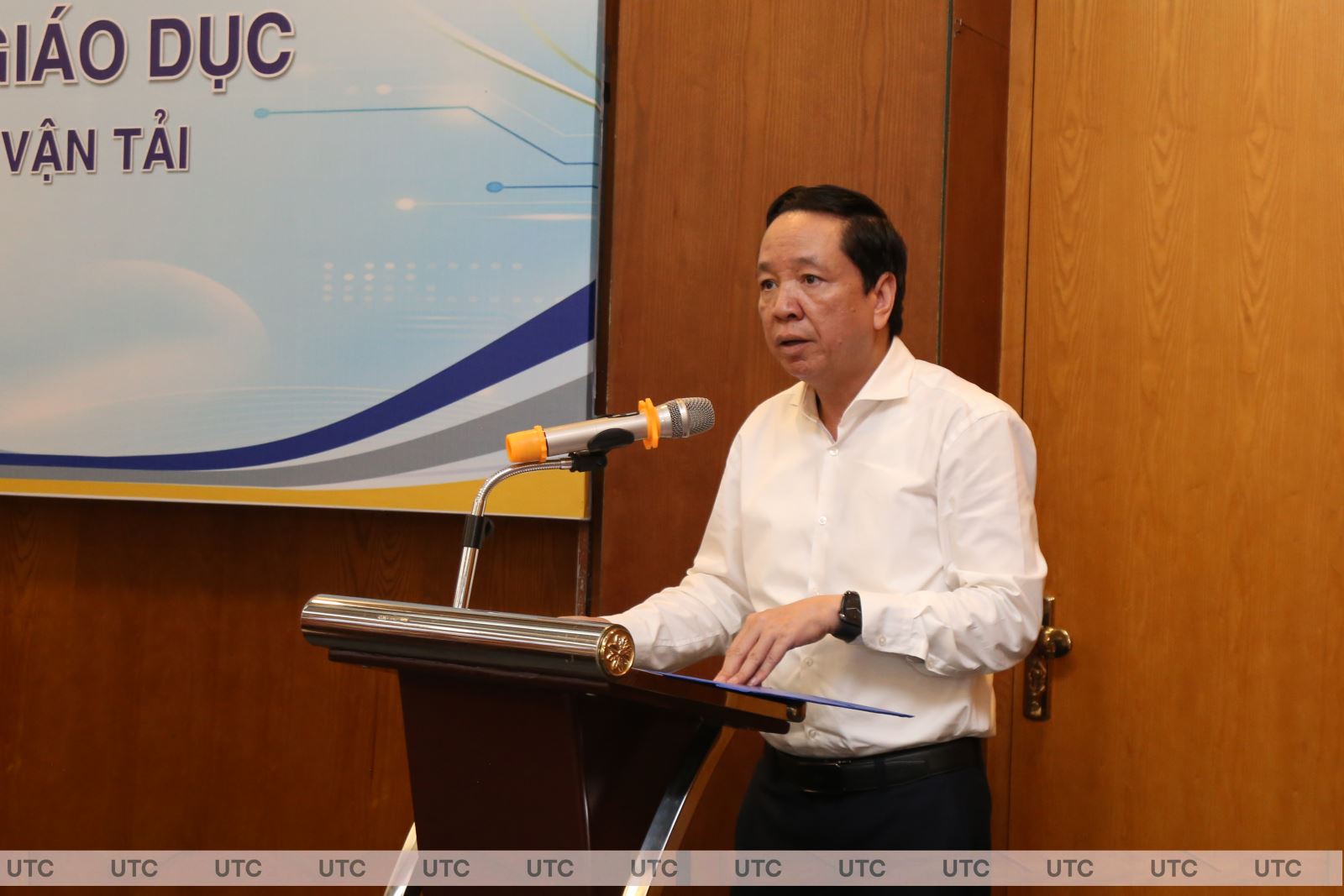
Assoc. Prof. Dr. Nguyen Van Hung, Secretary of the Party Committee and President of UTC, delivers his remarks.
Regarding the preliminary survey, the President expressed his hope that the expert team would provide constructive feedback and guidance to help the University review and complete its documentation, supporting evidence, and other necessary preparations for the official assessment scheduled for October 31 to November 4, 2026.
Assoc. Prof. Dr. Nguyen Van Hung expressed his confidence that, with the continued support and expert advice and recommendations provided by the external assessment team, the University would continue to make steady progress towards its goals of fostering a culture of quality, pursuing continuous improvement, and advancing international integration, thereby better meeting the country’s development needs. He also expressed his gratitude to the Centre for Education Accreditation at Vietnam National University, Hanoi, and the members of the external assessment team for their time, dedication, and support throughout this important process.
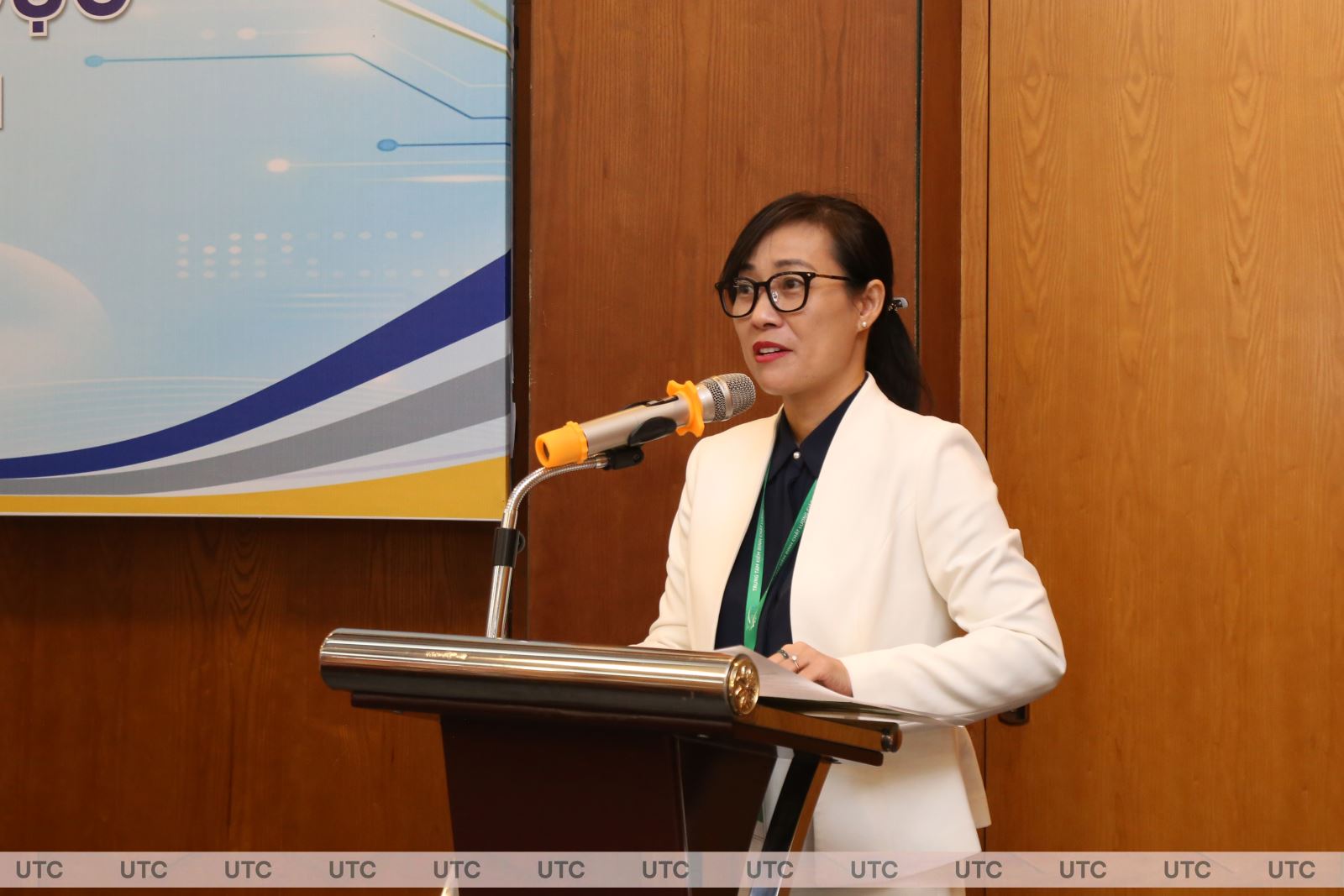
Assoc. Prof. Dr. Ta Thi Thu Hien, Director of the Centre for Education Accreditation at VNU-Hanoi
Assessing the preliminary survey, Assoc. Prof. Dr. Ta Thi Thu Hien acknowledged that UTC’s third-cycle institutional accreditation process had been conducted seriously and in accordance with established procedures and the prescribed assessment cycle. She noted that the process further affirmed the University’s pioneering role in quality assurance and its commitment to accountability to society.
In particular, given the University of Transport and Communications’ need to achieve significant development breakthroughs as a key higher education institution in science and technology, the Centre prioritized inviting leading experts in scientific research, technology transfer, educational assessment, quality management, and international standards to participate directly in the external assessment team.
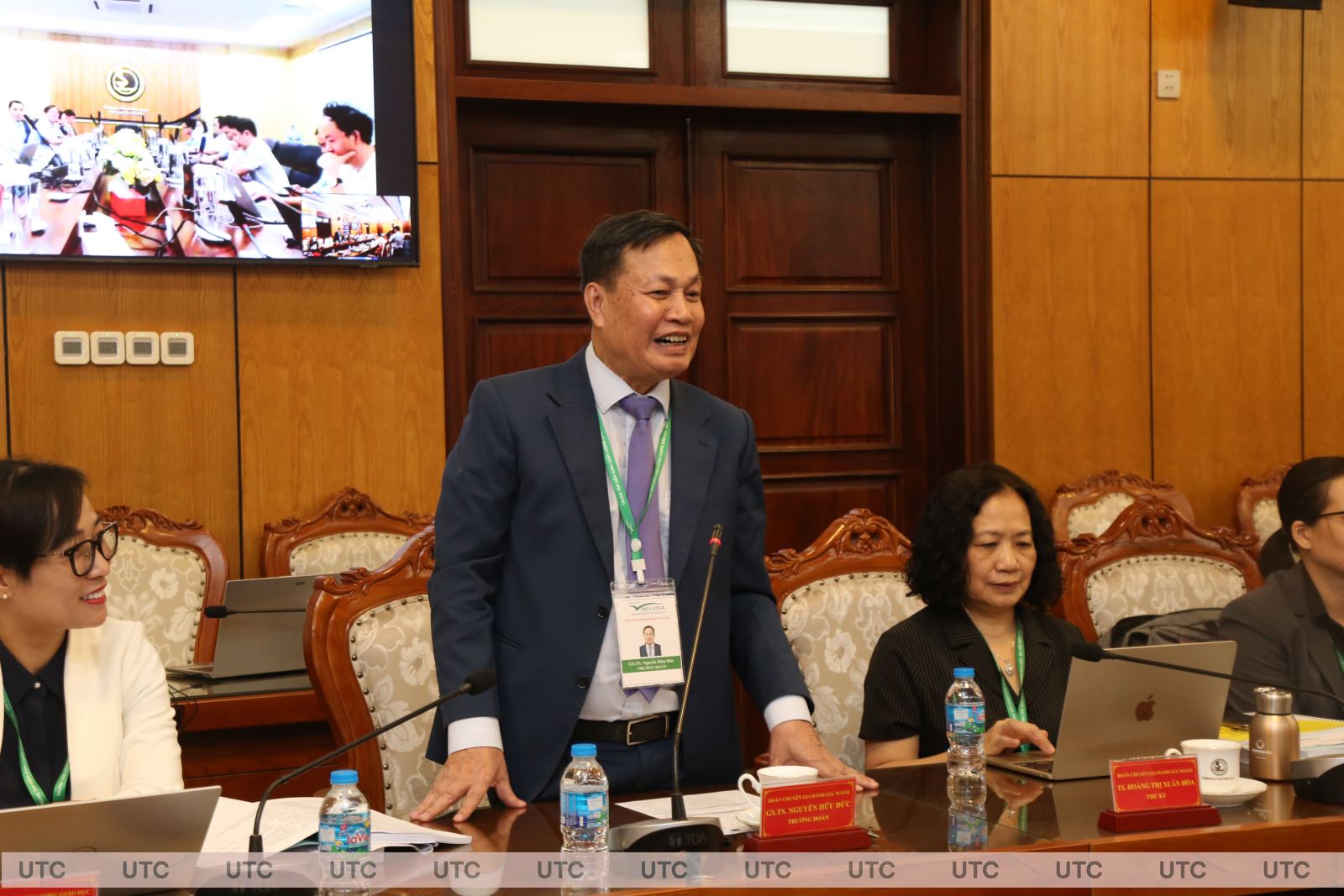
Prof. Dr. Nguyen Huu Duc, former Vice President of VNU-Hanoi and Head of the External Assessment Team, delivers his remarks.
On behalf of the external assessment team, Prof. Dr. Nguyen Huu Duc expressed his appreciation for the trust and cooperation extended by UTC and the Centre for Education Accreditation of VNU-Hanoi. He commented that, in this new phase of development, UTC is well positioned to capitalize on favorable conditions as Vietnam accelerates its progress in science and technology, innovation, and related fields. These developments present both significant opportunities and considerable pressure, requiring the expert team to provide substantive recommendations that align with the University’s vision and ambitions.
Regarding the assessment methodology, Prof. Dr. Nguyen Huu Duc emphasized that the team would adopt a differentiated approach to governance, focusing on four core pillars:
• Mission-driven governance.
• Data-driven governance.
• Enabling governance.
• Value creation and enhancement.
Preparing for the Official Assessment
At the conclusion of the meeting, both parties agreed on a detailed schedule for the official assessment, planned for October 31 to November 4, 2026. Following the meeting in Hanoi, the expert team will travel to UTC’s Ho Chi Minh City Campus to conduct on-site assessment activities in accordance with the agreed plan.
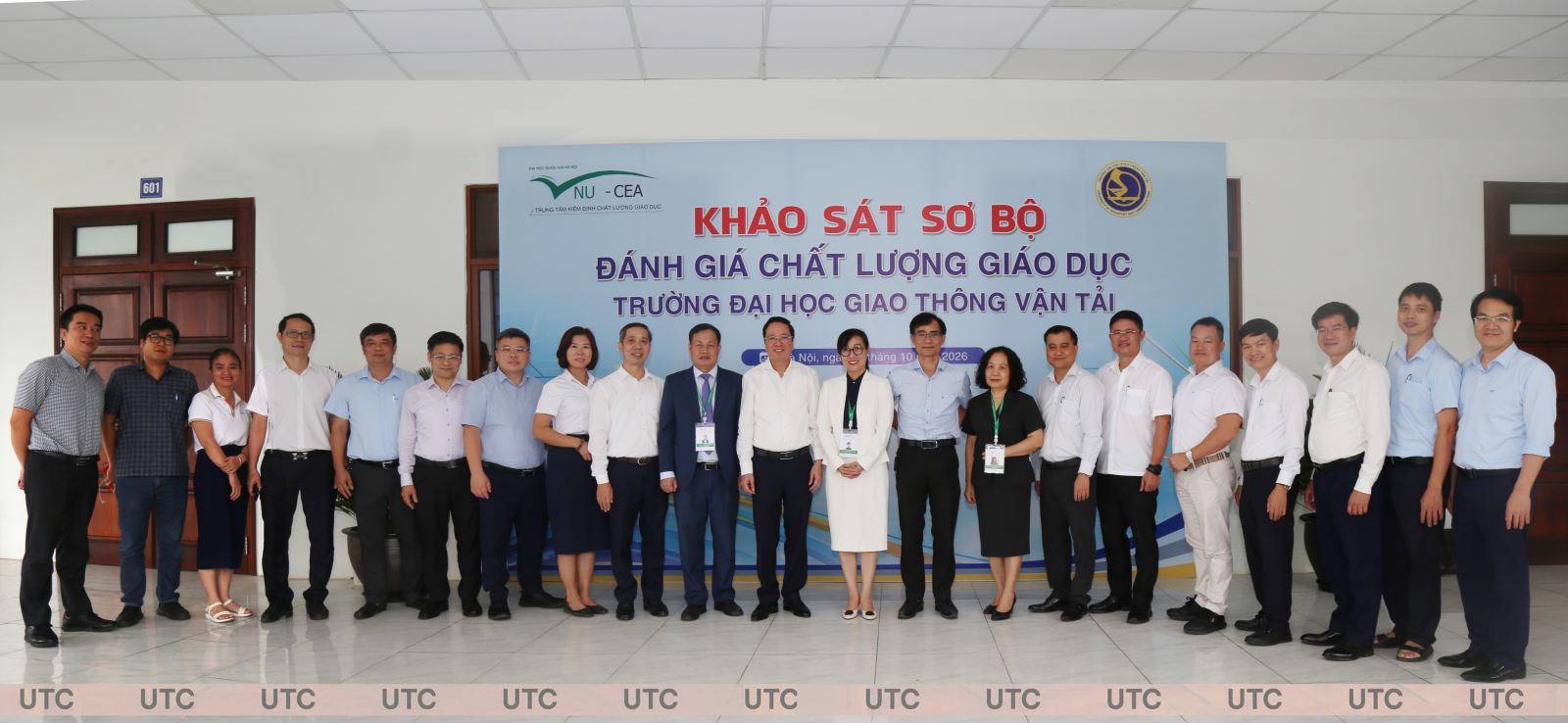
Delegates attending the preliminary external institutional assessment survey pose for a commemorative photograph.
Related Articles
University of Transport and Communications Strengthens Strategic Cooperation with Lam Dong Province in Education, Scientific Research and Technology Transfer
DetailUniversity of Transport and Communications Holds Seminar on International Accreditation and Enhancing Competitiveness
DetailUniversity of Transport and Communications signs Strategic Cooperation Agreement with Perm National Research University, Russia
Detail