
Seminar by Professor Akimasa Fujiwara: "Sharing Experiences in Developing a Long-Term Vision for Higher Education Institutions"
In the context of global higher education undergoing a profound transformation driven by internationalization, innovation, and academic competitiveness, developing a strategic vision and enhancing research quality have become essential priorities for universities. The seminar featuring Professor Akimasa Fujiwara, a distinguished expert in university governance and international higher education development, provided valuable insights for the University of Transport and Communications as it advances its transformation into a research-oriented university and strengthens its international integration efforts.
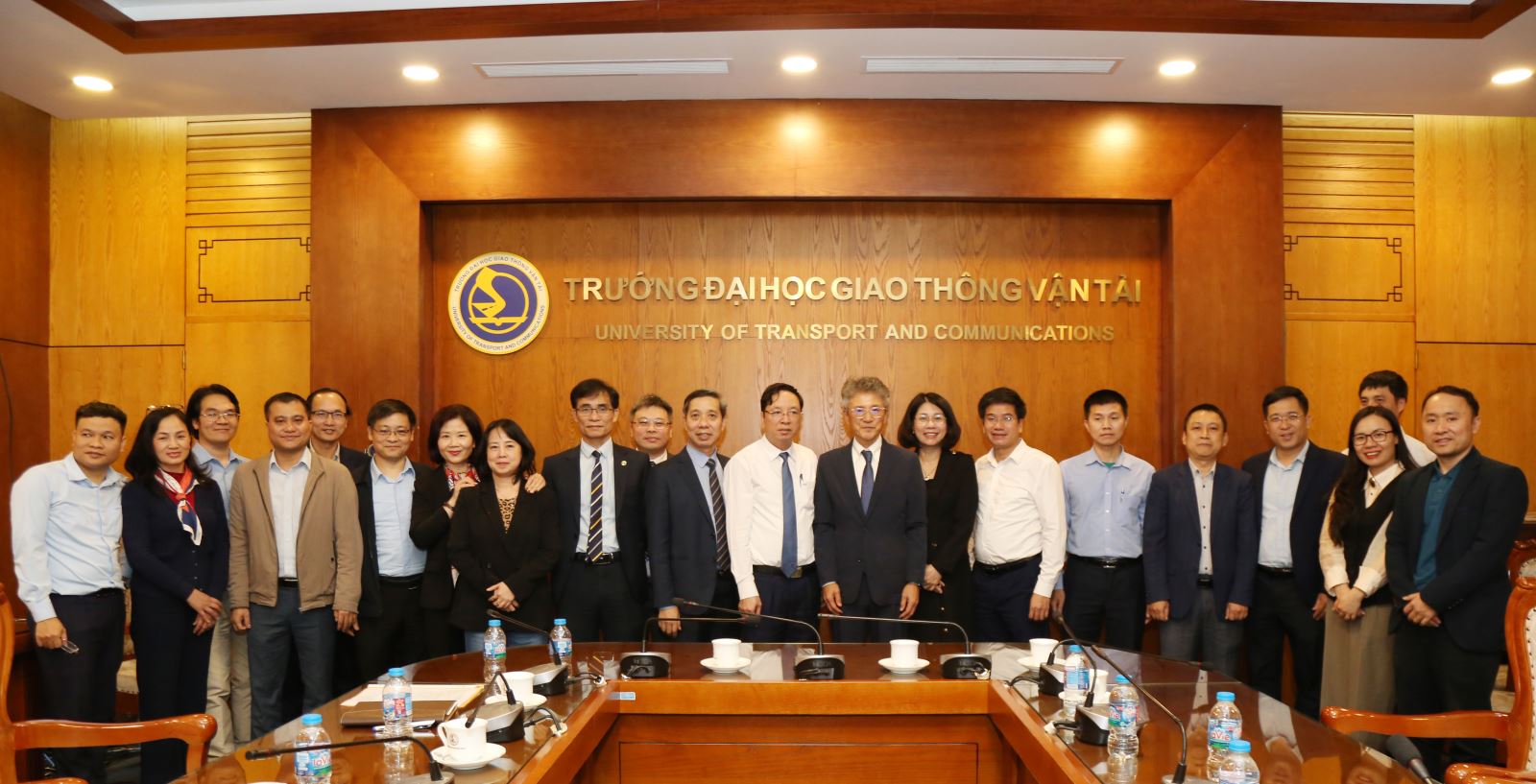
Delegates pose for a commemorative photo with Professor Akimasa Fujiwara
On the afternoon of March 10, 2026, the University of Transport and Communications (UTC) hosted a seminar and working session with Professor Akimasa Fujiwara, President of the Eastern Asia Society for Transportation Studies (EASTS), Vice Dean of the Graduate School of Advanced Science and Engineering, and former Executive Vice President of Hiroshima University, Japan. Professor Fujiwara is a distinguished scholar in the fields of transportation and international development. He has extensive experience in university governance, international collaboration, and the development of academic environments that attract leading international scholars and researchers. Since February 2026, Professor Fujiwara has been working at UTC under the University's International Visiting Scholars and Scientists Program, an initiative designed to attract outstanding international experts and researchers to support the University's academic and research development.
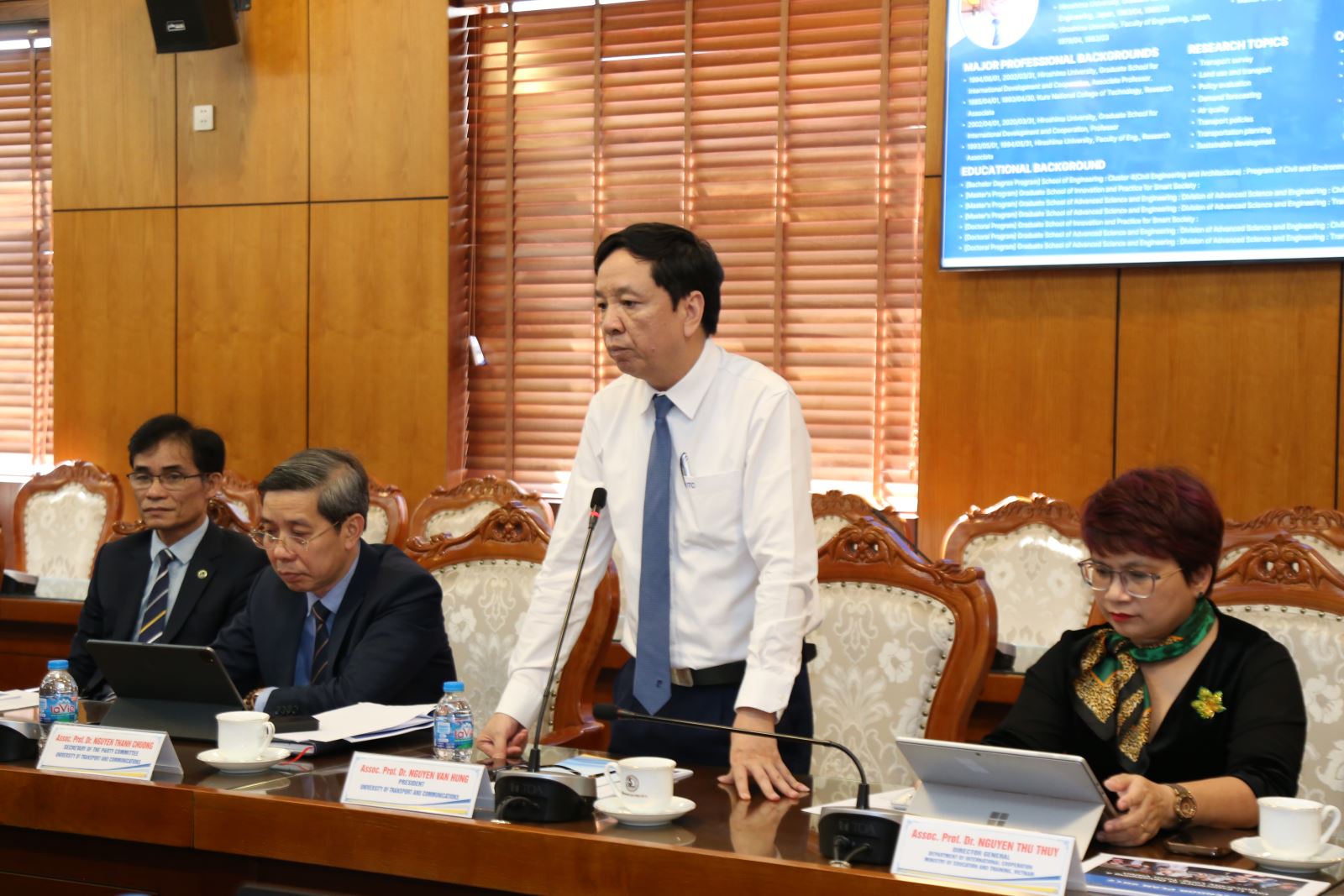
Associate Professor Dr. Nguyen Van Hung, President of the University, delivers his opening remarks
In his remarks at the seminar, Associate Professor Dr. Nguyen Van Hung, President of the University, expressed his sincere appreciation for the guidance and support provided by the Ministry of Education and Training (MOET) in the University's development. He also thanked Professor Akimasa Fujiwara for his willingness to support the University in several key areas, including the establishment of strong research groups, the supervision of doctoral candidates, the professional development of academic staff, and the sharing of valuable experience in university governance and strategic vision aimed at enhancing the University's academic standing and international rankings. Professor Hung also highlighted Professor Fujiwara's expertise in Intelligent Transportation Systems (ITS) and noted that his contributions would be particularly valuable in advancing research on intelligent transportation as a foundation for the development of smart cities—an area in which Professor Fujiwara has made significant academic achievements.
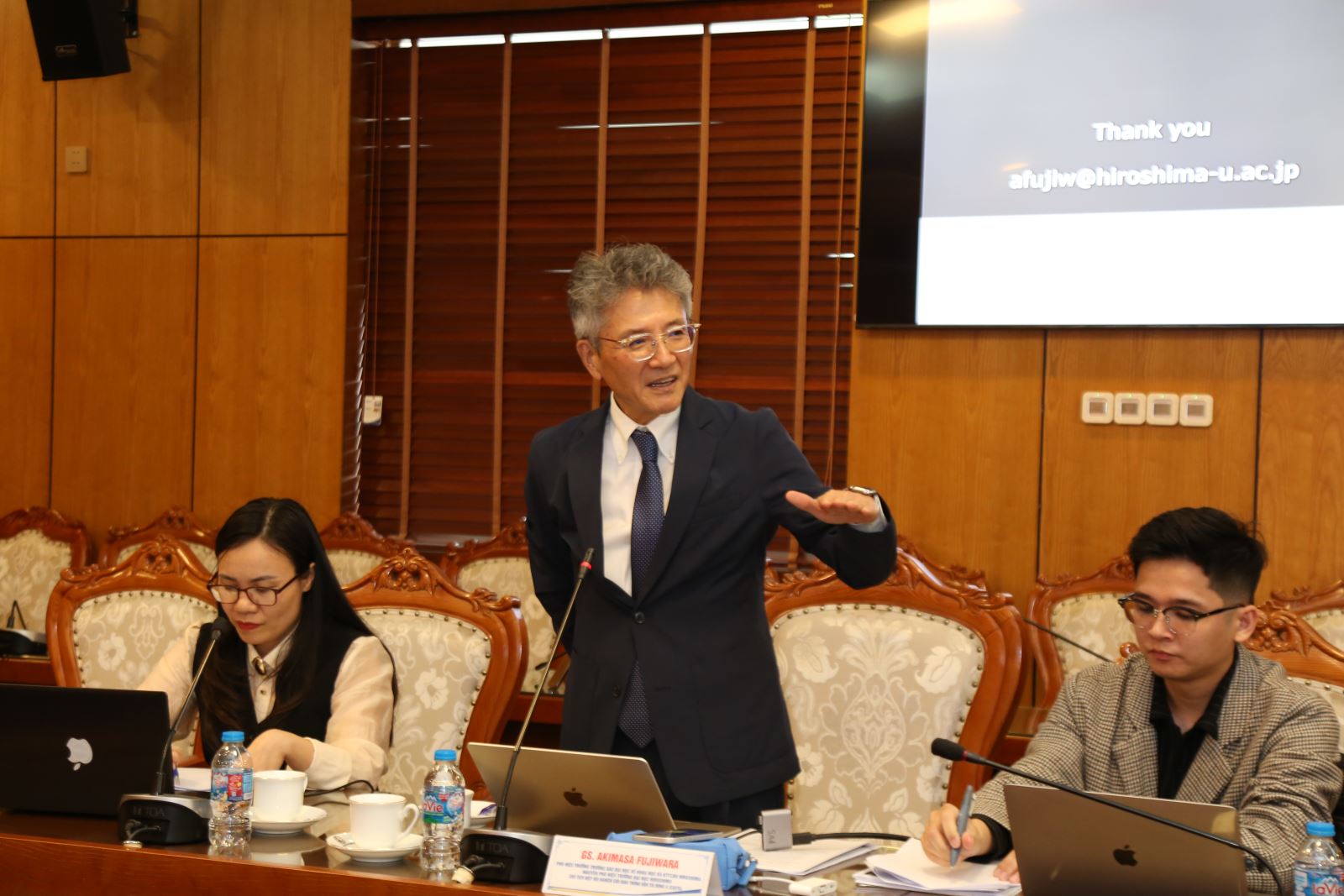
Professor Akimasa Fujiwara delivers his presentation at the seminar
During the seminar, Professor Akimasa Fujiwara shared valuable experiences from Hiroshima University, focusing on three key areas.
First, strategies for enhancing research publications. Professor Fujiwara explained that Hiroshima University has shifted its focus from increasing the number of publications to improving their quality, with particular emphasis on papers published in Q1 journals and other leading discipline-specific journals. Research evaluation and incentive mechanisms are closely aligned with the academic quality and scientific impact of publications rather than publication volume alone.
Second, Hiroshima University's long-term vision of becoming a world-class university. The University's mission is defined as "Science for Sustainable Development," with its development strategy built upon three core pillars: research, education, and societal contribution. Hiroshima University aims to become one of the Top 100 universities worldwide while fostering an academic environment that empowers faculty members to pursue excellence and realize their aspirations in both teaching and research.
Third, reforming the appointment and evaluation system for academic staff. Professor Fujiwara emphasized that "the University's development is built upon the collective achievements of its faculty members." To support this vision, Hiroshima University has introduced a comprehensive performance evaluation framework, including the Academic Key Performance Indicators (AKPI) for research and the Balanced Key Performance Indicators (BKPI) for education. These transparent evaluation systems are designed to recognize academic excellence, encourage faculty development, and promote meaningful contributions to the University's overall growth.
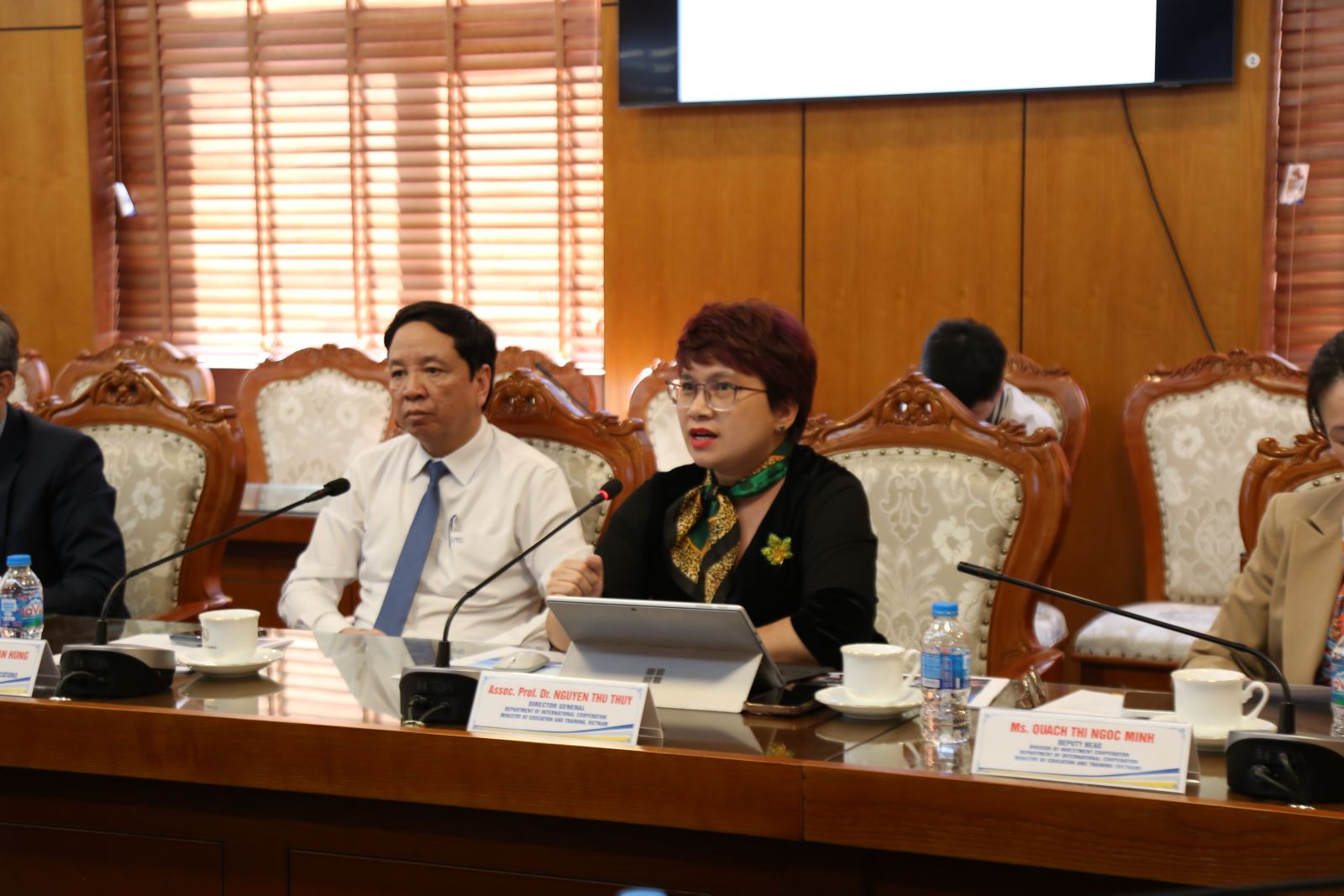
Associate Professor Dr. Nguyen Thu Thuy, Director General of the Department of International Cooperation, Ministry of Education and Training, delivers her remarks
During the discussion session, Associate Professor Dr. Nguyen Thu Thuy, Director General of the Department of International Cooperation, Ministry of Education and Training (MOET), together with the University's leadership and representatives of its academic and administrative units, raised a number of questions concerning the challenges and approaches adopted by Hiroshima University in developing and implementing its long-term strategic vision.
The discussion focused on a range of issues, including policies for attracting and retaining talented academics, fostering a dynamic research environment, promoting international collaboration, mobilizing financial resources to support university development, enhancing the quality and international visibility of scientific journals, and improving institutional performance in global university rankings.
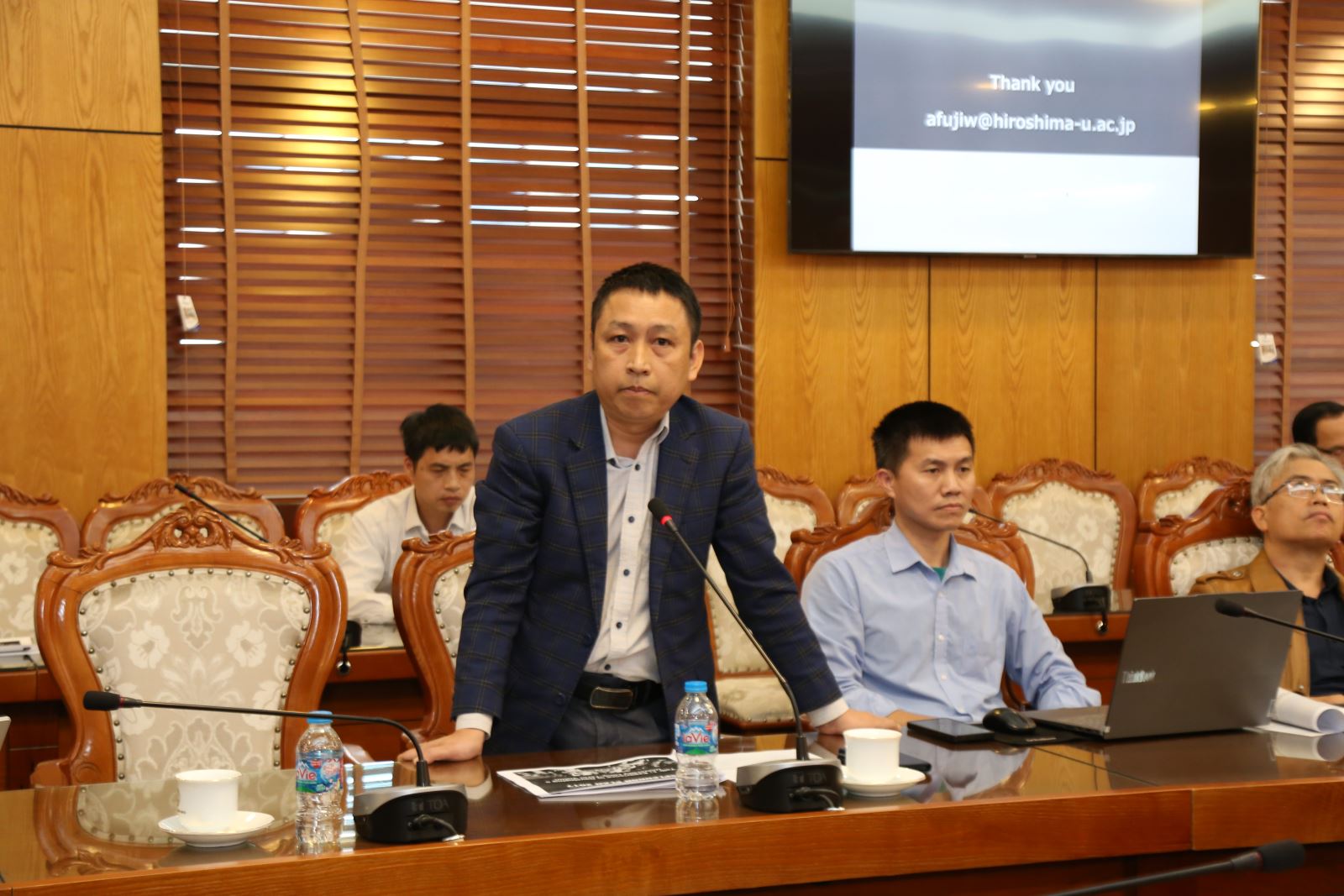
Assoc. Prof. Dr. Tran Ngoc Hien – Dean of Faculty of Mechanical Engineering delivers his remarks.
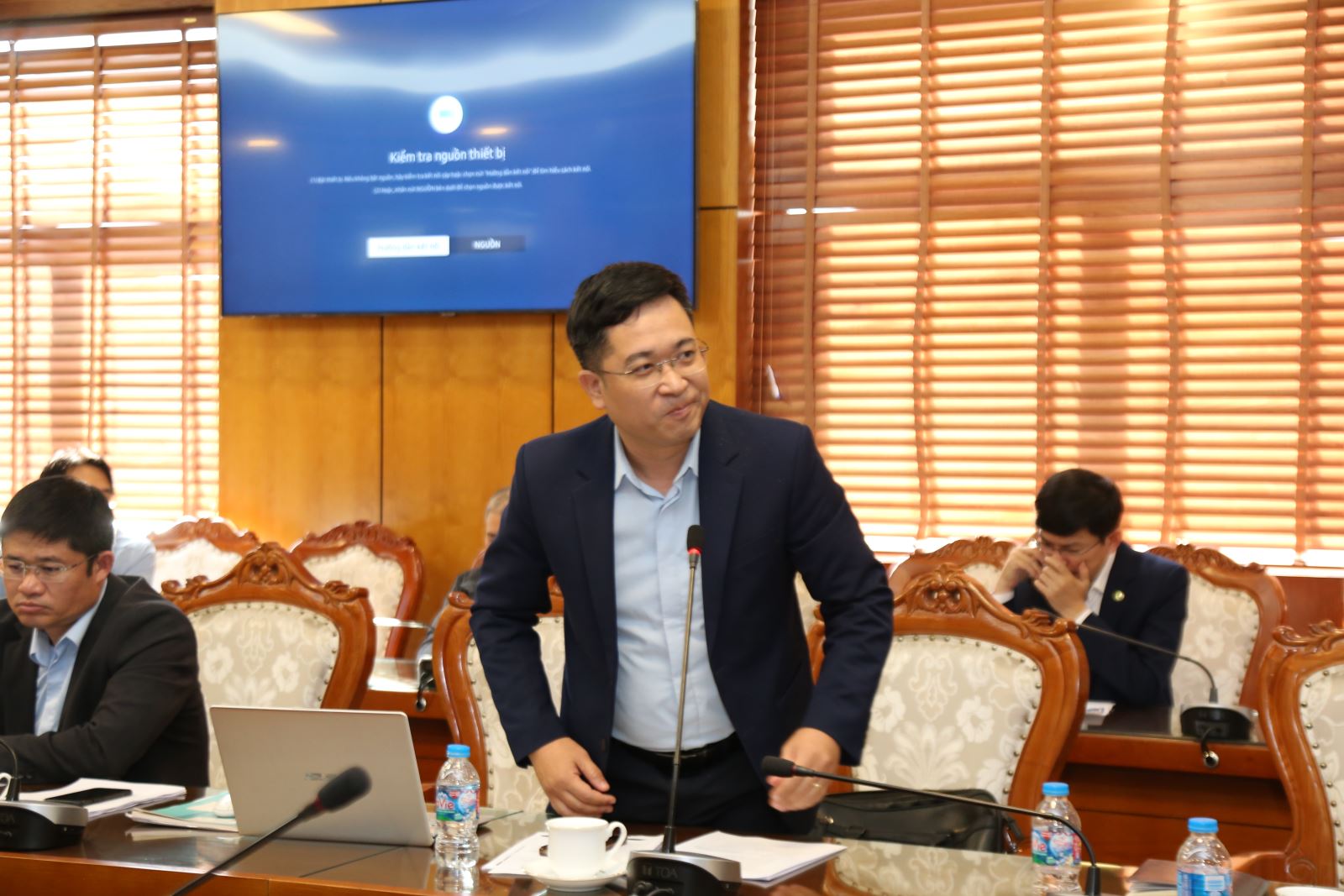
Dr. Mai Nam Phong – Director of Student Affairs Department delivers his remarks.
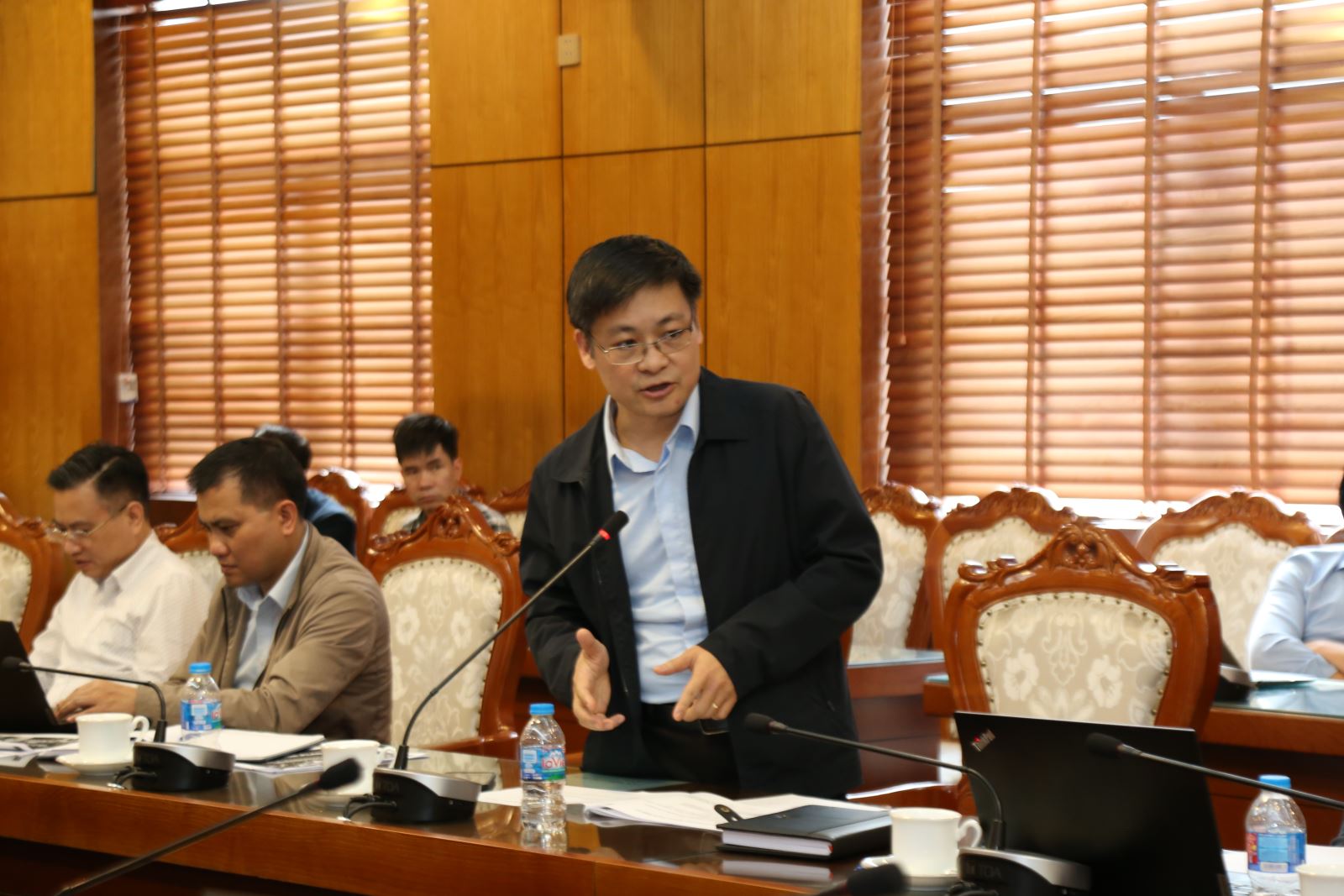
Assoc. Prof. Dr. Nguyen Duy Tien – Director of Science and Technology Department delivers his remarks.
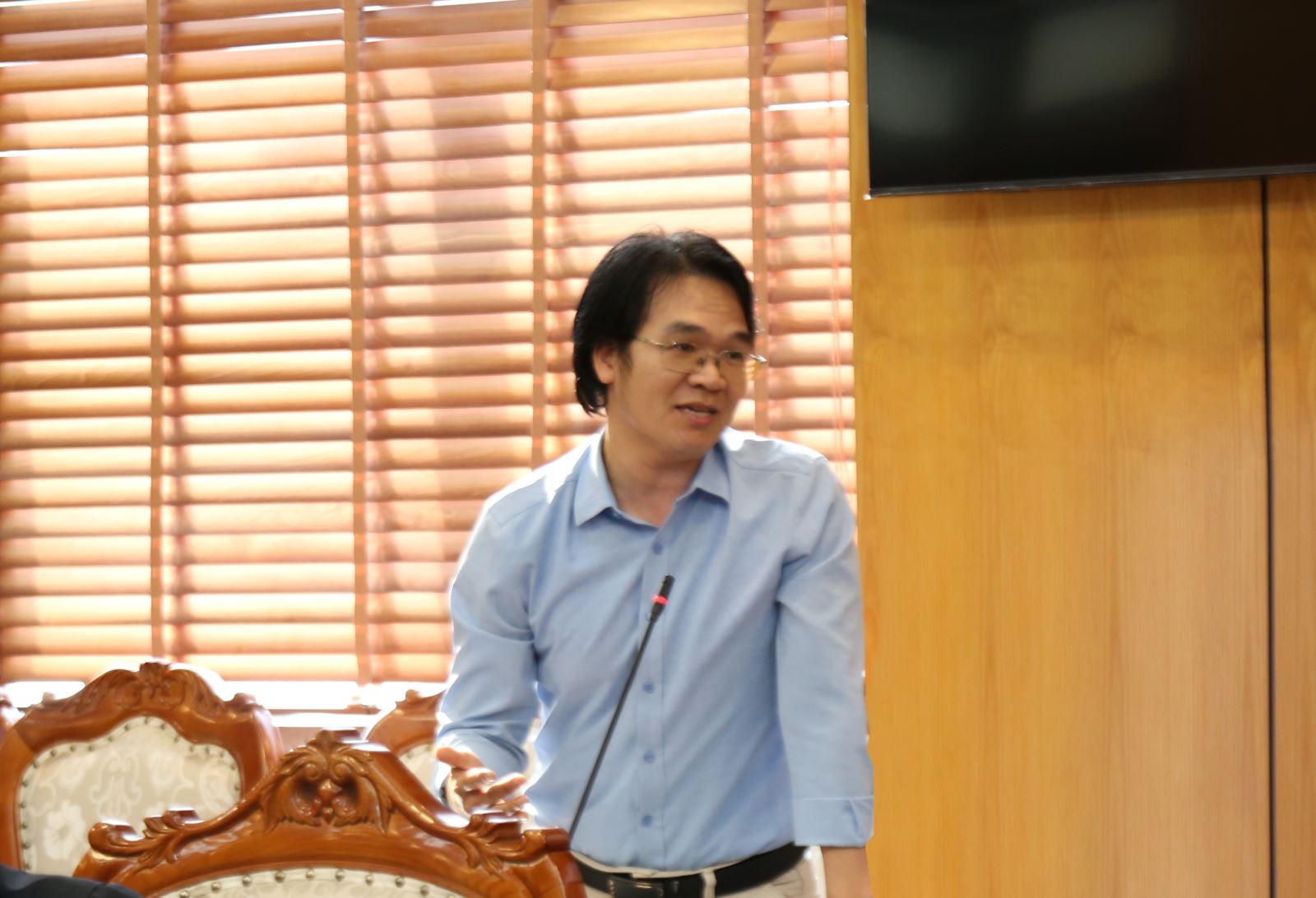
Assoc. Prof. Dr. Nguyen Cao Y – Vice Dean of Faculty of Transport-Economics delivers his remarks.
.jpg)
Assoc. Prof. Dr. Nguyen Thi Tuyet Trinh – Dean of Faculty of International Education delivers her remarks.
The discussions at the seminar were also closely aligned with Vietnam's broader national development agenda for the coming decades. General Secretary To Lam, Head of the Steering Committee for the Review of 100 Years of the Communist Party of Vietnam's Leadership of the Vietnamese Revolution (1930–2030), has emphasized the importance of formulating a strategic vision for the country's development over the next century (2030–2130), in which science, technology, education, and high-quality human resources are identified as fundamental drivers of sustainable national growth.
In the higher education sector, Acting Minister of Education and Training Associate Professor Dr. Hoang Minh Son has likewise underscored the spirit of Resolution No. 57, which identifies the development of a highly skilled science and technology workforce and the promotion of science, technology, and innovation as two key national priorities. According to the Acting Minister, the contribution of higher education institutions should not be measured solely by the number of published papers or annual growth in research output. Instead, scientific research and technological innovation must generate tangible value for the economy through research outcomes that can be transferred and applied in practice, while addressing the country's pressing socio-economic challenges.
In line with these national priorities, the University of Transport and Communications (UTC) is currently reviewing and updating its Development Strategy through 2030 and beyond, with the goal of transforming the University into an autonomous, smart, multidisciplinary, and research-oriented institution with strong international integration.
As part of this strategy, the University has launched an initiative to invite more than 60 international scholars and experts to engage in teaching, research, and academic collaboration. In the case of Professor Akimasa Fujiwara, the University hopes that his involvement will extend beyond sharing academic expertise and supporting the development of high-quality research communities. It also looks forward to expanding collaboration through guest lectures, co-supervision of doctoral candidates, and strategic consultation on enhancing the University's scientific journals, with the long-term objective of achieving Scopus indexation.
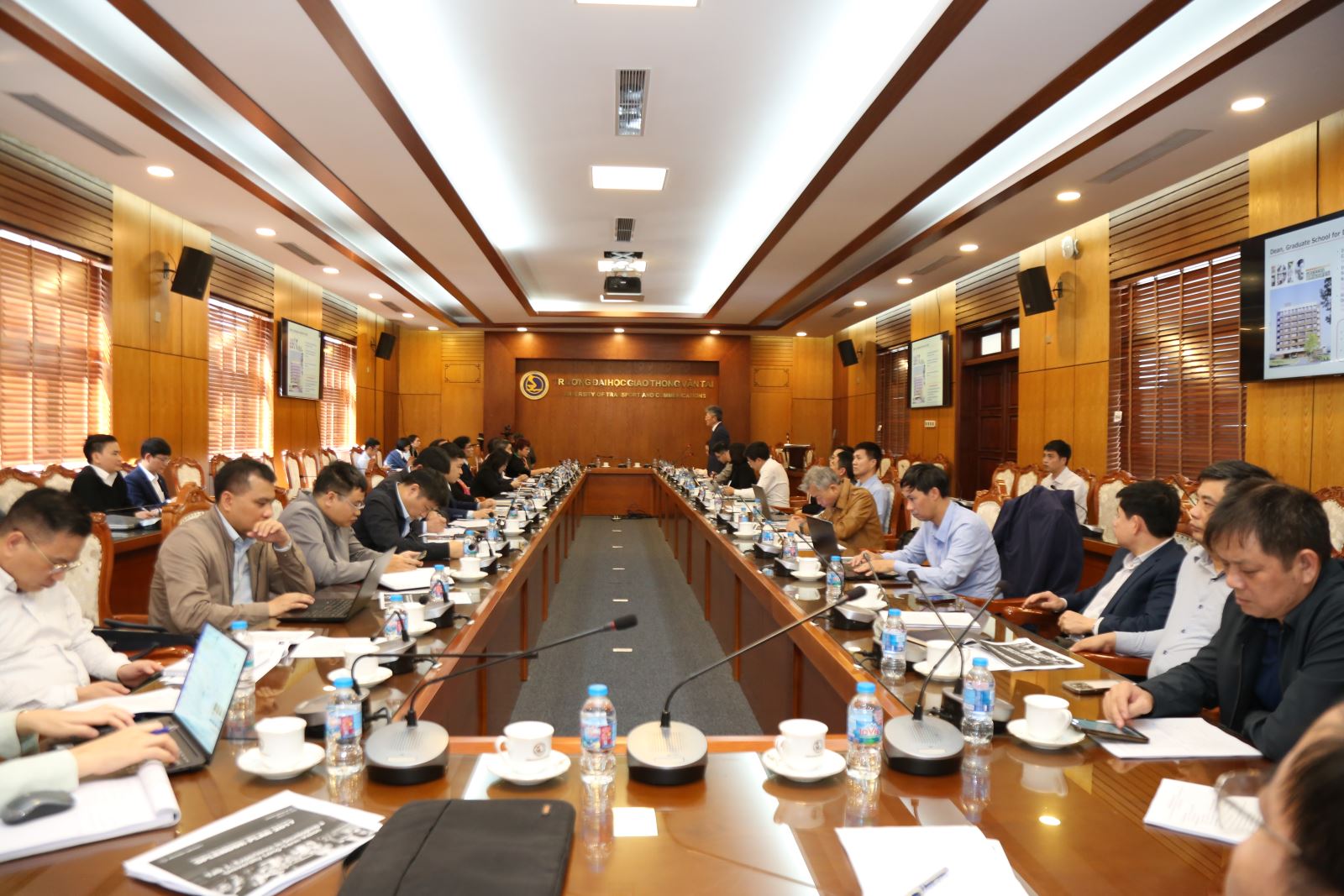
Overview of the seminar
The seminar provided valuable insights and practical recommendations for the University's ongoing development in an era of deepening international integration. It also created new opportunities for collaboration between the University of Transport and Communications and leading international scholars and higher education institutions, further strengthening the University's commitment to academic excellence, research innovation, and global engagement.
Related Articles
University of Transport and Communications takes the lead in Training Human Resources for the Development of National Strategic Railway Technologies in High-Speed Rail and Urban Rail Transit
DetailPresident of the University of Transport and Communications attends Vietnam–China Forum on Higher Education, Science and Technology, and Innovation Cooperation
DetailUniversity of Transport and Communications holds working session with China Railway Signal & Communication Corporation
Detail