
Technical Seminar on “Porous Asphalt Pavements for Highway Projects in Vietnam”
On July 21, the Faculty of Civil Engineering of the University of Transport and Communications organized a technical seminar entitled “Porous Asphalt Pavements for Highway Projects in Vietnam.”
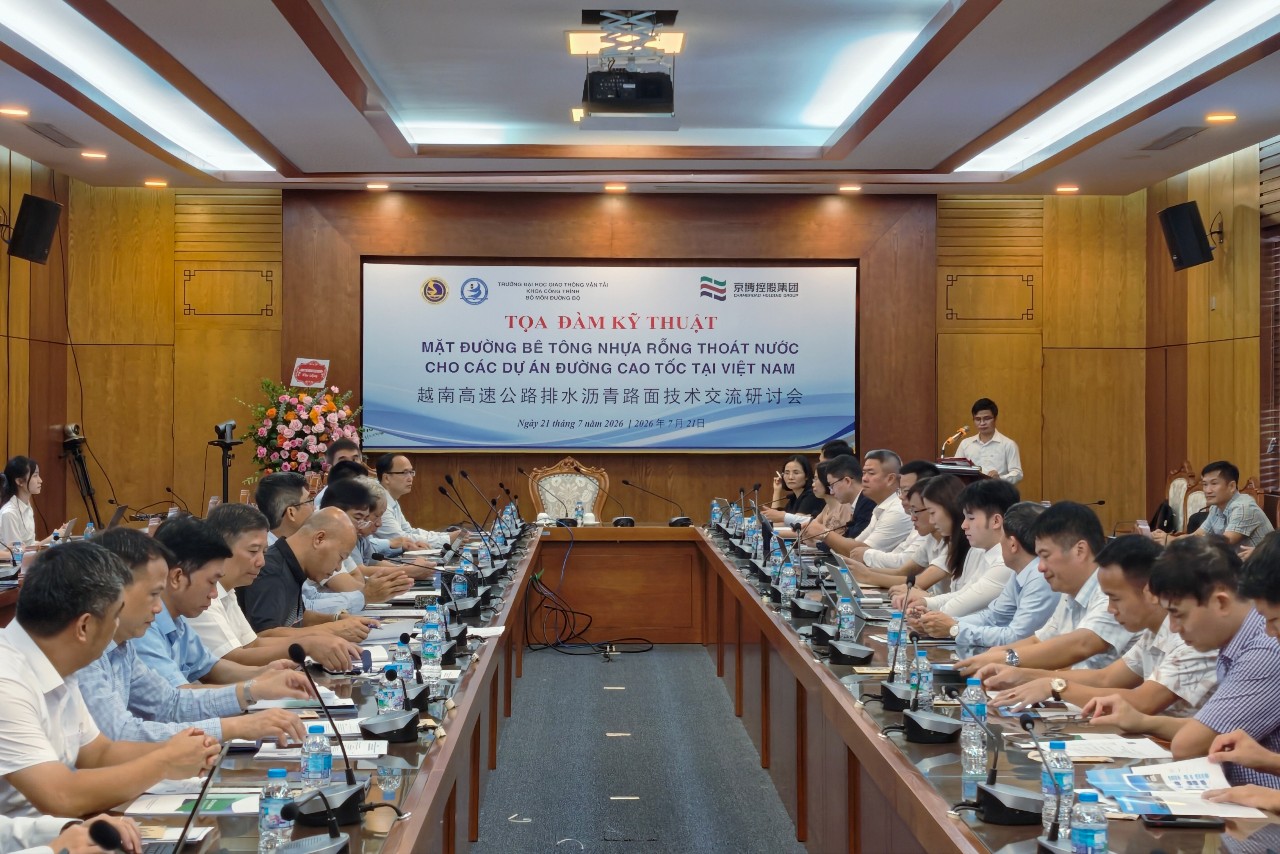
The seminar brought together experts, scientists, lecturers, businesses, and organizations working in the field of transport infrastructure construction. (Photo: Journal of Construction)
The seminar brought together experts, scientists, lecturers, representatives from businesses, and organizations working in the field of transport infrastructure construction. The program focused on discussions on the current state of highway pavement texturing technologies in Vietnam; research and application experience with porous asphalt pavements in China; solutions for using limestone aggregates; and the characteristics of modified asphalt binders used in porous asphalt concrete.
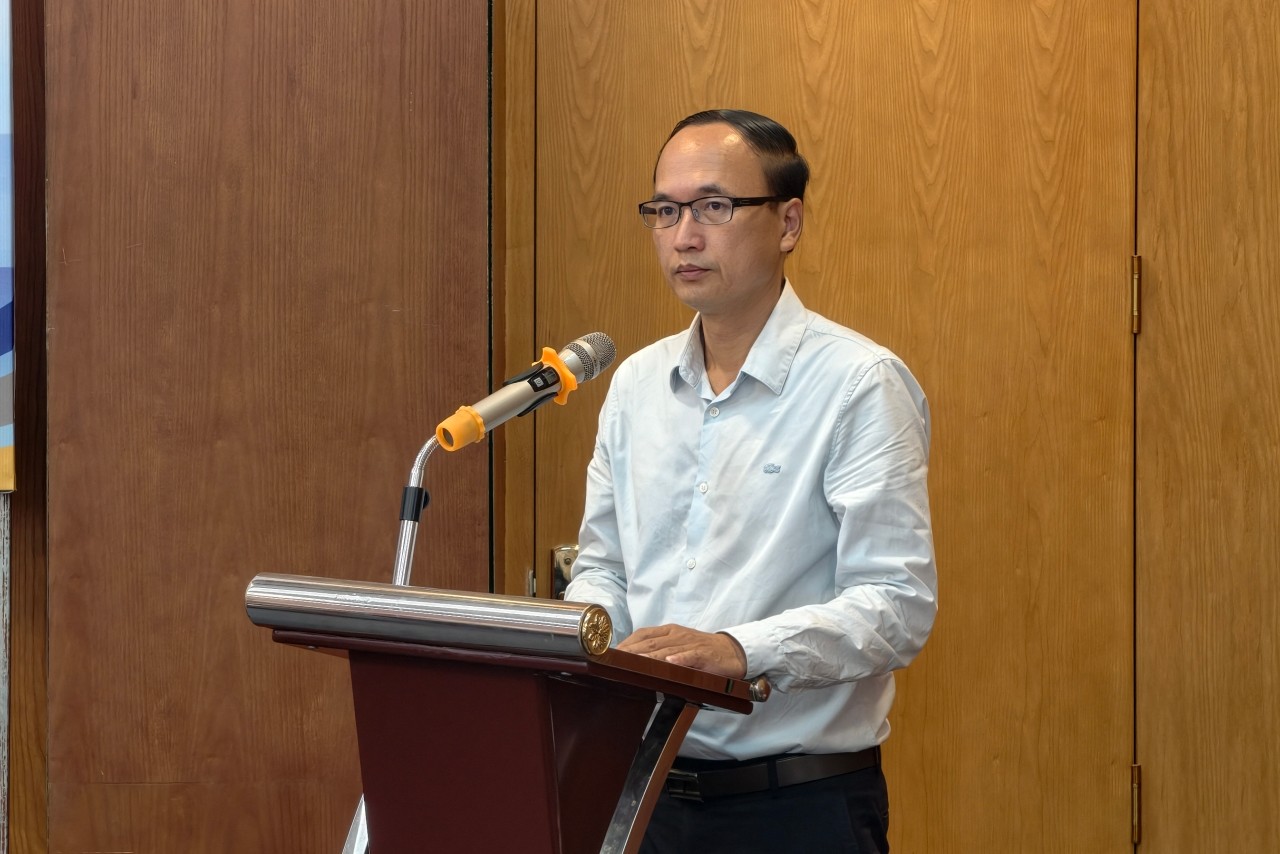
Prof. Dr. Bui Tien Thanh, Dean of the Faculty of Civil Engineering, delivers the opening remarks at the seminar. (Photo: Journal of Construction)
In his opening remarks, Prof. Dr. Bui Tien Thanh, Dean of the Faculty of Civil Engineering, emphasized that the quality of a pavement is not simply measured by its load-bearing capacity; fundamentally, it lies in its ability to maintain adequate skid resistance and operational safety under continuous exposure to weather conditions and traffic loads. For large-scale expressway infrastructure projects, particularly the Phu Xuyen–Dai Co Viet section of the National Highway 1A expansion project, where the pavement width reaches up to 90 meters, effective surface water drainage is not merely a secondary consideration but a decisive factor in both pavement service life and traffic safety.
“When the paved area is extensive, the amount of rainwater accumulating on the surface can increase significantly if it is not drained rapidly. Hydroplaning can then pose a direct threat to vehicle safety. The application of porous asphalt concrete with effective drainage properties provides a fundamental solution to this challenge. However, increasing pavement porosity inevitably entails challenges in terms of structural durability, resistance to rutting, and binder aging under Vietnam’s hot and humid tropical climate,” Prof. Dr. Bui Tien Thanh emphasized.

Dr. Tran Thi Cam Ha, Department of Highway and Traffic Engineering, presents her paper at the seminar. (Photo: Viet Linh – VTV Online)
Presenting her paper at the seminar, Dr. Tran Thi Cam Ha of the Department of Highway and Traffic Engineering noted that pavement skid resistance is always a key factor on expressways, where traffic speeds typically range from 80 to 120 km/h. The risk of hydroplaning during rainfall makes it essential for pavement surfaces to achieve adequate strength, smoothness, durability, and appropriate and stable skid resistance throughout their service life. In Vietnam, the system of standards governing pavement surface texturing treatments is now relatively comprehensive. However, there remains a lack of clear guidance on selecting appropriate technologies based on climatic conditions, traffic volume, operating speed, and life-cycle economic efficiency. Currently applied surface texturing technologies include Novachip ultra-thin surfacing, VTO thin surfacing, and porous asphalt concrete (PAC), which have been used on expressways such as Phap Van–Cau Gie, Hanoi–Lao Cai, and Ninh Binh–Hai Phong (the section passing through Ninh Binh), among others. According to Dr. Cam Ha, porous asphalt concrete technology is a highly significant solution compared with conventional pavement surface texturing technologies. “The key priority for the coming period is to establish a scientific, modern, and Vietnam-specific system of criteria for the selection, acceptance, and management of skid resistance on expressway pavements,” Dr. Cam Ha emphasized.
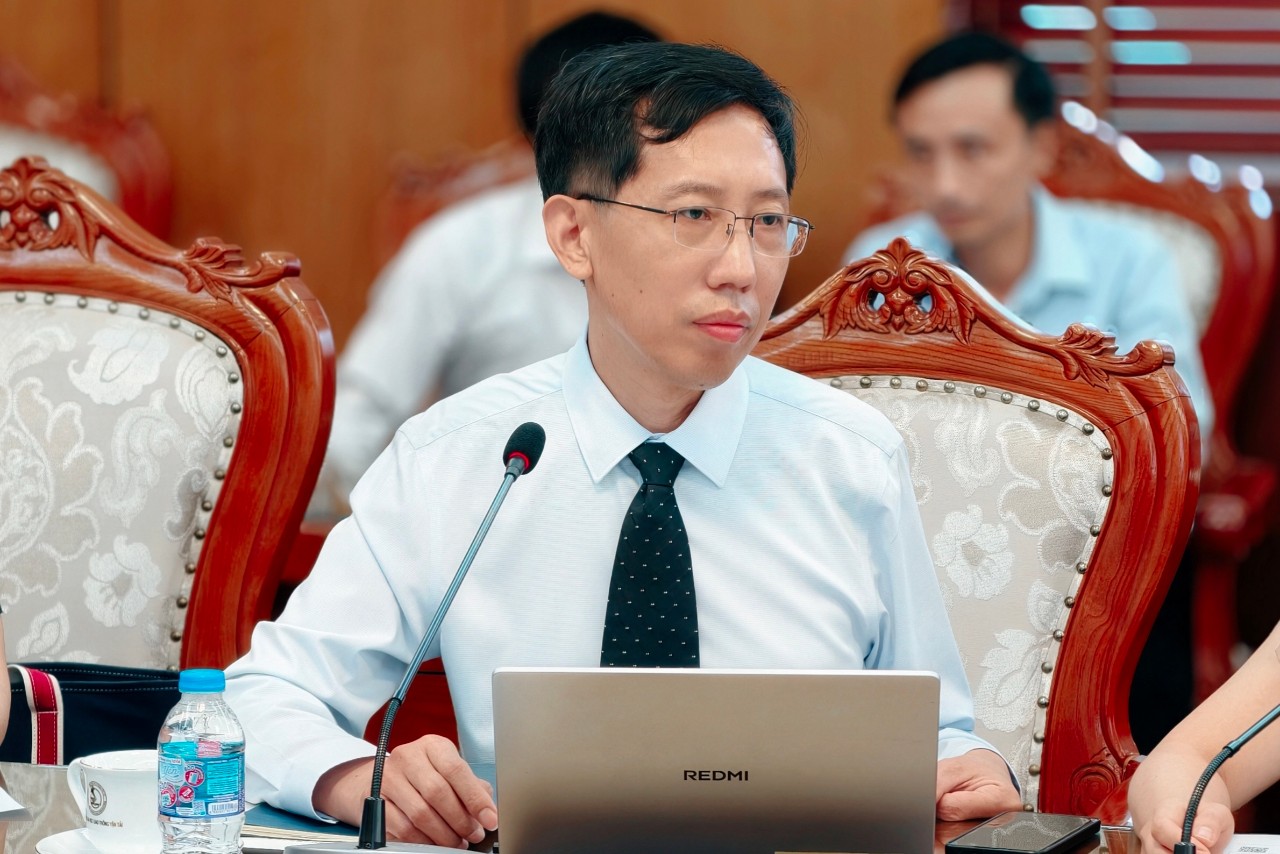
Prof. Cao Dongwei shares experience in the application of porous asphalt pavements in China. (Photo: Journal of Construction)
Sharing experience in the application of porous asphalt pavements in China, Prof. Cao Dongwei, Research Fellow and Deputy Chief Engineer at the Research Institute of Highway Science, Ministry of Transport of China, noted that China’s road network is undergoing extensive construction and rehabilitation, while society’s expectations for transportation have shifted from simply asking whether infrastructure is “sufficient or insufficient” to whether it is “good or not good.” Research and practical applications in China have demonstrated that porous asphalt pavements, incorporating four key functional features, can reduce the wet-weather accident rate by more than 40% and noise levels by 3–10 dB(A), thereby contributing to improvements in both pavement functionality and quality.
Over 20 years of research, development, and widespread application, more than ten scientific research projects and over forty field projects have progressively addressed key technological challenges, establishing porous asphalt pavement as a mature and reliable engineering technology. High-quality design and construction, together with strict quality control, are key to ensuring pavement performance. An integrated technological system covering pavement structure, drainage systems, key materials, construction technologies, and specialized testing and inspection methods has been researched and developed. Practical experience from the Yantong Expressway demonstrates a service life of more than 12 years under heavy traffic conditions.
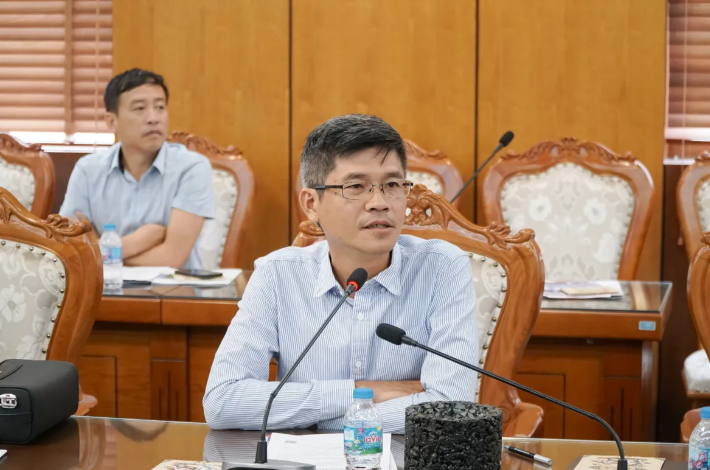
Dr. Nguyen Huynh Tan Tai, Head of R&D Department, BMT Investment and Construction Joint Stock Company, presents his paper at the seminar. (Photo: Viet Linh – VTV Online)
Presenting his paper at the seminar, Dr. Nguyen Huynh Tan Tai, Head of the R&D Department at BMT Investment and Construction Joint Stock Company, presented laboratory test results, observations from actual construction works, and preliminary field monitoring results for porous asphalt concrete mixtures using PMB-S modified asphalt binder. According to Dr. Tai, as Vietnam continues to expand its network of expressways, ring roads, major bridges, port access roads, industrial parks, and other transport routes with increasingly high traffic volumes and axle loads, the requirements for pavement performance can no longer be limited to conventional load-bearing capacity. Every new material solution needs to be comprehensively evaluated on a scientific basis and validated under actual operating conditions. For porous asphalt mixtures, in addition to drainage performance, strength, stability, rutting resistance, and long-term durability are critical factors determining their applicability in infrastructure projects. This perspective reflects an emerging trend in transport infrastructure development: material innovation is not simply aimed at creating a new product, but at addressing specific engineering challenges, such as improving pavement drainage, reducing splash and spray from vehicles traveling at high speeds, enhancing structural stability, mitigating the risk of wheel-path rutting, and improving operational safety.
“Bringing new material solutions into practical application requires the close collaboration and support of regulatory authorities, universities, research institutions, enterprises, consultants, and construction contractors. Material innovation is a continuous process. Every validated research finding, every monitored project, and every additional piece of field data contributes to strengthening the scientific foundation for applying solutions that are appropriate to Vietnam’s traffic and operating conditions,” Dr. Nguyen Huynh Tan Tai shared.
The discussions at the seminar highlighted that material innovation is not merely a matter of technology. It is part of a broader journey towards developing a transport infrastructure system that is safer, more sustainable, and better adapted to climate change, increasing traffic loads, and future development requirements.
ICDS
Related Articles
An international-standard training cooperation model between the University of Transport and Communications and Chisholm Institute (Australia)
DetailNearly 200 students from the First Cohort of the Distance Learning Program defend their Graduation Projects in Railway and High-Speed Railway Engineering
DetailUniversity of Transport and Communications proposes a strategic cooperation model at the Conference of Vietnam’s Seven Leading Engineering and Technology Universities
Detail