
Conference on the Review of Science and Technology Activities of the University of Transport and Communications for the 2022–2025 Period
On January 29, 2026, the University of Transport and Communications held a conference to review its science and technology (S&T) activities for the 2022–2025 period.
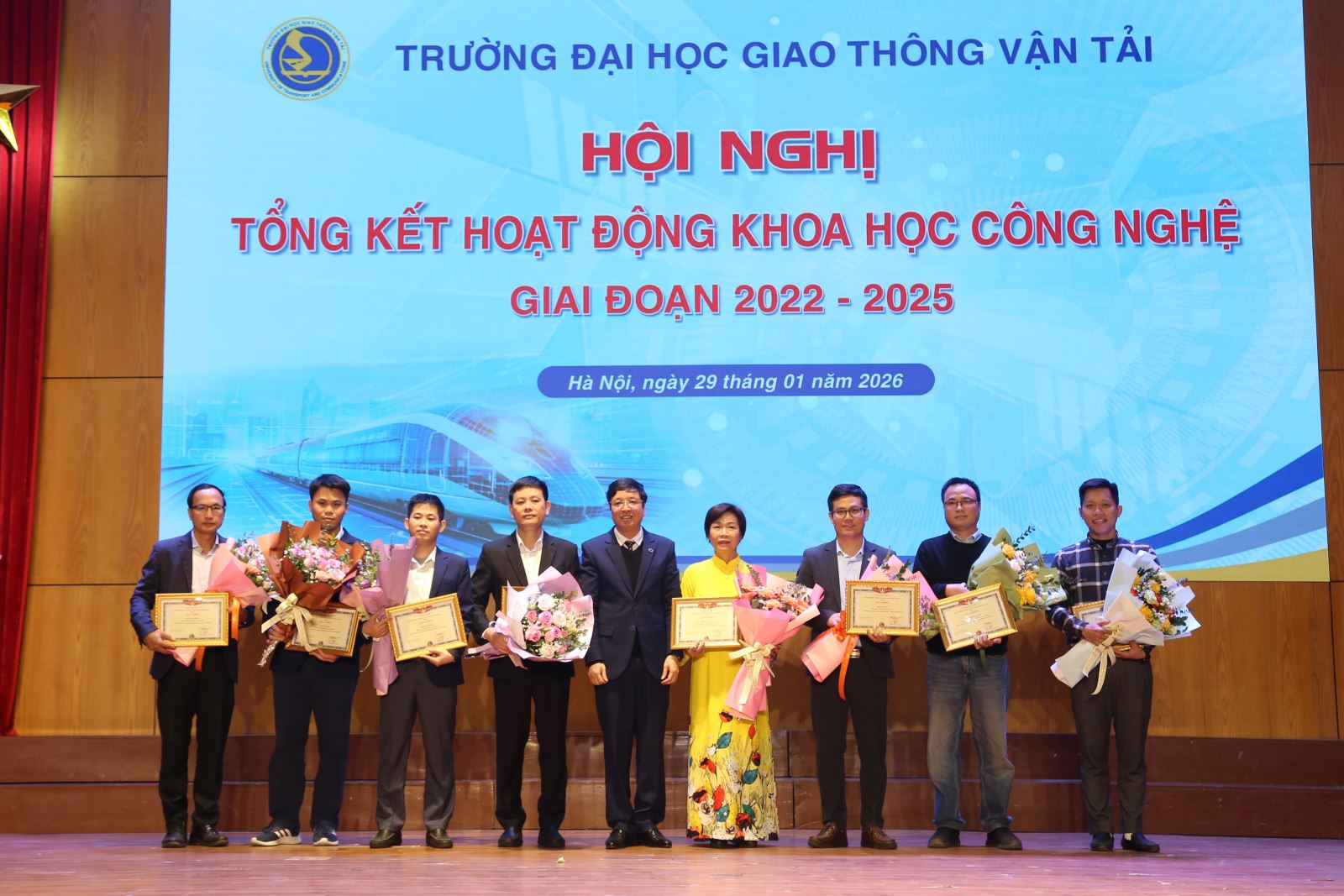
Assoc. Prof. Dr. Nguyen Van Hung, President of the University, presents certificates of merit to lecturers with outstanding achievements in scientific research during the 2022–2025 period.
The conference was attended by managers, universities, and enterprises that are partners of the University.
On behalf of the University of Transport and Communications, attendees included Assoc. Prof. Dr. Nguyen Thanh Chuong, Secretary of the Party Committee; Assoc. Prof. Dr. Nguyen Van Hung, President; Assoc. Prof. Dr. Le Hoai Duc, Vice President; along with leaders of relevant functional units, scientists, and research groups. The conference was also connected online with the University’s Campus in Ho Chi Minh City.
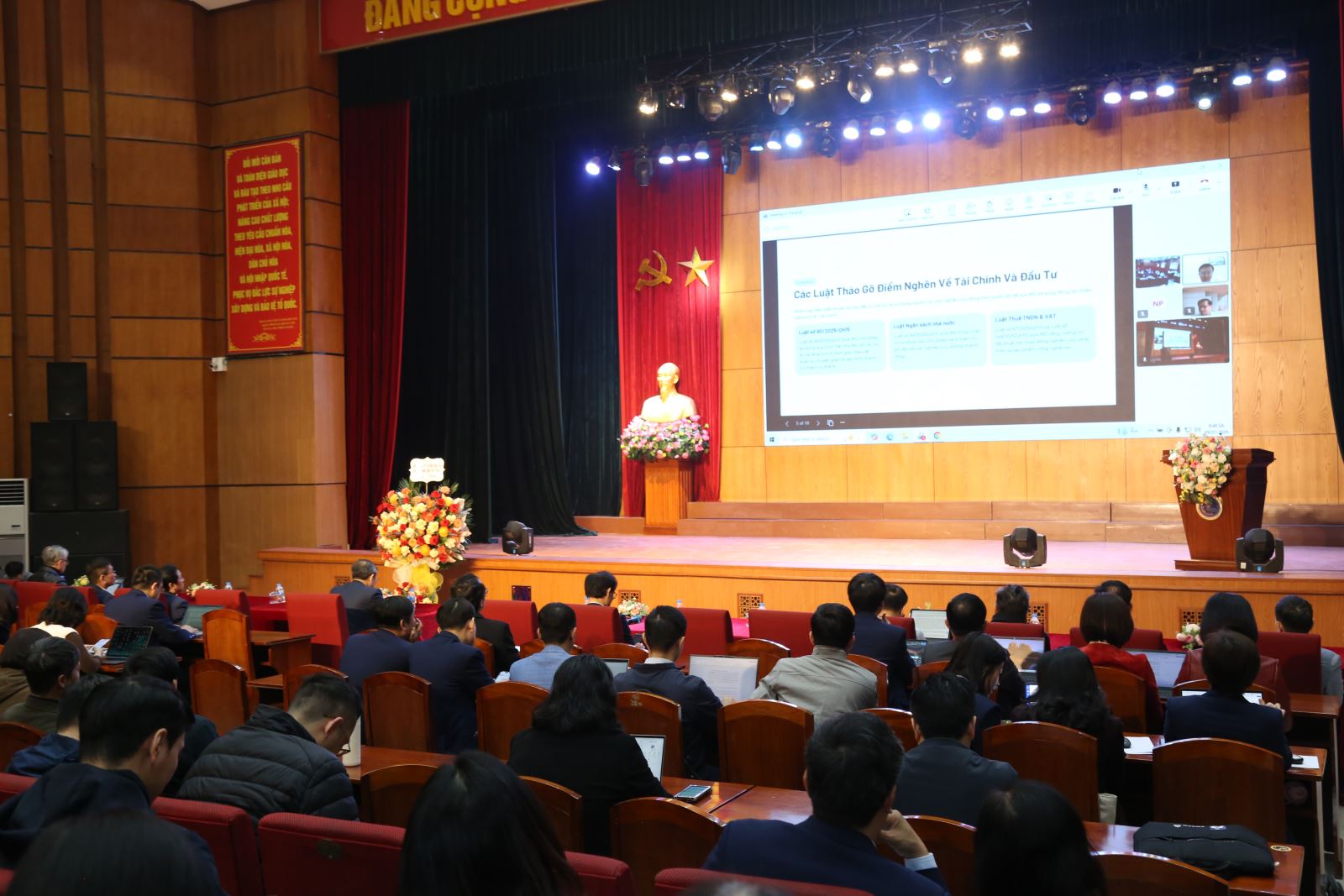
Overview of the Conference
During the 2022–2025 period, the science and technology (S&T) activities at the University of Transport and Communications (UTC) experienced many positive developments, contributing to enhancing the University’s position and reputation as one of the country’s leading S&T institutions. These activities have also helped improve the working conditions, living standards, and research environment for the University’s lecturers and scientists. The governance of science and technology has been innovated toward a modern approach, gradually undergoing digital transformation, increasing transparency, improving internal regulations, standardizing procedures, and moving toward data-driven management. International publications have continued to grow steadily; in 2025, the University achieved an average of 0.38 WoS/Scopus-indexed publications per lecturer, placing it among the higher-performing education and research institutions in the country in terms of publication output. Research groups have begun to take shape with long-term objectives, receiving increasing attention and investment from the University and achieving initial research outcomes. Two research groups have already presented preliminary research products to the Hanoi People’s Committee, and several studies have been commissioned by the City and included in the controlled pilot testing program within the 2026 S&T plan. The University’s proactive engagement in accessing and mobilizing scientific research resources has also increased, helping expand research capacity. In 2025, UTC was one of two pioneering universities entrusted by the Government and the Ministry of Education and Training to lead a key national S&T program implementing Resolution No. 57/NQ-TW. Through this initiative, the University has accessed research resources from the Ministry of Construction, the Ministry of Science and Technology, Hanoi City, international organizations, and the business sector.
Notably, in 2025, the University established several new laboratories, secured significant research funding, and signed multiple technology transfer contracts with enterprises. The “extended triple-helix cooperation model” (linking universities, government, and enterprises) has continued to be strengthened, gradually forming an innovation ecosystem within the University. Cooperation with enterprises within the network of Centers of Excellence in Industry 4.0 technologies for advanced and intelligent transport infrastructure, led by UTC, has begun to produce substantive results. The income of staff and lecturers actively engaged in S&T activities has improved. Some lecturers and scientists have secured stable incomes commensurate with their contributions to science and technology. Many experts and scientists from UTC have also been invited to participate in advisory councils of the National Assembly, the Government, the Ministry of Construction, and the authorities of Hanoi and Ho Chi Minh City, making meaningful contributions to national development, particularly in the field of transportation. The “80 Years of Science and Technology – Convergence, Innovation and Development” Exhibition was successfully organized, once again affirming the strong capacity and reputation of UTC’s scientific community. This demonstrates that the University’s scientists possess the expertise and potential to address major science and technology challenges facing the country in the new development era.
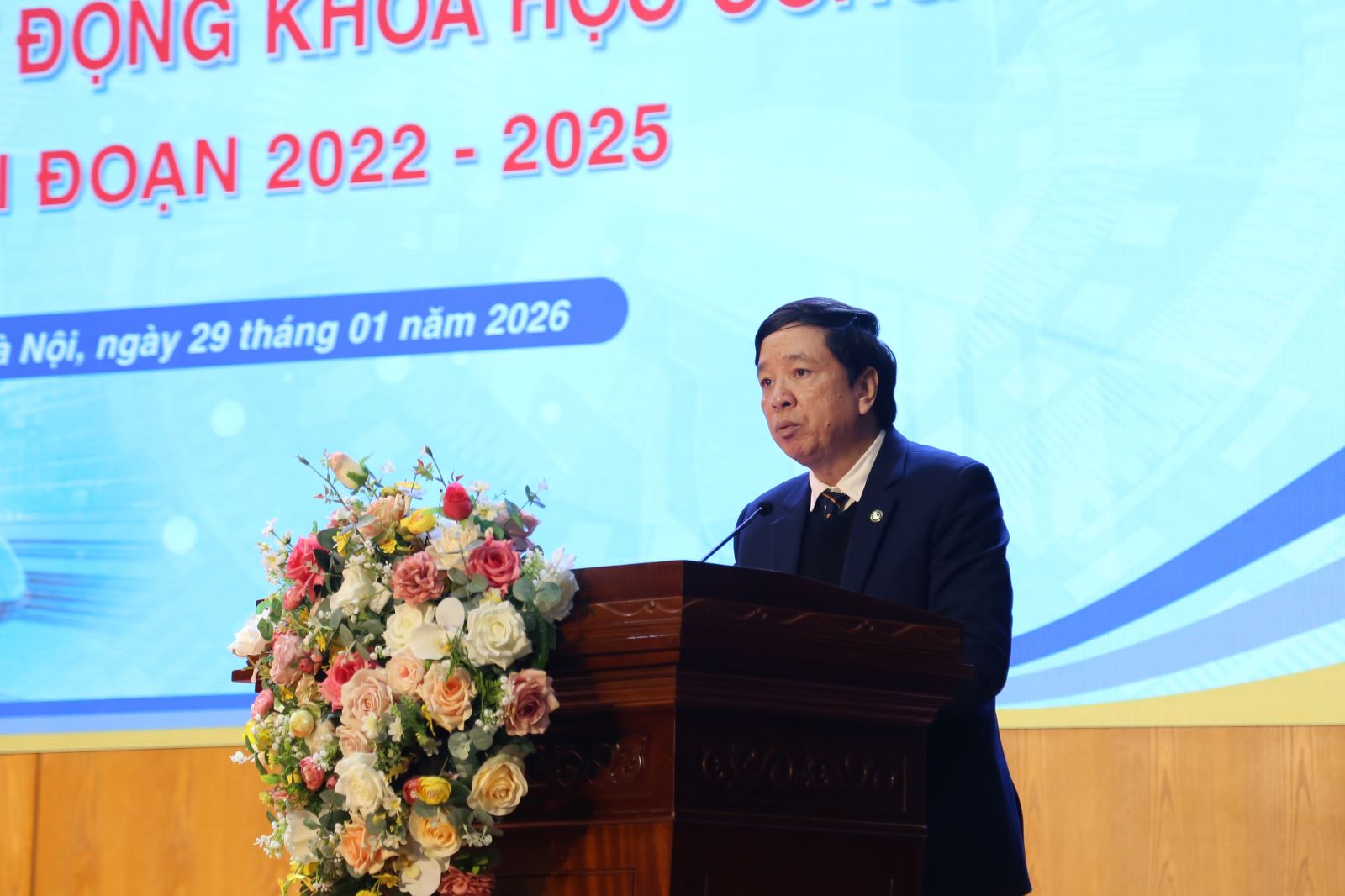
Assoc. Prof. Dr. Nguyen Van Hung, President of the University, delivers remarks
Speaking at the conference, Assoc. Prof. Dr. Nguyen Van Hung, President of the University, expressed his satisfaction with the achievements in science and technology (S&T) activities of the University of Transport and Communications during the 2022–2025 period. He affirmed that the University will continue to improve the governance of science and technology based on the orientation of clear objectives – clear outcomes – prioritizing practical and applicable products, particularly in key scientific and technological directions. At the same time, the University will promote the commercialization of S&T products in order to generate additional resources for research. In this spirit, the key priorities for the development of S&T activities at the University in the coming period include: continuing to effectively fulfill the University’s leading role in priority S&T fields in which it has strengths and which have received significant investment from the Government and enterprises, such as modern railway systems, smart cities and intelligent transportation, artificial intelligence, semiconductor technology, and sustainable development in transportation. The University will also continue to upgrade and further develop its innovation ecosystem, with the goal of gradually expanding it into a broader ecosystem serving the S&T community in the transportation sector. Key directions include investing in and improving research infrastructure, developing strong research groups, and effectively and transparently mobilizing S&T resources from the Government and enterprises under the extended triple-helix cooperation model, ensuring mutual benefits for all parties involved. Another important objective is to shorten the research and technology transfer cycle to a maximum of three years, thereby better responding to practical needs. In addition, the University will strengthen the linkage between science and technology, innovation, and education and training in order to enhance the quality of human resources in accordance with the spirit of Resolution No. 71/NQ-TW dated August 22, 2025 of the Politburo. The University will also accelerate digital transformation in governance, improve forecasting capacity, and clearly identify major S&T challenges for each period, stage, and field. This will provide a solid basis for preparing resources and implementing large-scale, high-quality research programs. At the same time, the University plans to establish a Science and Technology Market Information Portal of the University of Transport and Communications to bring its S&T products closer to society.
Assoc. Prof. Dr. Nguyen Van Hung also emphasized that policies on science and technology (S&T), innovation, and digital transformation (DX)—from Party resolutions to legal regulations—have effectively removed institutional bottlenecks, enabling science, technology, and innovation to take off. Issues that were previously regarded as “barriers” have largely been addressed. The governance mindset in S&T has shifted from management to facilitation, from ex-ante control to ex-post evaluation based on results, accepting scientific risks and allowing direct investment in products, rather than strictly following cost norms and expenditure limits as in previous S&T tasks. At the same time, research activities are increasingly required to be closely linked with market needs. These policy orientations have been clearly articulated in Resolution No. 57-NQ/TW of the Politburo and Resolution No. 71 of the Government on S&T, innovation, and digital transformation, which have now been translated into specific legal and regulatory frameworks. Intellectual property management is also shifting from protection to exploitation and commercialization, with faster and more convenient procedures and greater autonomy granted to institutions and scientists, enabling research results to be more effectively applied in practice. From this perspective, it can be said that the greatest bottleneck for the development of science and technology today is no longer the market or institutional mechanisms, but rather the pioneering spirit, readiness, and professionalism of the scientific community. It lies in the quality of human resources, the capacity for adaptation, the aspiration to master technologies, and especially the ability of S&T organizations to create practical products that benefit society. In other words, now that institutional constraints have been lifted and both the market and enterprises are actively involved, the responsibility of research organizations and scientists is to restructure research activities, enhance implementation capacity, and produce better results more rapidly to meet market demands.
These fundamental developments open up tremendous opportunities for science and technology (S&T) and innovation at the University of Transport and Communications to take off. At the same time, they also place us under intense competitive pressure among leading technical universities. Opportunities and foundations for the development of science and technology have now expanded to all organizations and individuals, including non-public S&T organizations. Even for a university with strong reputation and long-standing tradition, if we do not truly engage with full dedication and responsibility, we will not only miss the opportunity to unlock our S&T potential but also risk being left behind. More than ever, the spirit of “pioneering, quality, responsibility, and adaptability”—the core values affirmed by the University over more than 80 years of development—must be fully and proactively demonstrated in this new stage of development. Research must be closely linked with innovation, technology transfer, and digital transformation, and must generate real value.
In concluding his speech, Assoc. Prof. Dr. Nguyễn Văn Hùng expressed his confidence in the tradition of “Pioneering – Quality – Responsibility – Adaptability,” the core values long upheld by the staff, faculty members, students, and alumni of the University of Transport and Communications. The University’s 80-year history of integration, creativity, and development has demonstrated that the greater the challenges and the heavier the responsibilities, the more strongly the University’s pioneering and adaptive spirit is reaffirmed. The tasks and challenges facing science and technology in the new stage of development are indeed significant; however, with a spirit of unity, proactive engagement, and professionalism in all activities, science and technology at the University of Transport and Communications will achieve breakthroughs and make meaningful contributions to the country’s industrialization and modernization.
At the conference, many practically significant presentations were delivered by managers and scientists, including: An introduction to newly issued Government regulations on science, technology and innovation (STI) activities (Mr. Nguyen Ky – Deputy Director of the Ho Chi Minh City Department of Science and Technology); New intellectual property policies aimed at protecting and effectively exploiting the intellectual property rights of Vietnamese scientists (Mr. Nguyen Ngoc Chien – Legal Affairs and Policy Division, Intellectual Property Office of Vietnam, Ministry of Science and Technology); Policies for mobilizing resources to promote the practical application of scientific research, intellectual property, and technology transfer outputs (Assoc. Prof. Dr. Pham Tan Thi – Head of the Office of Science and Technology, Ho Chi Minh City University of Technology, Vietnam National University–Ho Chi Minh City); Demand for cooperation with the University of Transport and Communications in human resource development, research, and technology transfer (Mr. Tran Huy Tuan – Head of the Quality Management and R&D Department, Transport Engineering Design and Consultancy Corporation); Results and plans for cooperation with universities in human resource development, research, and technology transfer (Dr. Vu Ba Thao – Director of the FECON Institute of Research and Development, FECON Joint Stock Company); Achievements in science and technology activities during the 2022–2025 period, and development orientations and objectives for 2026–2030 (Assoc. Prof. Dr. Nguyen Duy Tien – Head of the Office of Science and Technology, University of Transport and Communications); and A presentation by a research group on establishing and operating research groups to develop science and technology products in the University’s key priority areas (Assoc. Prof. Dr. Vu Van Tan – University of Transport and Communications).
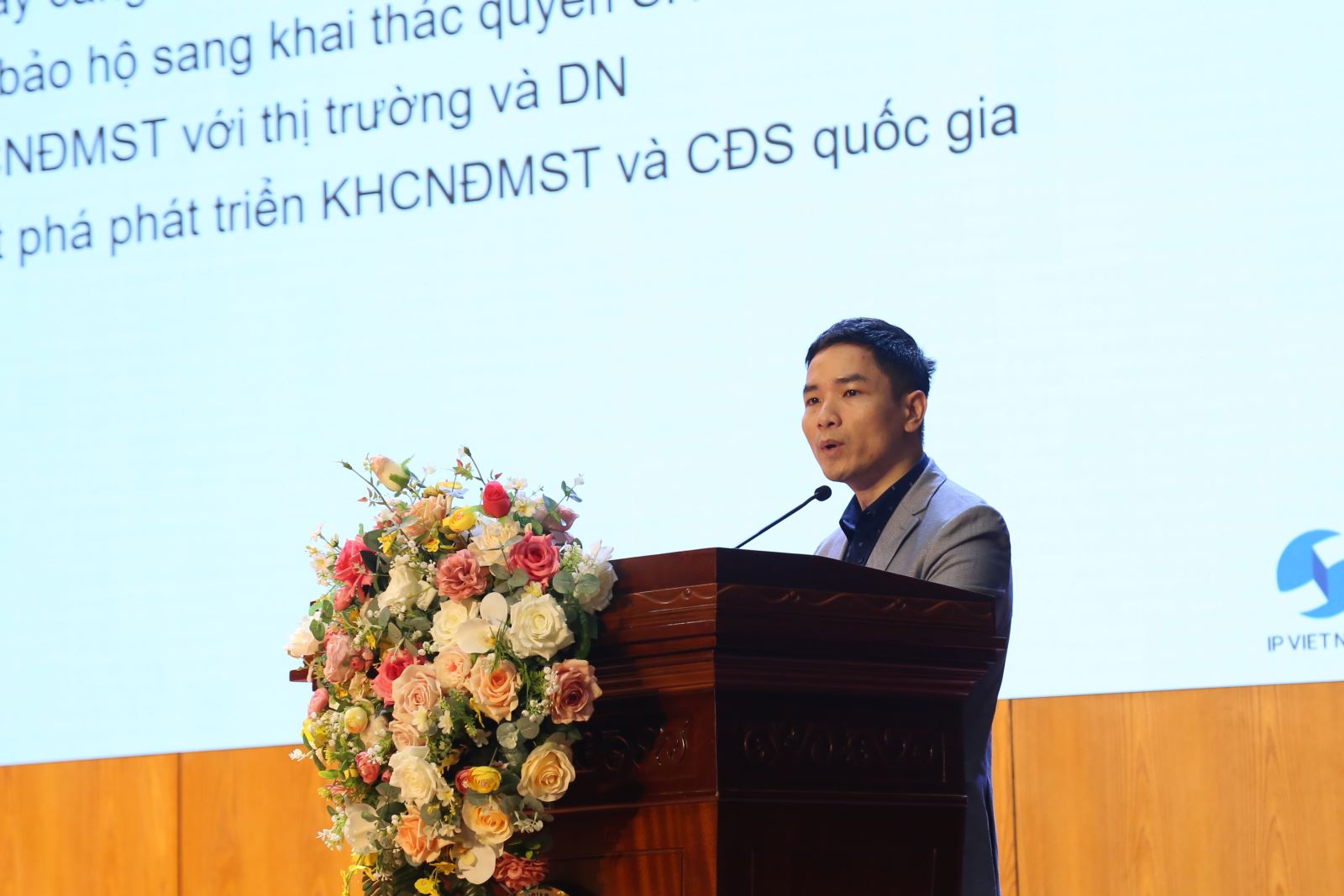
Mr. Nguyen Ngoc Chien from the Legal Affairs and Policy Division of the Intellectual Property Office of Vietnam, Ministry of Science and Technology, delivered a presentation entitled “New Intellectual Property Policies to Protect and Effectively Exploit the Intellectual Property Rights of Vietnamese Scientists.”
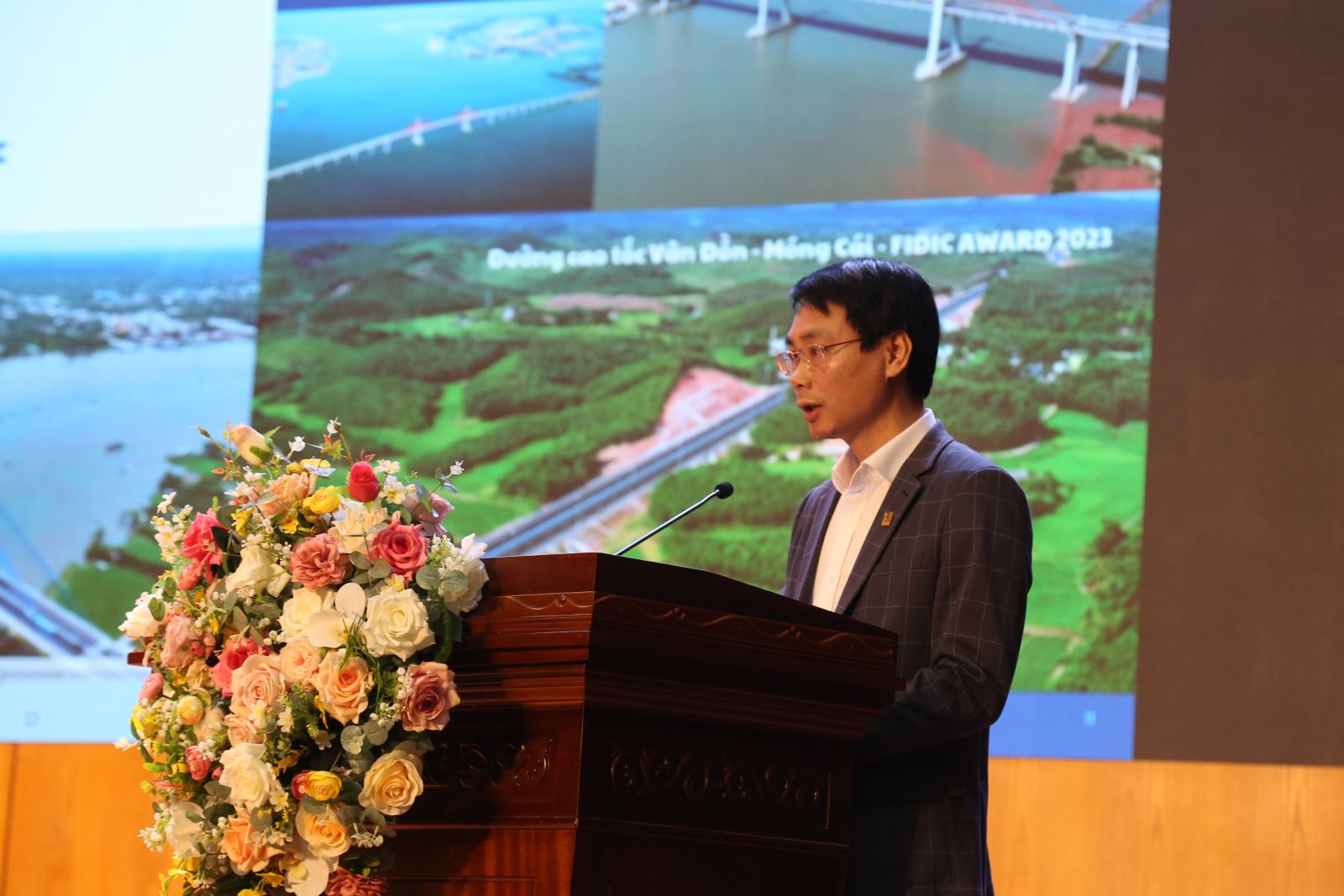
Mr. Tran Huy Tuan, Head of the Quality Management and Research & Development Department of the Transport Engineering Design and Consultancy Corporation, delivered a presentation entitled “The Demand for Cooperation with the University of Transport and Communications in Human Resource Development, Research, and Technology Transfer.”
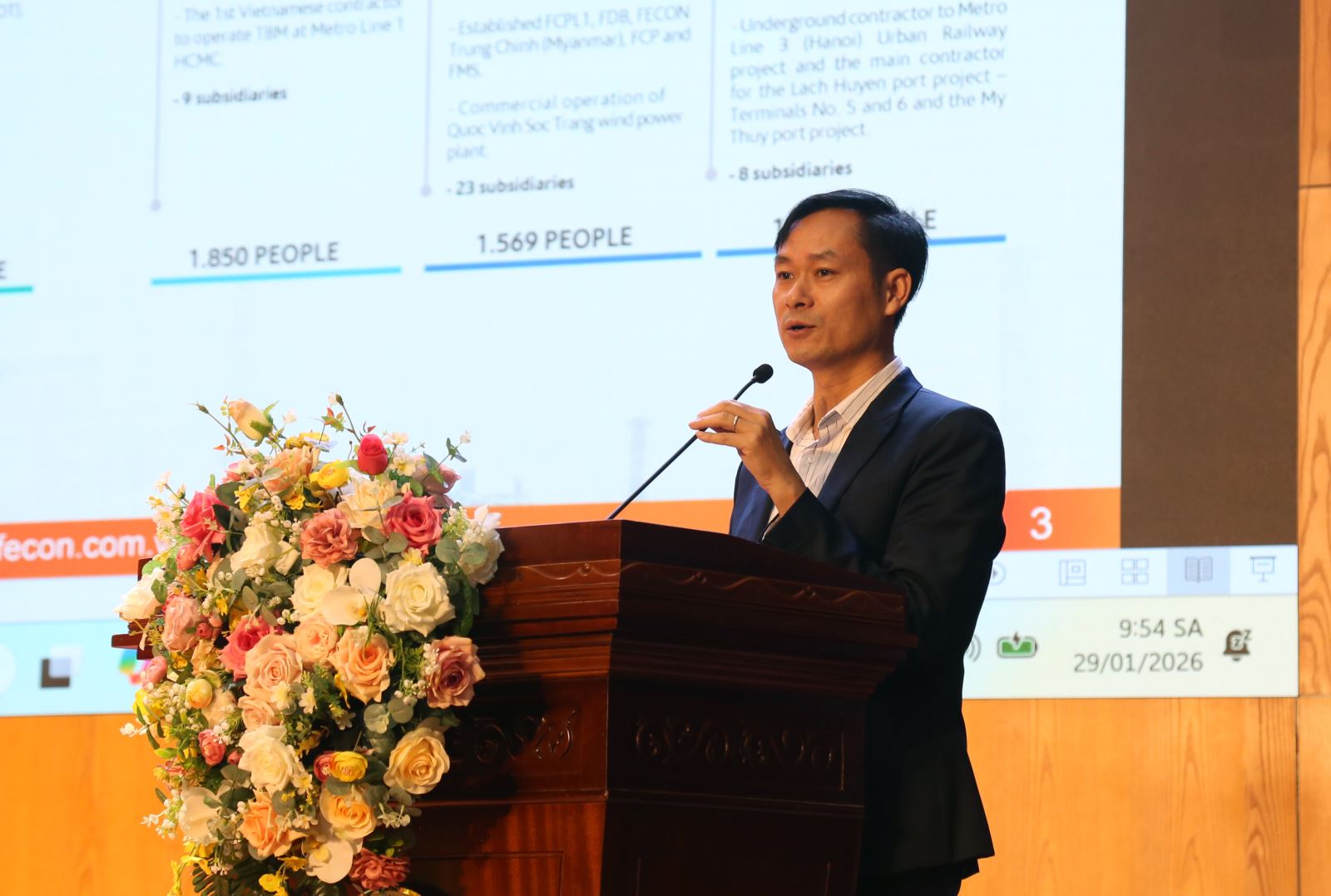
Dr. Vu Ba Thao, Director of the FECON Institute of Research and Development, FECON Joint Stock Company, delivered a presentation entitled “Results and Plans for Cooperation with Universities in Human Resource Development, Research, and Technology Transfer.”
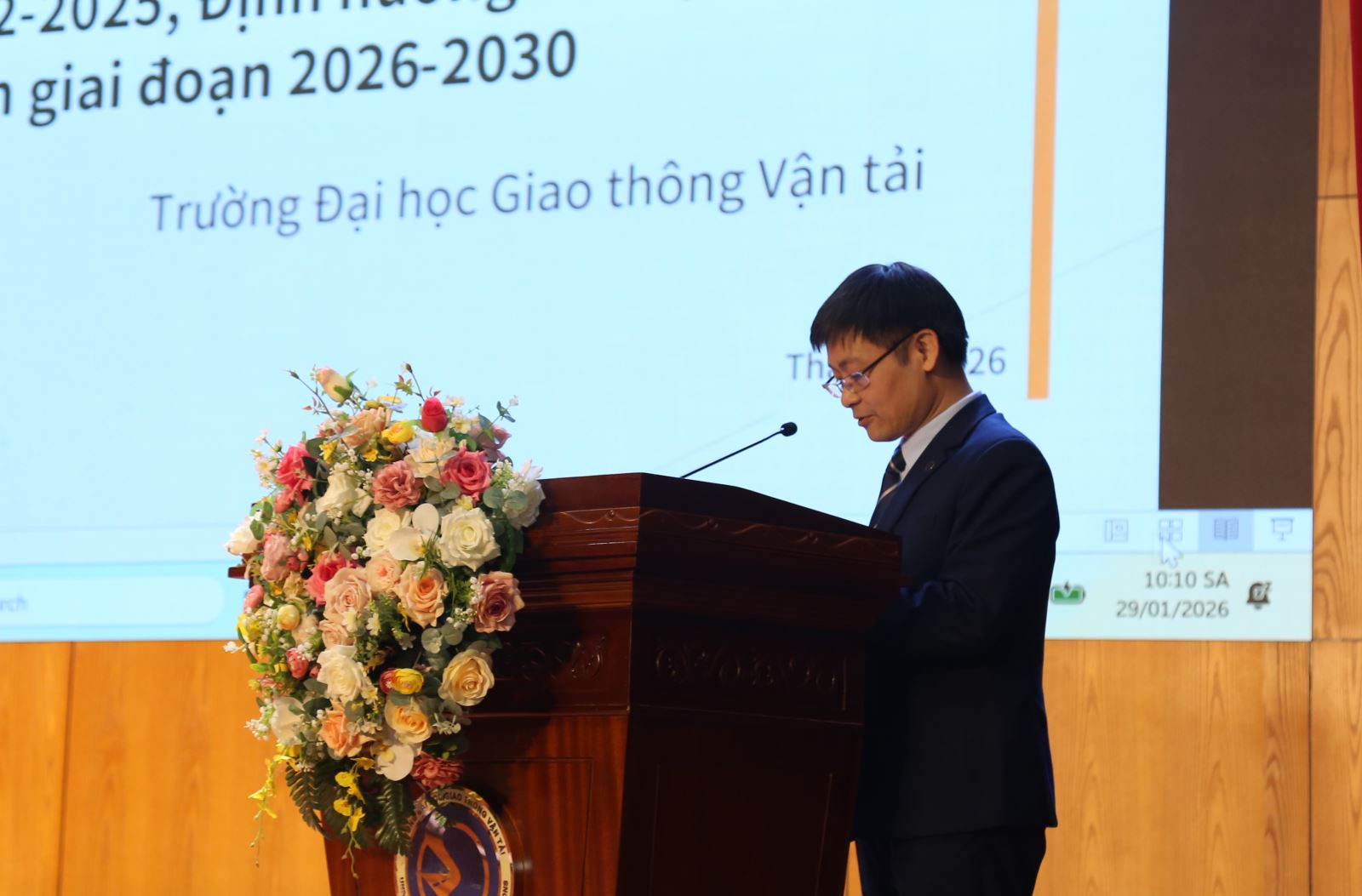
Assoc. Prof. Dr. Nguyen Duy Tien, Head of the Office of Science and Technology of the University of Transport and Communications, delivered a presentation entitled “Achievements in Science and Technology Activities during the 2022–2025 Period, and Development Orientations and Objectives for 2026–2030.”
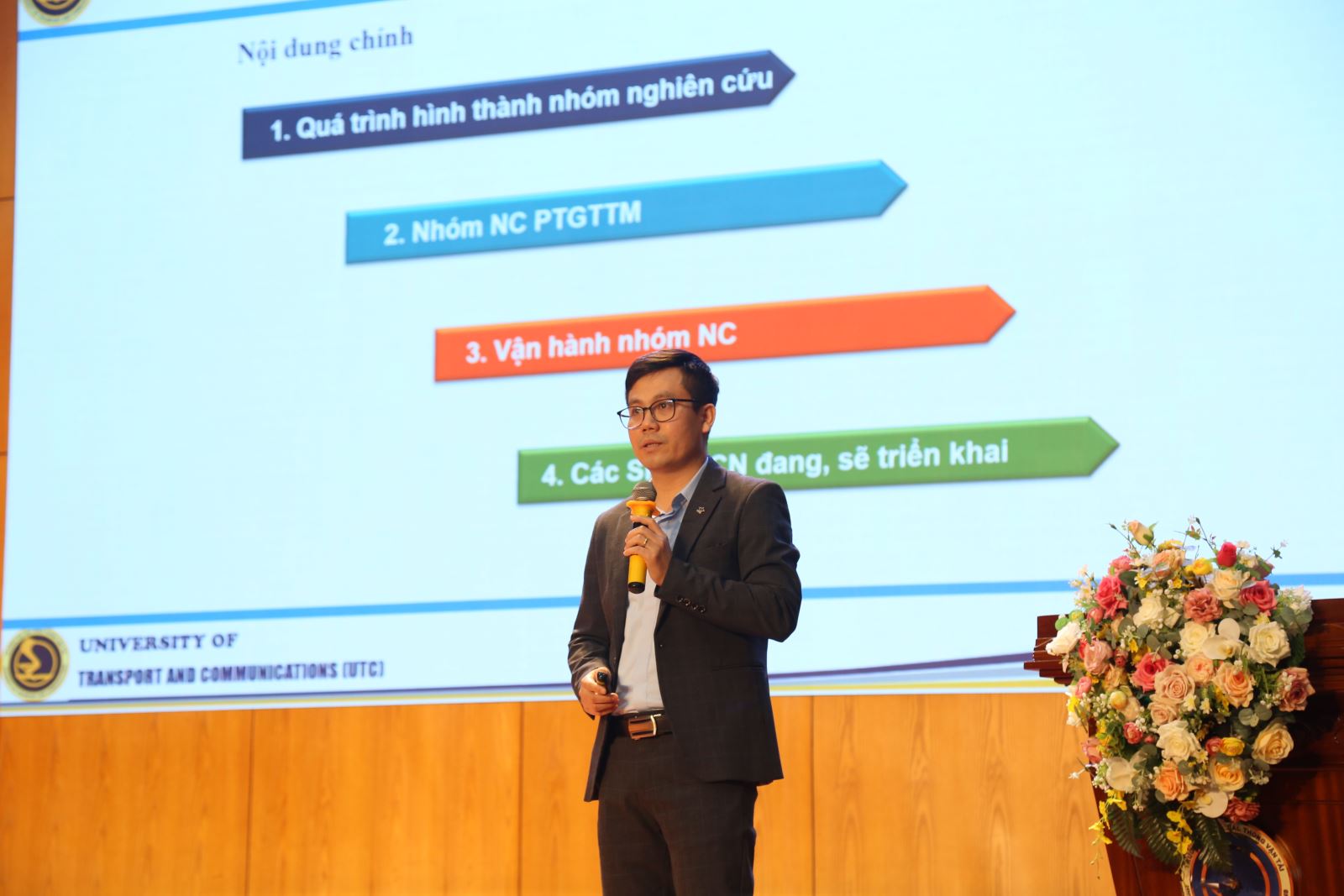
Assoc. Prof. Dr. Vu Van Tan of the University of Transport and Communications delivered a presentation entitled “Establishing and Operating Research Groups to Develop Science and Technology Products in the University’s Key Priority Areas.”
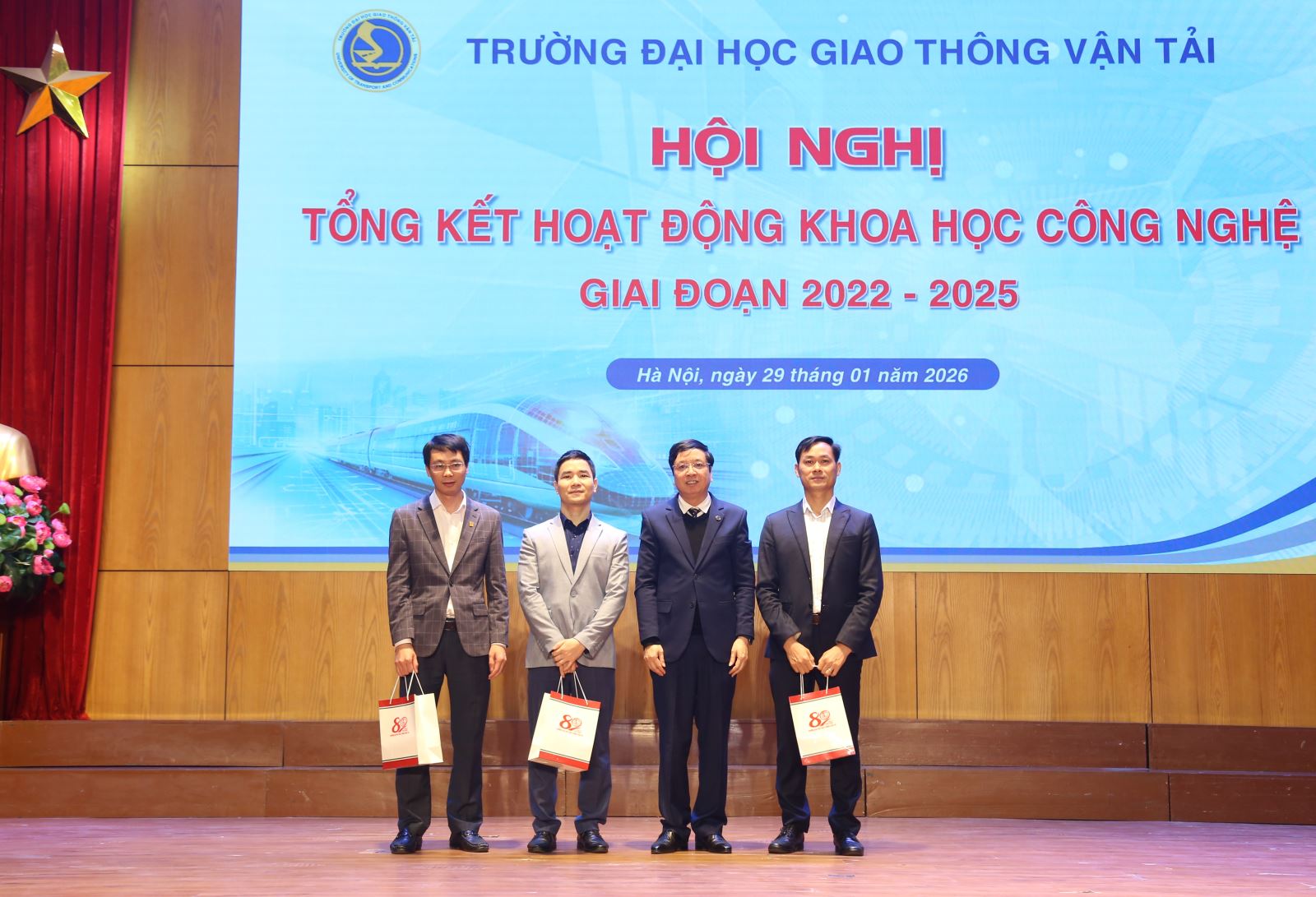
Assoc. Prof. Dr. Nguyen Van Hung, President of the University, presented commemorative gifts to the invited speakers attending the conference.
At the conference, the University also announced commendation decisions for collectives and individuals who achieved outstanding accomplishments in scientific research during the 2022–2025 period. This recognition honors the persistent efforts and achievements of the University’s staff, faculty members, scientists, and students.
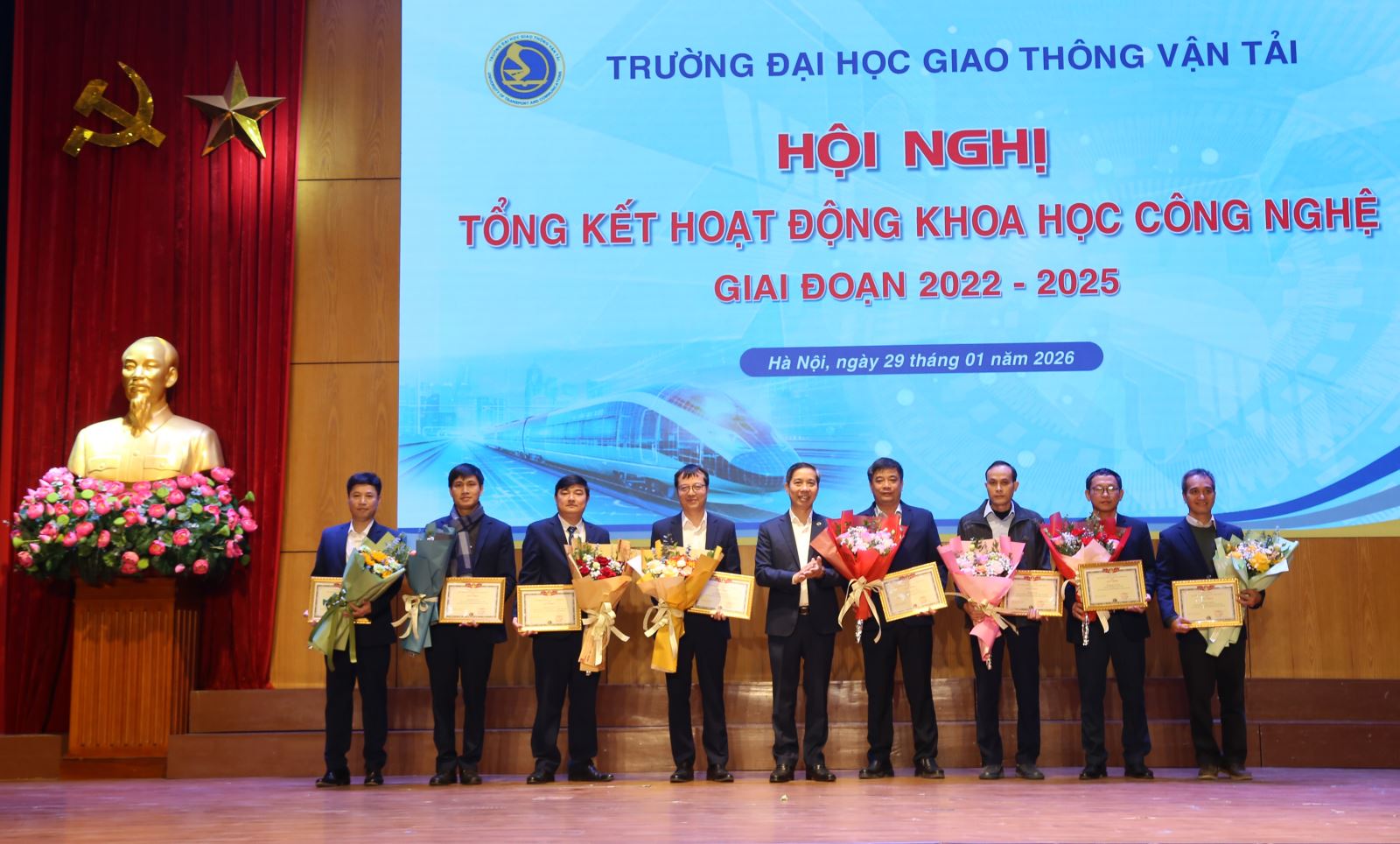
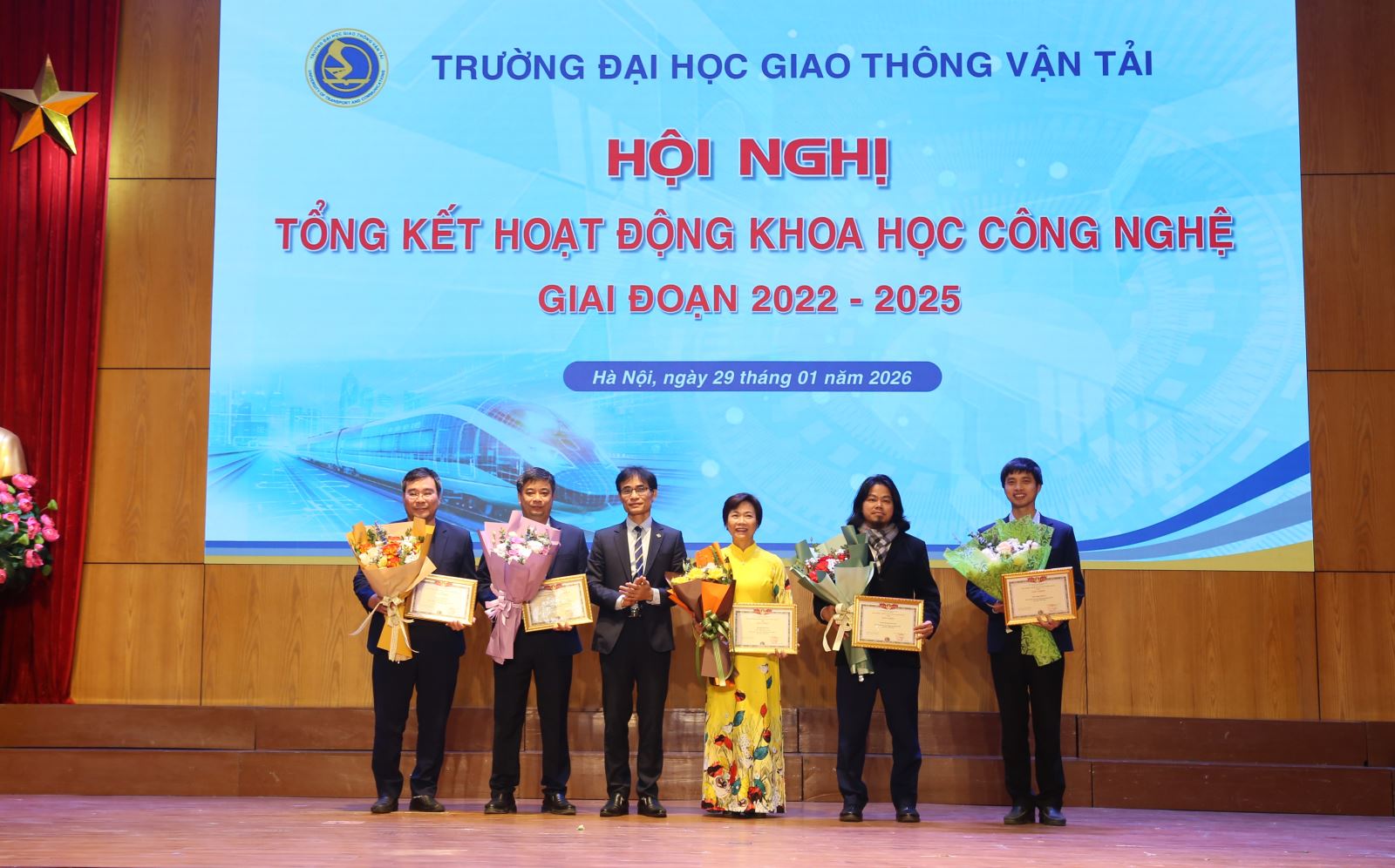
The University leadership presented certificates of merit to collectives and individuals who achieved outstanding accomplishments in scientific research during the 2022–2025 period.
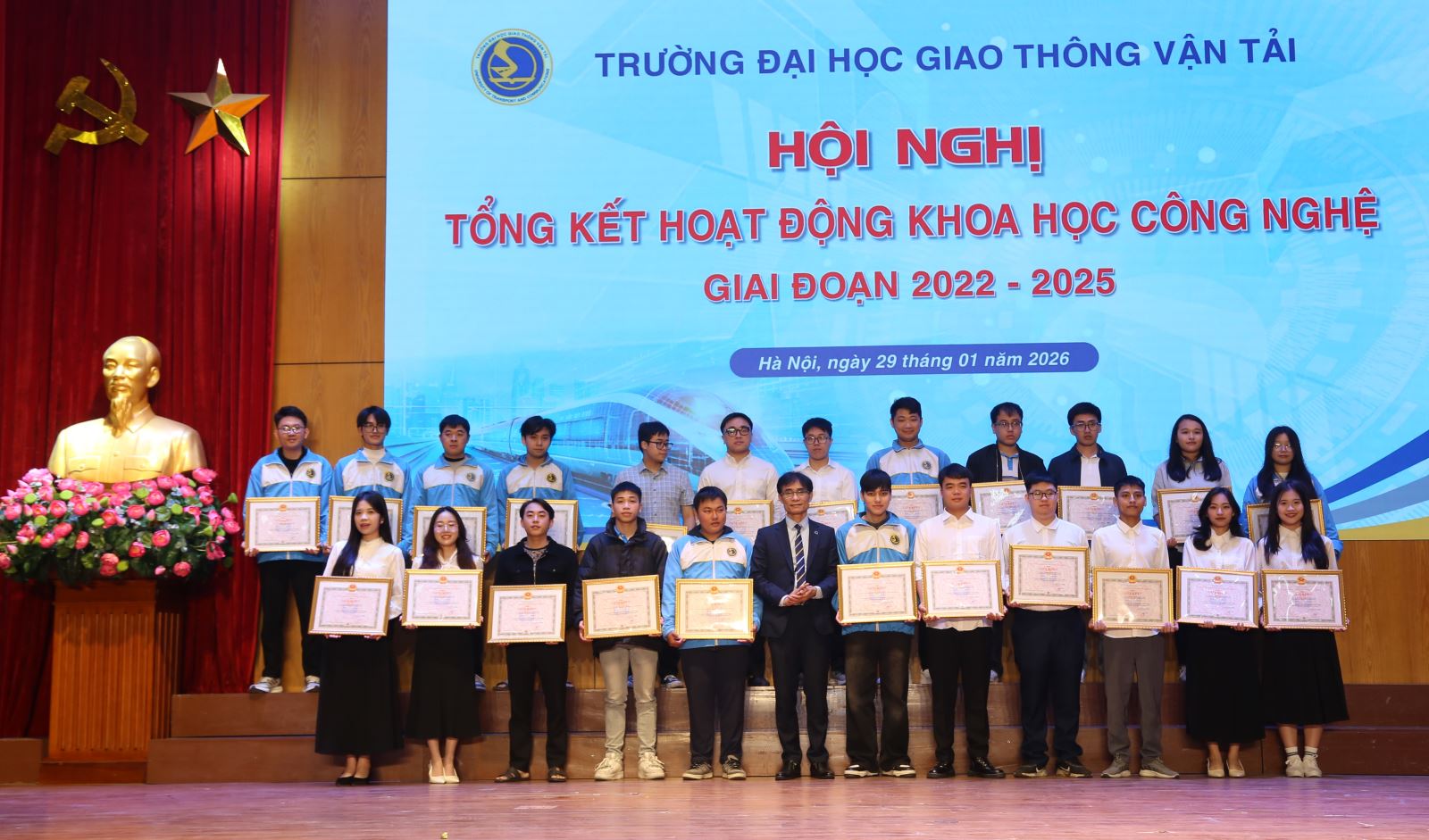
The University leadership presented certificates of merit to student groups who achieved outstanding accomplishments in scientific research activities.