
International Symposium on “Modern Railway Technology – ISART 2026”
On June 12, 2026, the University of Transport and Communications (UTC) organized the International Symposium on “Modern Railway Technology” (ISART 2026) at its Ho Chi Minh City Campus. The symposium attracted many scientists, experts, representatives of enterprises, and government agencies from Vietnam and abroad.
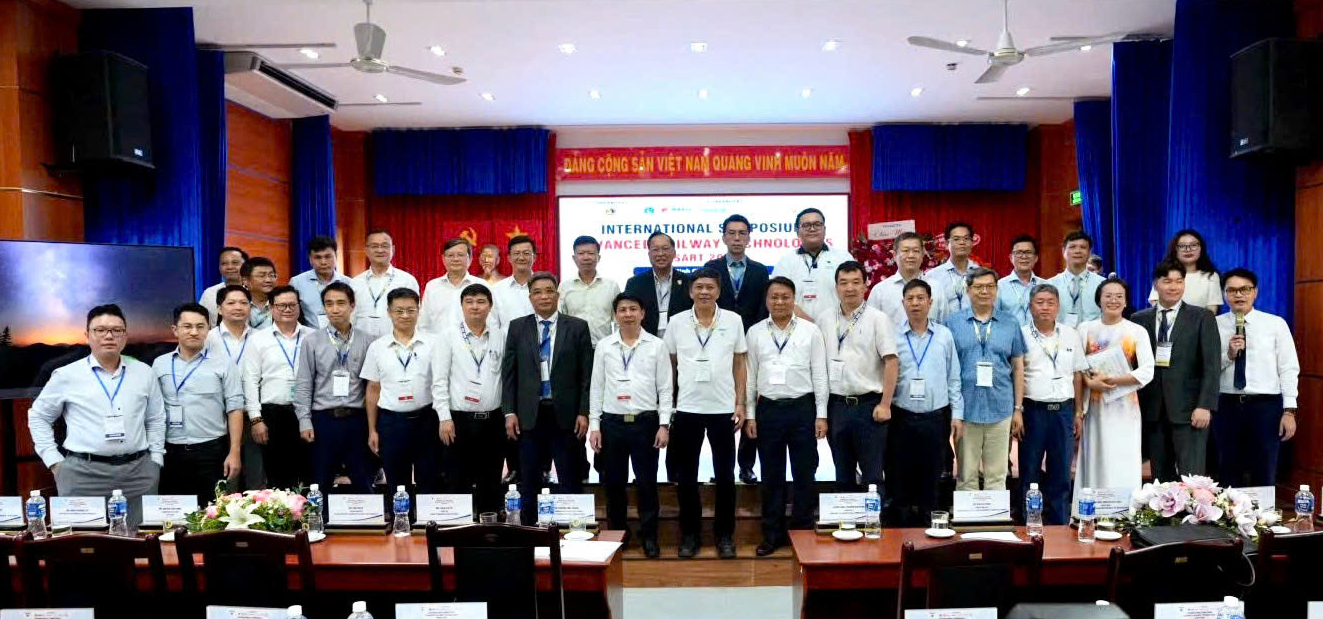
Symposium delegates take a commemorative photo.
The symposium was held at a time when high-speed rail and urban rail have been identified by the Government as two of the ten national strategic technology areas to be prioritized through 2045, pursuant to Decision No. 21/2026/QĐ-TTg dated April 30, 2026, issued by the Prime Minister.
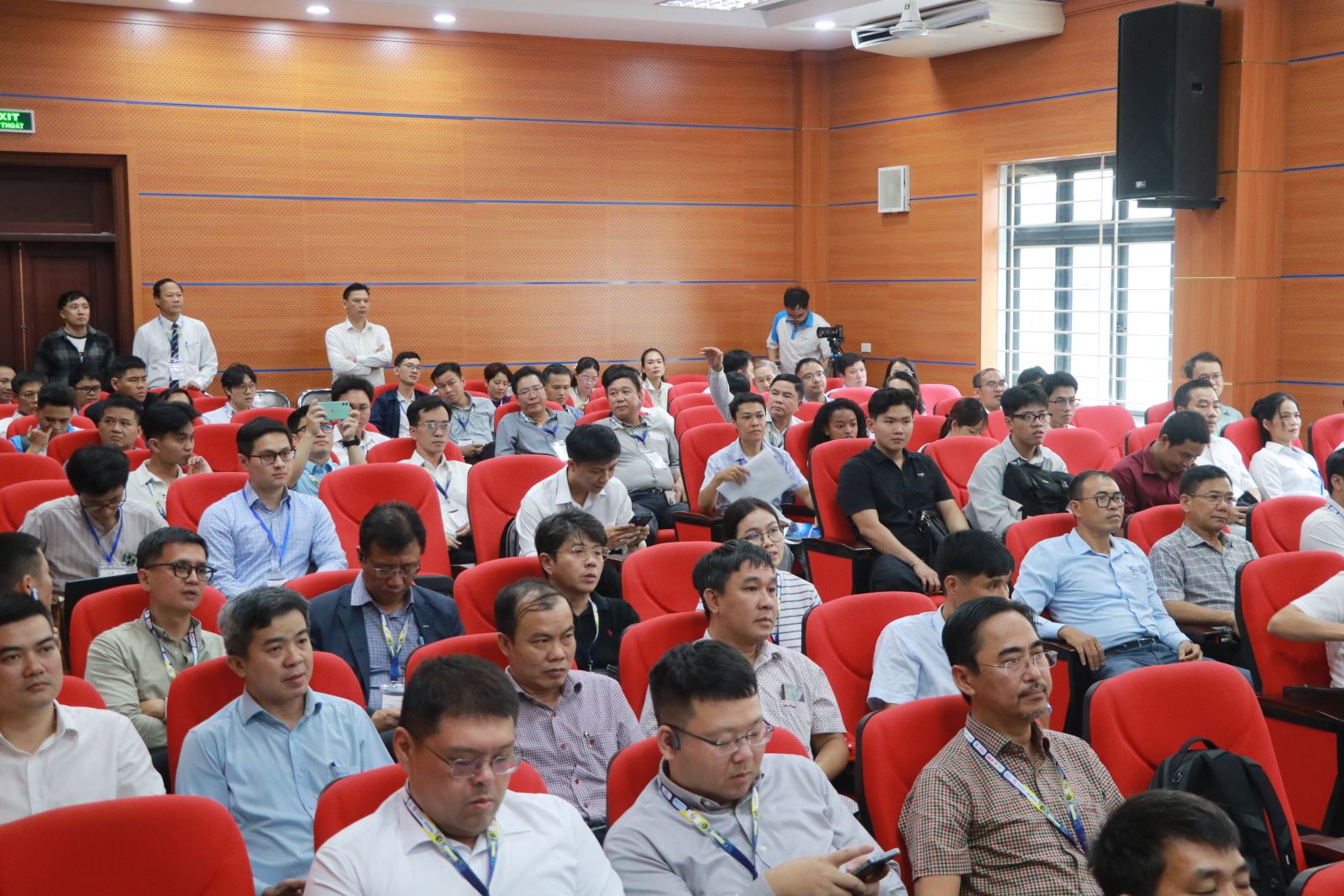
The symposium attracted many scientists, experts, businesses, and representatives of management agencies from Vietnam and abroad.
Speaking at the symposium, Assoc. Prof. Dr. Nguyen Van Hung, President of the University, stated that the International Symposium on Modern Railway Technology – ISART 2026, the first large-scale specialized symposium on modern railway technology to be held in Ho Chi Minh City, took place at a particularly significant moment for Vietnam’s railway sector.
Mastering modern railway technology is not simply a matter of constructing new railway lines; it requires mastering a highly advanced, multidisciplinary and integrated technological value chain. Equally important is the task of developing a high-quality workforce capable of absorbing, mastering and advancing modern railway technologies, while fostering a cohesive, dynamic and responsible scientific and engineering community to support a railway industrial ecosystem built on Vietnam’s own identity and capabilities.
Under the national program for implementing strategic technology tasks in the construction sector, the University of Transport and Communications has been assigned key and leading responsibilities in the field of modern railway technology. These include developing standards and technical regulations; conducting research on core and foundational technologies; contributing to the localization of essential modern railway systems; developing national education and training standards at the undergraduate, master’s and doctoral levels; and, in particular, establishing a system of National Key Laboratories for the railway sector.
For the University, these are not merely scientific and technological tasks. They also represent a responsibility to help build the fundamental knowledge base for Vietnam’s railway sector for decades to come, while continuing the strategic missions entrusted to the University by the Government, ministries and relevant authorities in developing high-quality human resources and advancing science and technology in the field of modern railways.
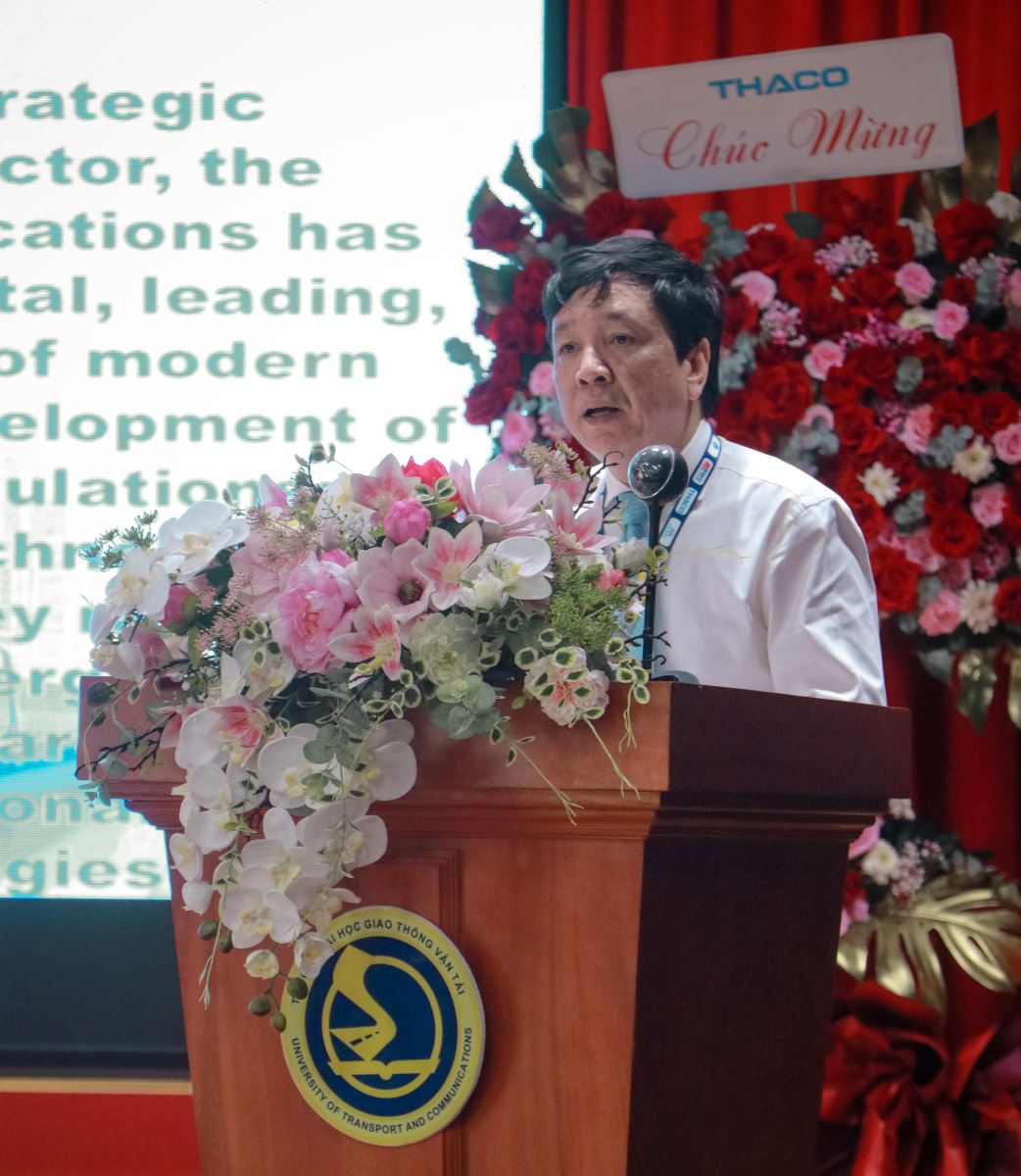
Assoc. Prof. Dr. Nguyen Van Hung, President of the University, delivers his remarks at the Symposium.
ISART 2026 is not a standalone event, but rather an integral link in a series of scientific, technological and policy dialogue activities that the University of Transport and Communications and its partners have continuously organized over the years. ISART 2026 focuses on emerging and challenging issues of a highly interdisciplinary nature that are receiving particular attention from the scientific community, industry and relevant government authorities.
Assoc. Prof. Dr. Nguyen Van Hung expressed his confidence that, with a spirit of scientific inquiry, openness, practicality, and responsibility, the plenary session and specialized discussions at ISART 2026 would go beyond academic presentations and be translated into new ideas, new research programs, new collaborative projects, and valuable policy recommendations. These outcomes, he noted, would make a more meaningful contribution to the national goal of progressively mastering strategic railway technologies—a goal that Vietnam is determined to pursue.
.jpg)
Assoc. Prof. Dr. Nguyen Van Hung, President of the University, presents commemorative gifts to the sponsors of the Symposium.
The symposium provided an opportunity for scientists, experts, businesses, and government agencies to exchange views and experiences on international models for investment and financing in high-speed rail and their potential application to Vietnam’s North–South high-speed railway project; the role of artificial intelligence, automation, and digital technologies in the assessment, monitoring, and management of railway infrastructure; and advanced surveying technologies, BIM, GIS, and digital twins for the design, construction, and asset management of railway infrastructure.
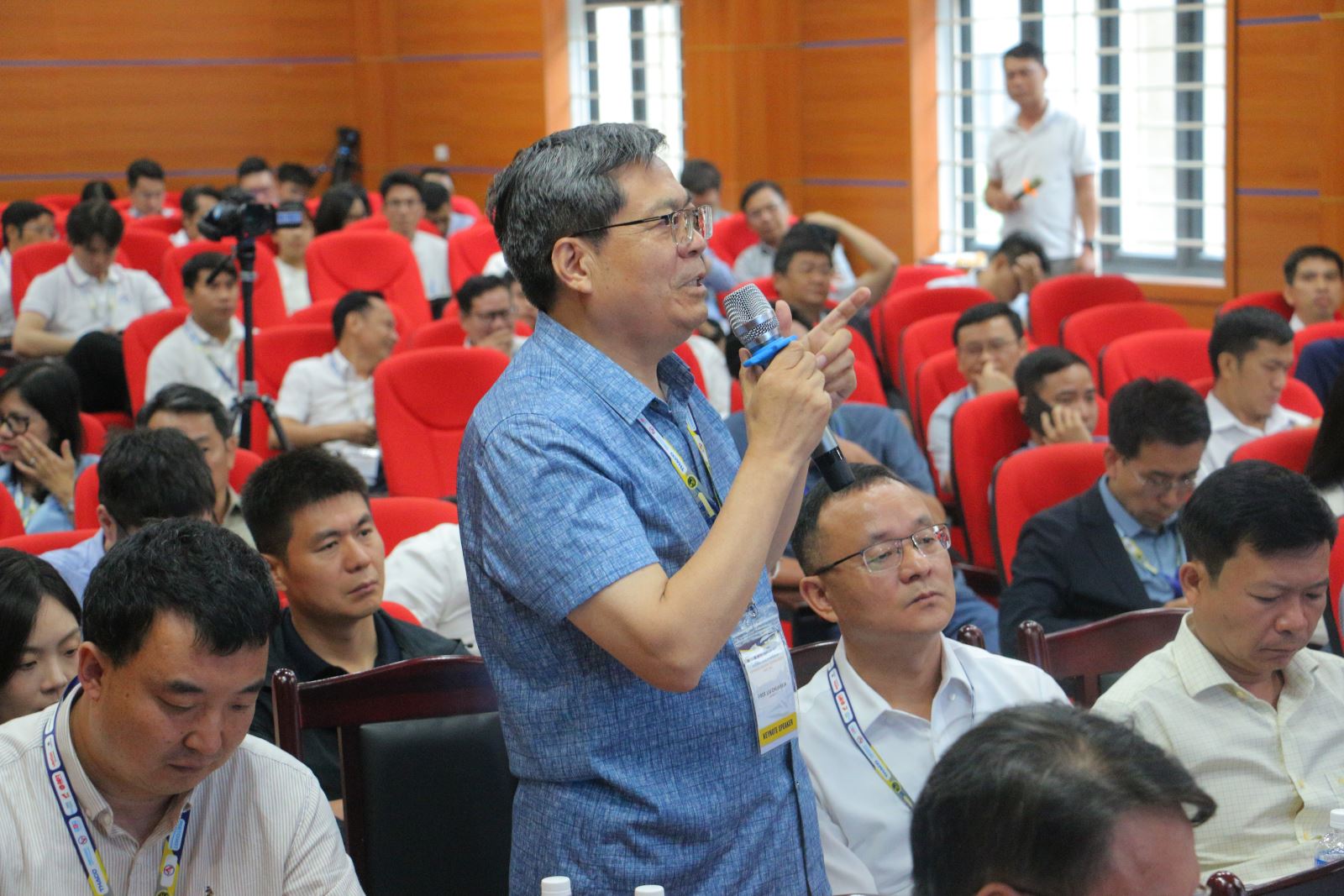
Experts exchange views at the Symposium.
The symposium also placed special emphasis on international experience in quality management, safety assurance, and risk control throughout the entire lifecycle of high-speed and urban railway projects; engineering solutions for railway infrastructure under complex geological conditions; long-span bridge technologies for high-speed rail; and many other advanced technical issues.
These are all core and highly topical issues, directly linked to Vietnam’s current efforts to progressively master strategic technologies in the railway sector.
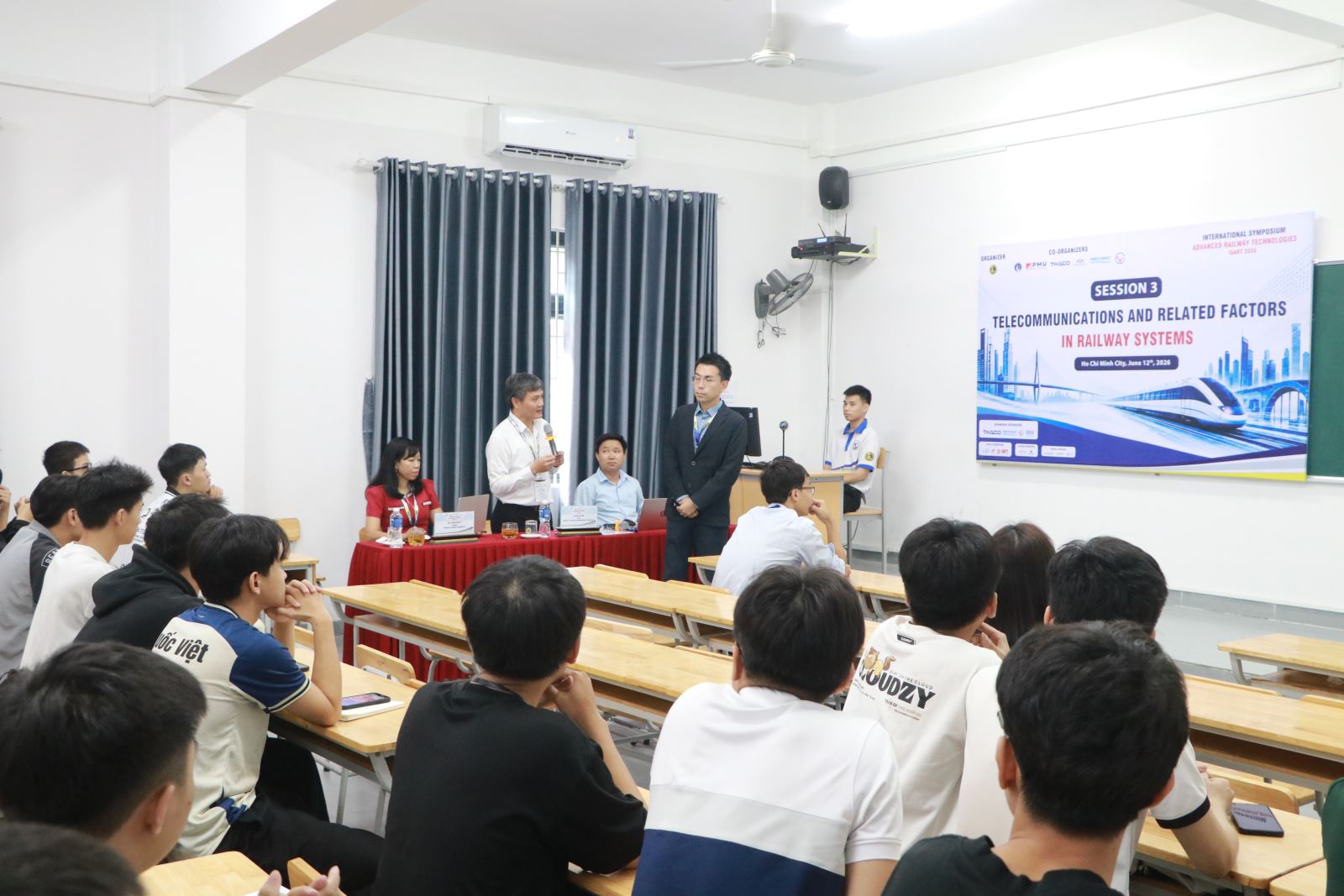
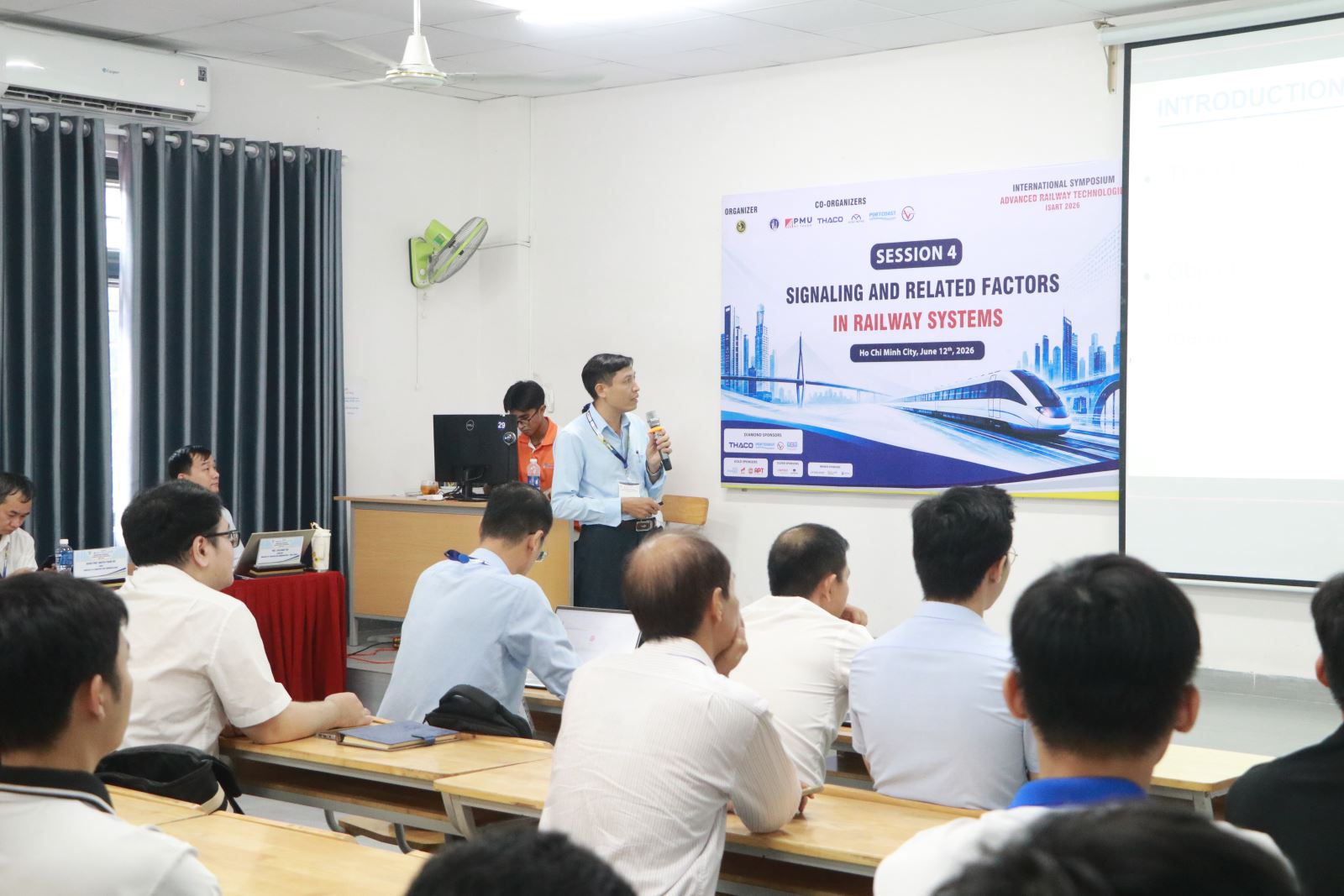
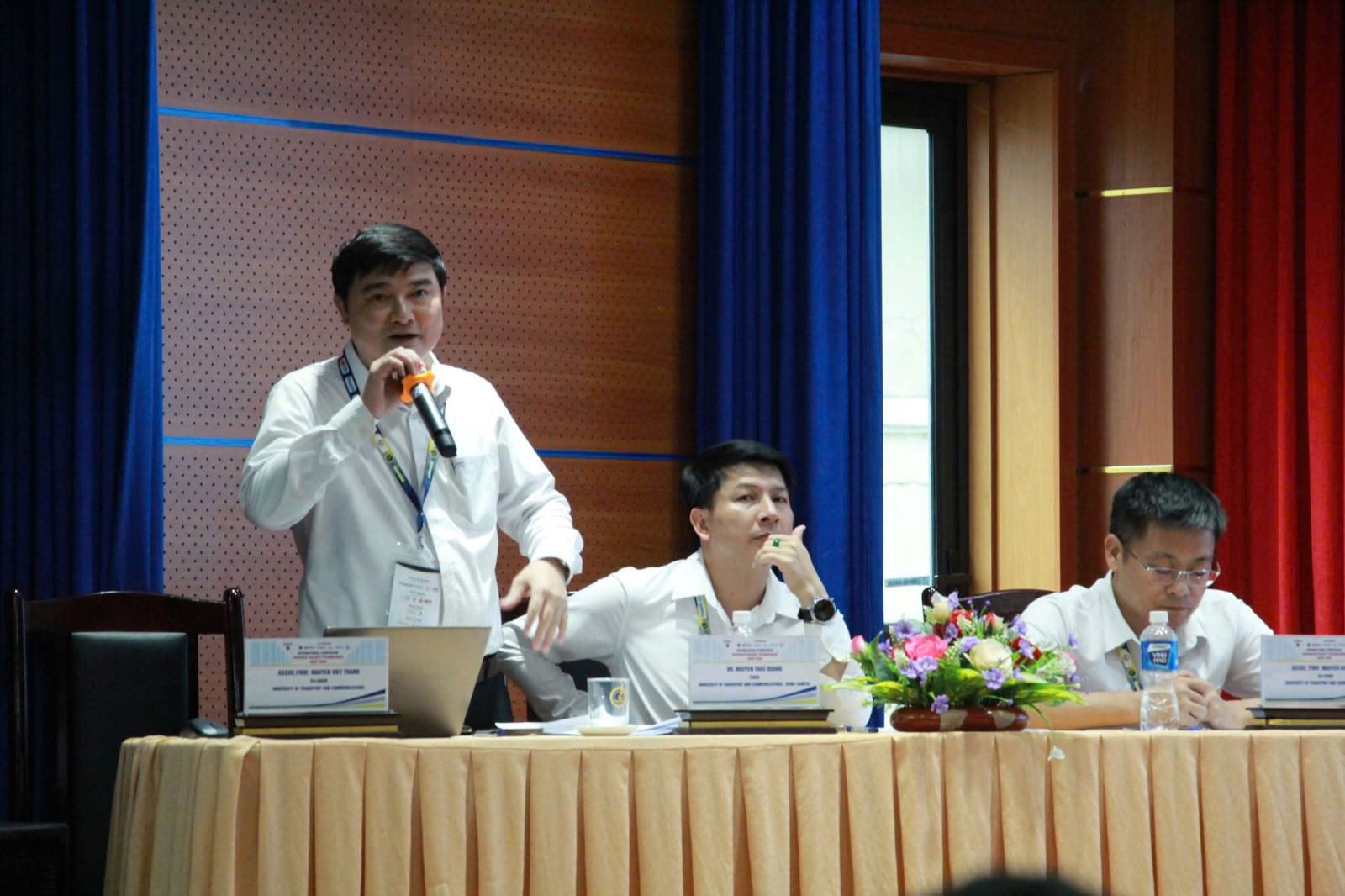
Discussion sessions in parallel technical sessions.
The success of ISART 2026 has opened up new opportunities for cooperation in technology transfer and the development of high-quality human resources, contributing to the realization of strategic objectives and accelerating the modernization of Vietnam’s railway system. At the same time, through ISART 2026, the University of Transport and Communications continues to affirm its leading role in training high-quality human resources and advancing applied research in support of strategic projects, thereby contributing to the modernization of Vietnam’s transport system and paving the way towards a greener and more sustainable future.
ICDS
Related Articles
University of Transport and Communications takes the lead in strategic technology tasks for high-speed and urban railways
DetailMinister of Education and Training presents Appointment Decisions to the Leadership of the University of Transport and Communications
DetailUniversity of Transport and Communications co-organizes the 2026 Vietnam–Russia Rectors’ Conference
Detail