
University of Transport and Communications takes the lead in strategic technology tasks for high-speed and urban railways
On June 18, 2026, at the Ministry of Construction, Minister Tran Hong Minh chaired a meeting of the Council to identify strategic technology development tasks in the fields of high-speed railways and urban railways.
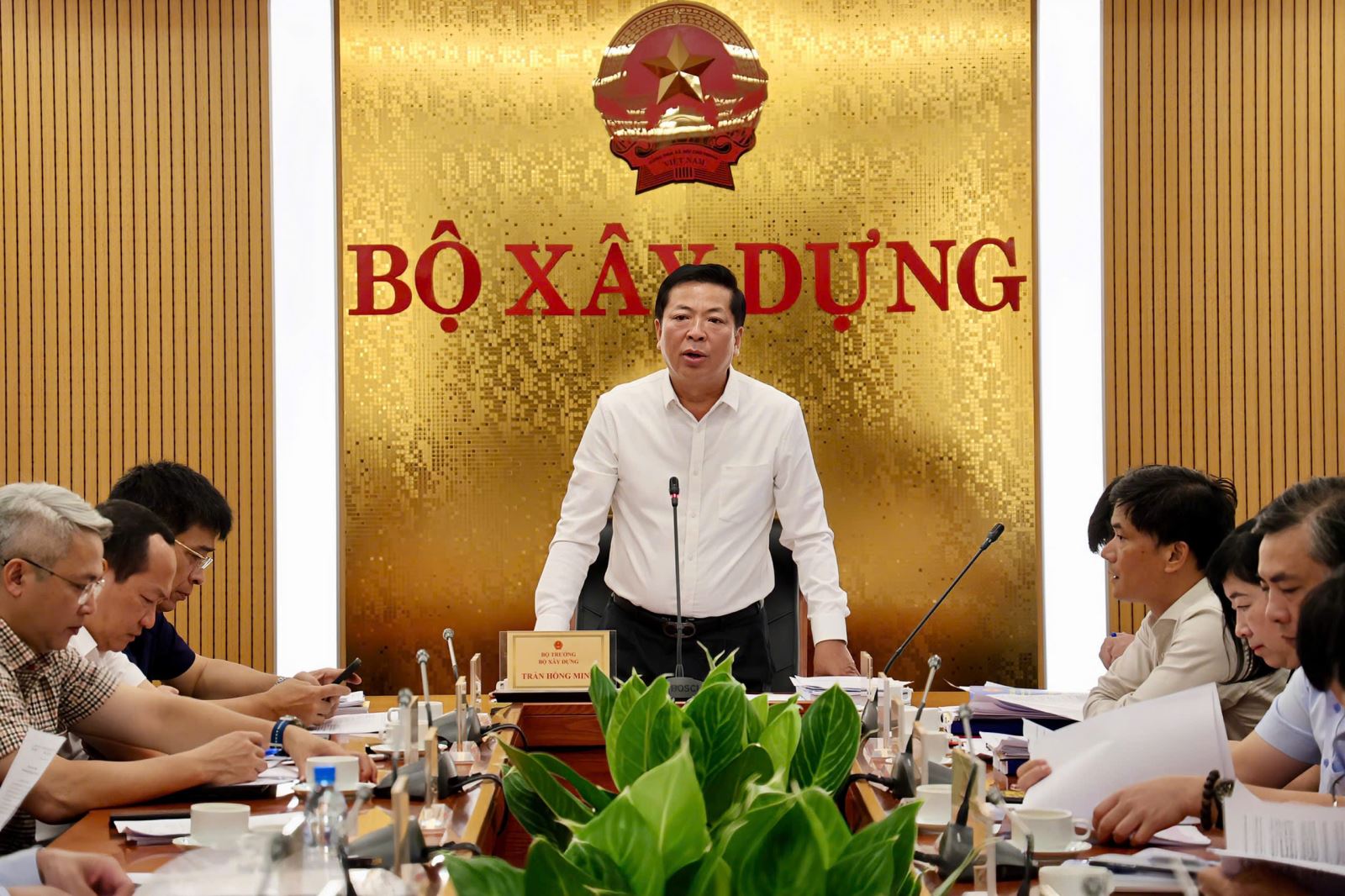
Minister Tran Hong Minh delivers remarks and provides direction at the meeting.
The Council was attended by Assoc. Prof. Dr. Nguyen Van Hung, President of the University of Transport and Communications (UTC). In addition, the Council’s Expert Advisory Group included several railway specialists from UTC, namely Prof. Dr. Nguyen Van Ky from the Department of Railway Engineering; Assoc. Prof. Dr. Nguyen Thanh Hai, Dean of the Faculty of Electrical - Electronic Engineering; Assoc. Prof. Dr. Nguyen Duy Viet, specializing in railway information and signalling; Dr. Mai Van Tham, specializing in railway rolling stock; and Assoc. Prof. Dr. Ngo Van Minh, specializing in railway infrastructure.
The meeting marked an important step in implementing the policy on the development of strategic technologies, with the aim of progressively mastering foundational and core technologies and enhancing the country’s indigenous capabilities in developing the railway industry.
According to the Council’s conclusions, the Ministry of Construction identified eight strategic technology development tasks in the fields of high-speed and urban railways in Vietnam, including: rails and rail fastening systems; track structural systems; materials and technologies for soft ground treatment for railway subgrades and transition zones at structures; 5G networks for high-speed and urban railways; computer-based interlocking (CBI) systems; the manufacture of selected components and core parts to support the localization of the railway industry; special railway vehicles; and the establishment of a key laboratory dedicated to strategic technologies for high-speed and urban railways.
Among the strategic technology products and tasks concluded by the Minister of Construction, the University of Transport and Communications (UTC) has been assigned to take the lead in two core tasks: research and development of track structural systems for high-speed and urban railways, and the establishment of a key laboratory for strategic technologies in high-speed and urban railways.
These two tasks are of fundamental importance to the process of mastering modern railway infrastructure technologies. Track structural systems are among the key components determining operational safety, track geometry stability, service quality, the ability to sustain high speeds, and maintenance costs throughout the lifecycle of railway infrastructure. Meanwhile, the key laboratory will serve as critical science and technology infrastructure for research, testing, evaluation, validation, and the progressive localization of strategic technologies for high-speed and urban railways.
In addition to leading the two core tasks, the University of Transport and Communications (UTC) has also been identified as a key institution, working in collaboration with enterprises, research institutes, and government authorities to implement the remaining tasks, serving as a principal research partner.
Specifically, under the task of researching and mastering technologies for the production of rails and rail fastening systems, UTC will lead research activities related to wheel–rail interaction and laser cladding technologies for the restoration of rails and wheels. The University will also collaborate with the Institute of Technology under the General Department of Defense Industry, Hoa Phat Dung Quat Rail and Special Steel Joint Stock Company, and other relevant organizations in carrying out this task.
For the task of researching, developing, and mastering technologies for materials, soft ground treatment for railway subgrades, and transition zones at structures for high-speed railways, the University of Transport and Communications (UTC) will collaborate with Hanoi University of Civil Engineering to address specific technical requirements, including the control of long-term settlement, track geometry stability, the structural durability of railway subgrades, and the assurance of safe operations under Vietnam’s complex geological conditions.
In the field of digital technologies and control systems, UTC will collaborate with Viettel Group on the task of researching and developing 5G networks for high-speed railways. The University will also work with Vietnam Posts and Telecommunications Group (VNPT) on the research and development of computer-based interlocking (CBI) systems. These tasks are of significant importance for ensuring safe, intelligent, and automated railway operations, while progressively building domestic capabilities in modern control and communication systems for high-speed and urban railways.
.jpg)
The University of Transport and Communications (UTC) being entrusted to lead and serve as a key research partner in the majority of the Ministry of Construction’s strategic technology tasks reflects the Ministry’s confidence in the University’s leading capabilities in railway science and technology. This is both a source of pride and a major responsibility for the University, as it contributes directly to the country’s strategic infrastructure programmes, particularly the North–South high-speed railway project and urban railway networks in Hanoi and Ho Chi Minh City.
In the coming period, UTC will continue to mobilize its experts, scientists, and strong research groups across key areas, including infrastructure engineering, materials, geotechnical and foundation engineering, information and signalling systems, rolling stock, railway operations, digital transformation, and railway technologies. At the same time, the University will strengthen its collaboration with enterprises, research institutes, and government authorities to develop concrete products and solutions that can be validated, tested, and applied in practice.
Guided by the principle of “research linked to products, products linked to practical applications, and practical applications linked to the nation’s capacity for technological self-reliance,” the University of Transport and Communications reaffirms its pioneering role in training high-quality human resources, conducting scientific research, and developing strategic technologies to serve the Vietnamese railway sector in its new stage of development.
ICDS
Related Articles
International Symposium on “Modern Railway Technology – ISART 2026”
DetailMinister of Education and Training presents Appointment Decisions to the Leadership of the University of Transport and Communications
DetailUniversity of Transport and Communications co-organizes the 2026 Vietnam–Russia Rectors’ Conference
Detail