
On August 13, 2026, the University of Transport and Communications (UTC) organized the launch Ceremony for the Project Technical solutions for viaduct construction to minimize the use of sand and enhance sustainability in the development of transportation infrastructure in the Mekong Delta subregion".
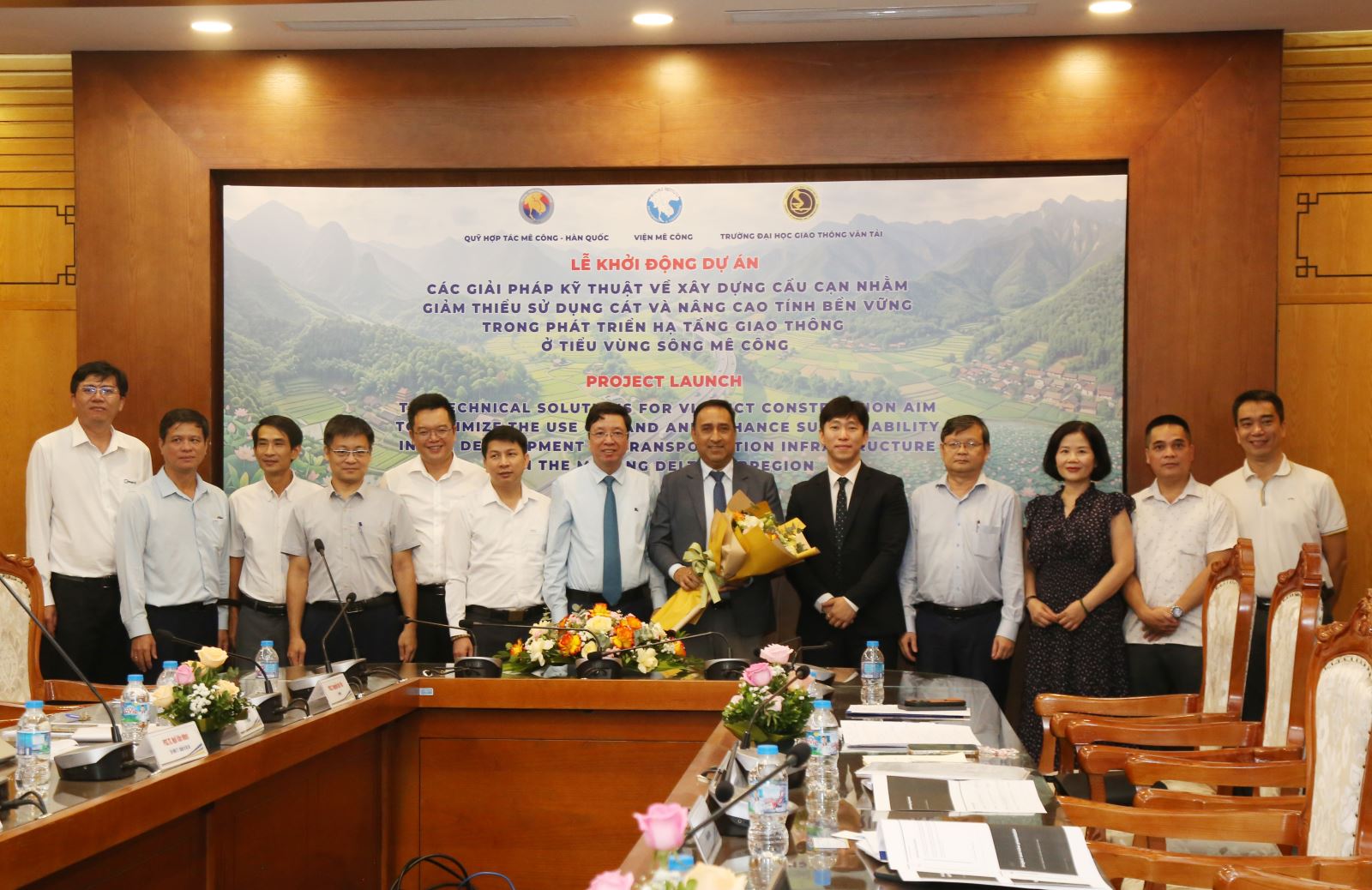
Delegates take a commemorative photo at the project launch ceremony
The project is supported by the Mekong - Republic of Korea Cooperation Fund (MKCF) through the Mekong Institute and has been approved for implementation by the Ministry of Education and Training of Vietnam.
Attending the launch ceremony on behalf of the Mekong - Republic of Korea Cooperation Fund and the Mekong Institute were Mr. Madhurjya Kumar Dutta, Director of the Mekong - Republic of Korea Cooperation Fund, and Mr. Giwoong Son, Project Officer of the Fund.
The ceremony was also attended by members of the Vietnamese Project Management Units; representatives of the Project Management Unit My Thuan, UTC2 Joint Stock Company, Thu Duc Concrete Company, and the Southern Transport Engineering Design Joint Stock Incorporated (TEDI South); as well as representatives of relevant organizations, businesses, experts, and researchers who are expected to participate in and support the project.
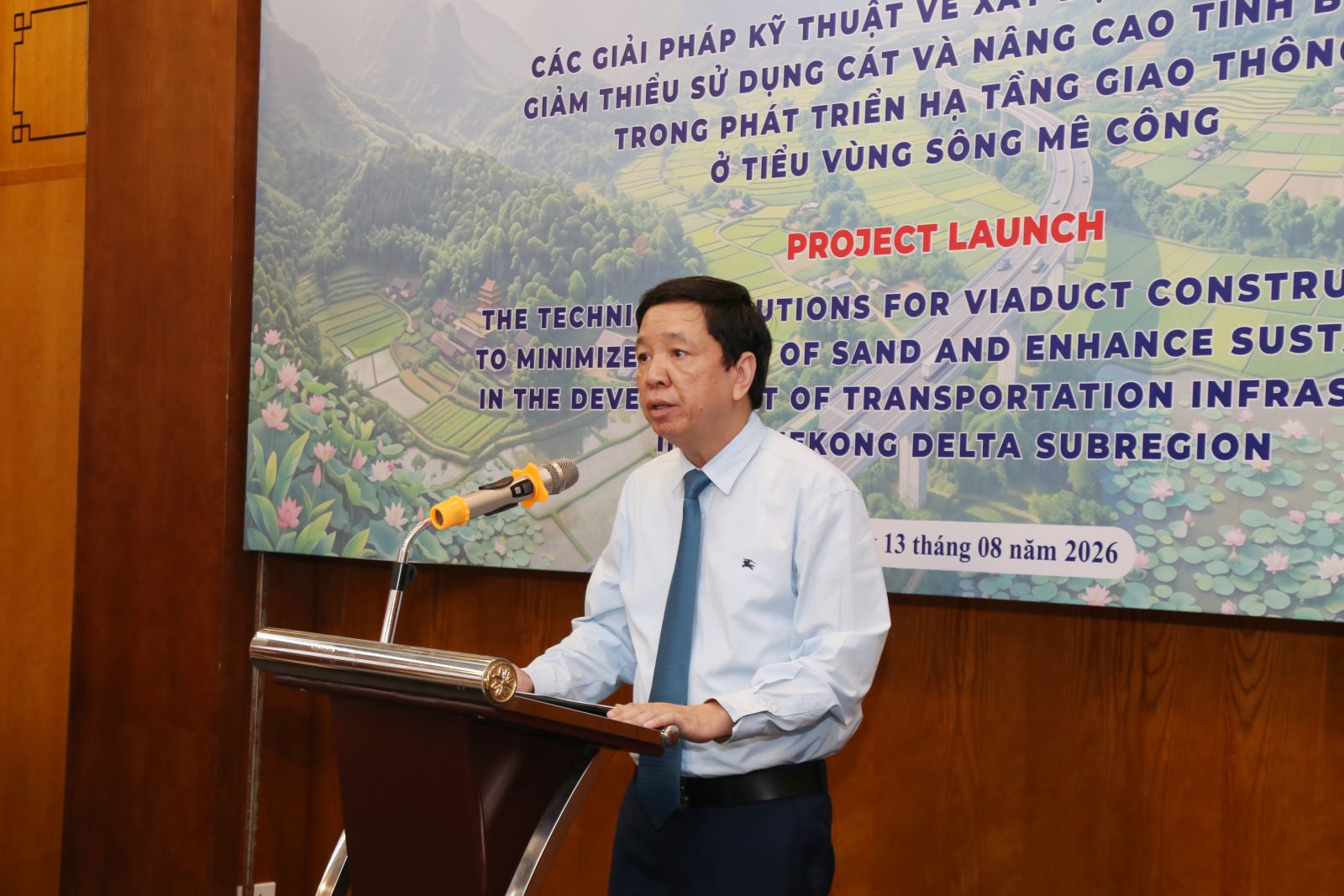
Assoc. Prof. Dr. Nguyen Van Hung, President of UTC, delivers his speech
Speaking at the ceremony, Assoc. Prof. Dr. Nguyen Van Hung, President of UTC, emphasized:
“The challenge is not simply to build more transport routes, but, more importantly, to select appropriate construction solutions that conserve natural resources, minimize environmental impacts, and ensure efficiency throughout the project lifecycle. The University of Transport and Communications committes to collaborating closely with the Mekong Institute, the Mekong - Republic of Korea Cooperation Fund, management agencies, and businesses to ensure that the project’s research findings can be transferred and applied in practice.”
UTC will mobilize experts in the fields of bridges, roads, geotechnical engineering, foundations, materials, environmental engineering, construction economics, and infrastructure management to implement the project in accordance with its objectives, schedule, and quality requirements.
The University will also coordinate with members of the Project Management Unit, management agencies, consulting organizations, manufacturers, and construction contractors to select representative case studies, conduct comprehensive assessments of proposed solutions, and enhance the potential for transferring research outcomes into practice.
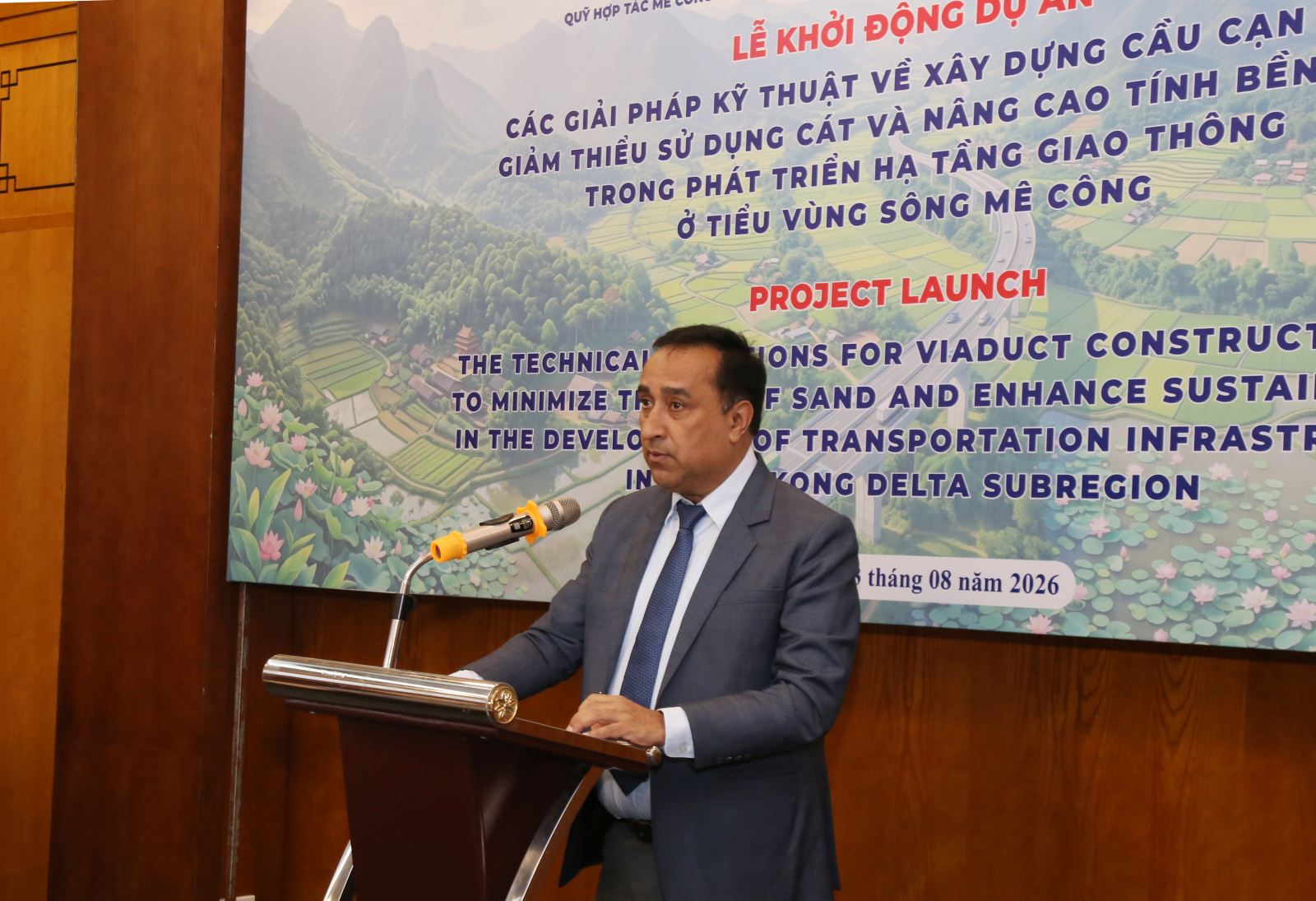
Mr. Madhurjya Kumar Dutta, Director of the Mekong - Republic of Korea Cooperation Fund, delivers his speech
Speaking at the project launching ceremony, Mr. Madhurjya Kumar Dutta, Director of the Mekong - Republic of Korea Cooperation Fund (MKCF), expressed his expectation that the project would contribute to positive changes in controlling and reducing sand mining activities on the Mekong River. He emphasized that the key to the project’s success lies in close professional collaboration between scientists and regulatory authorities across the Mekong River Basin.
During the implementation phase, the research team must regularly update project developments and provide field data so that the Fund can monitor progress. The Fund will conduct periodic reviews evaluations and assess the completion level of the committed objectives. After three years of implementation, the project will undergo an assessment of its practical effectiveness before any options and further development are considered.
Concluding his speech, Mr. Madhurjya Kumar Dutta reaffirmed the importance of the project and expressed his expectation that the research team achieve strong, practically proven results. The success of the project will not be defined by administrative reports, but more importantly, by its capacity to deliver valuable, applicable, and scalable solutions that can benefit countries across the Mekong Subregion.
.jpg)
An overview of the project launch ceremony
Seeking Solutions to Reduce Sand usage in Transport Infrastructure Construction
The development of transport infrastructure in the Mekong Subregion is increasing demand for sand as construction and filling materials. Meanwhile, natural sand resources are becoming increasingly scarce in many areas. Excessive extraction can lead to riverbank erosion, changes in river flows, ecosystem degradation, and negative impacts on local livelihoods.
In addition to material pressures, many areas across Mekong Subregion have soft soil foundations and are frequently affected by flooding, land subsidence, and climate change. Conventional high embankments typically require large quantities of sand, presenting challenges related to ground improvement, settlement control, and maintaining adequate drainage capacity.
Within this context, utilizing viaduct structures to partially replace traditional embankments is considered a promising solution. This approach could reduce sand demand, minimize impacts on weak soil foundations, maintain flood drainage corridors, reduce ecosystem fragmentation, and enhance the resilience of transport infrastructure to climate change.
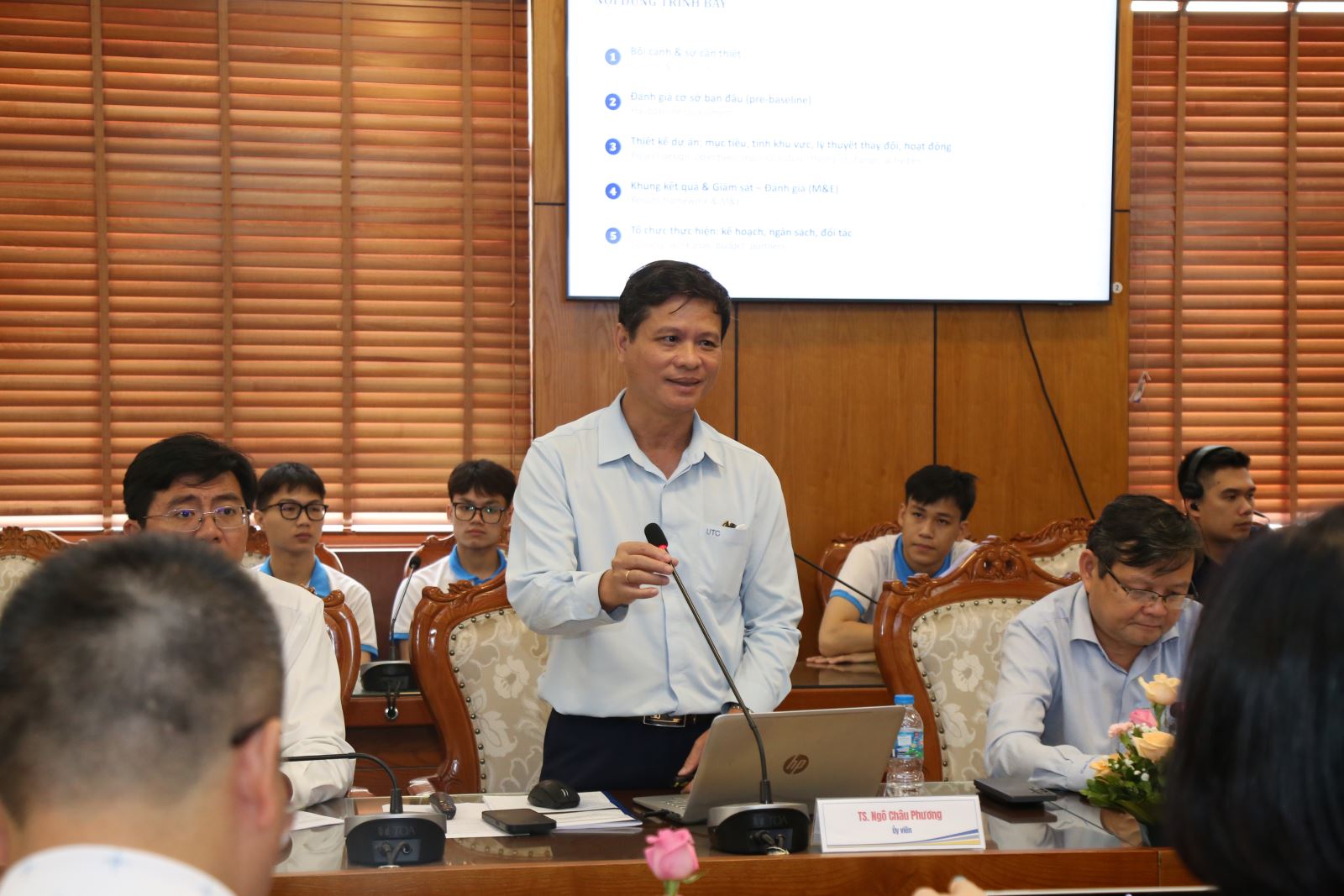
Dr. Ngo Chau Phuong presents the key components of the project
Linking Scientific Research with Practical Needs
The project focuses on researching, evaluating, and proposing technical solutions for viaduct construction that are suitable for the natural conditions and transport infrastructure development needs of the Mekong Subregion.
The main activities are expected to include: Surveying the current use of sand in transport infrastructure construction; Analyzing geological, hydrological, and environmental conditions in the study areas; Reviewing experiences and technologies in viaduct construction; Proposing appropriate structural systems and construction methods; Comparing viaducts and embankments in terms of technical performance, lifecycle costs, resource efficiency, and environmental impacts; Developing case studies and evaluating the feasibility of pilot implementations; Proposing guidelines and recommendations for the planning, design, investment, construction, and management of transport infrastructure; Organizing training activities, technical workshops, and knowledge transfer seminars.
The participation of the My Thuan Project Management Unit, UTC2 Joint Stock Company, Thu Duc Concrete Company, TEDI South, and other relevant organizations will enable the project to address practical requirements from multiple perspectives, including project management, surveying, design, component manufacturing, construction, and infrastructure operation and management.
This is a vital prerequisite to ensure that the research outcomes have not only scientific value but also strong potential for application in specific transport infrastructure projects.
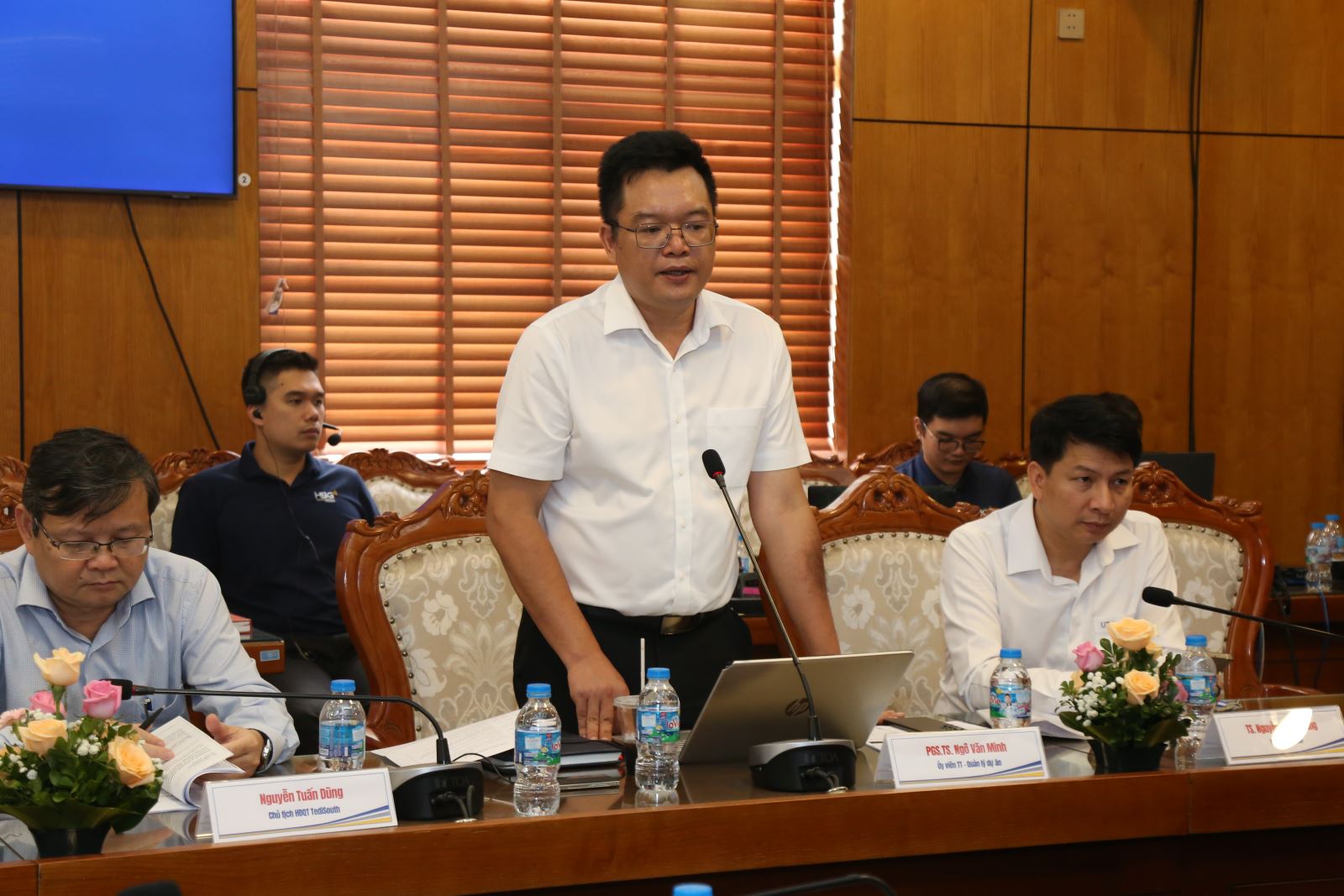
Assoc. Prof. Dr. Ngo Van Minh, Director of the Department of Innovation and Technology Transfer, moderates the discussion session
Commitment to Effective and Practical Project Implementation
The launch ceremony marks the official commencement of the project and provides a platform for participating organizations to align the work plans, coordination mechanisms, survey methodologies, study locations, expected outputs, and priority tasks for the initial phase.
The project is expected to provide additional scientific and practical foundations for selecting appropriate transport infrastructure solutions in areas characterized by soft soils, material scarcity, and significant impacts of climate change; contribute to reducing dependence on natural sand resources and promoting green, resilient, and sustainable transport infrastructure development in the Mekong Subregion.
ICDS
Related Articles
University of Transport and Communications affirms its pioneering role in implementing resolutions No. 57-NQ/TW and No. 71-NQ/TW
DetailUniversity of Transport and Communications (UTC) has been selected and assigned by the Prime Minister to play a co-leading role in developing and enhancing the quality of higher education in the Capital
DetailUniversity of Transport and Communications welcomes new students of cohort 67
Detail