
University of Transport and Communications affirms its pioneering role in implementing resolutions No. 57-NQ/TW and No. 71-NQ/TW
On August 24, 2026, the University of Transport and Communications (UTC) organized a review conference on the implementation of Resolution No. 57-NQ/TW of the Politburo on breakthroughs in the development of science, technology, innovation, and national digital transformation, and Resolution No. 71-NQ/TW of the Politburo on breakthroughs in the development of education and training. The program reviewed the progress and achievements made during the 2025–2026 period and identified key tasks through 2030.
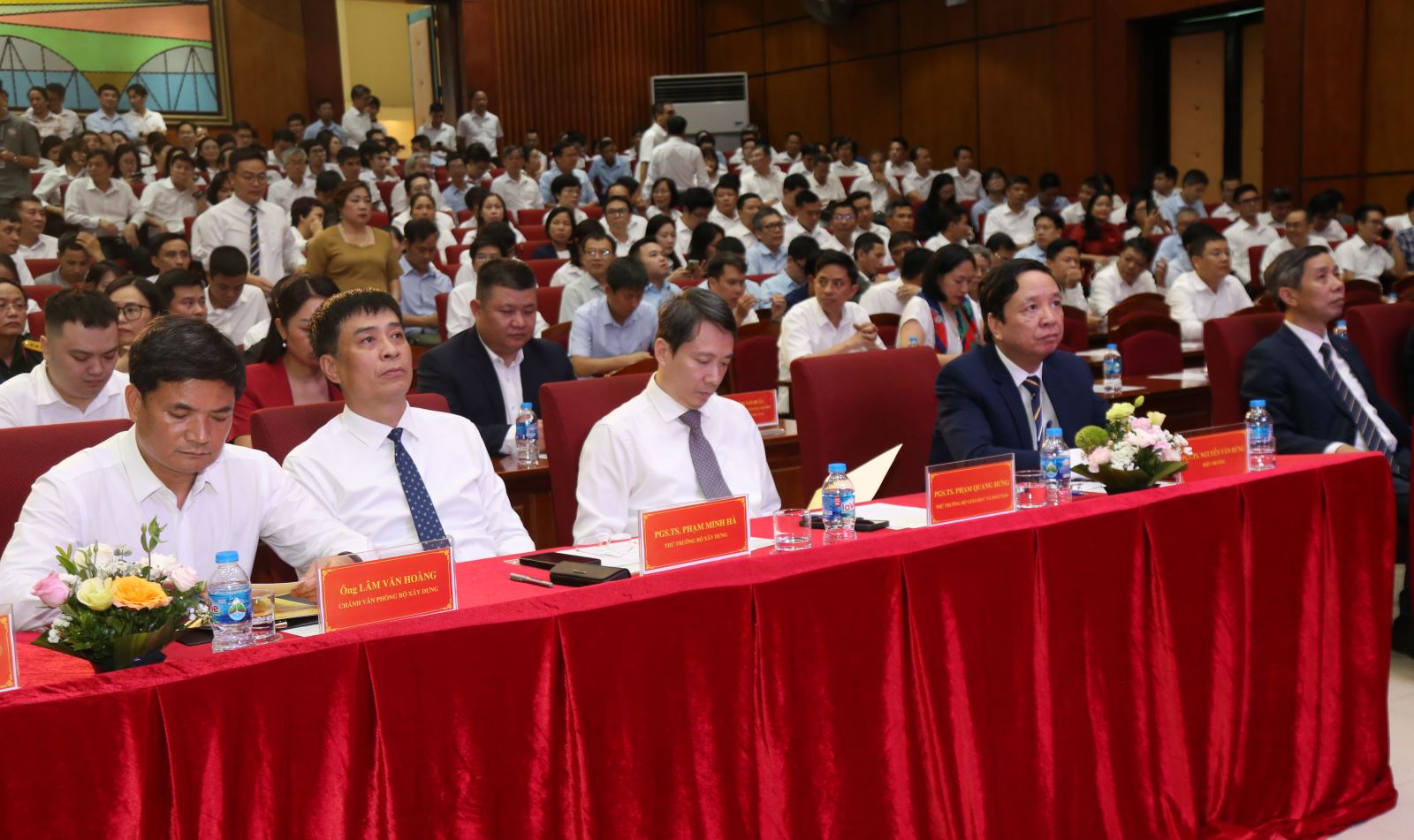
Delegates attending the program
Speaking at the conference, Assoc. Prof. Dr. Nguyen Van Hung, Secretary of the Party Committee and President of UTC, affirmed that Resolution No. 57-NQ/TW identifies the development of science and technology, innovation, and national digital transformation as a top priority and a key breakthrough. The Resolution also calls for universities to become strong research entities, with close integration among research, application, and training.
Resolution No. 71-NQ/TW affirms that higher education plays a core role in developing highly qualified human resources and talents, while promoting science and technology and innovation. It also calls for streamlined, autonomous, and modern university governance, with learners at the center, and for stronger linkages between universities and society, industry.
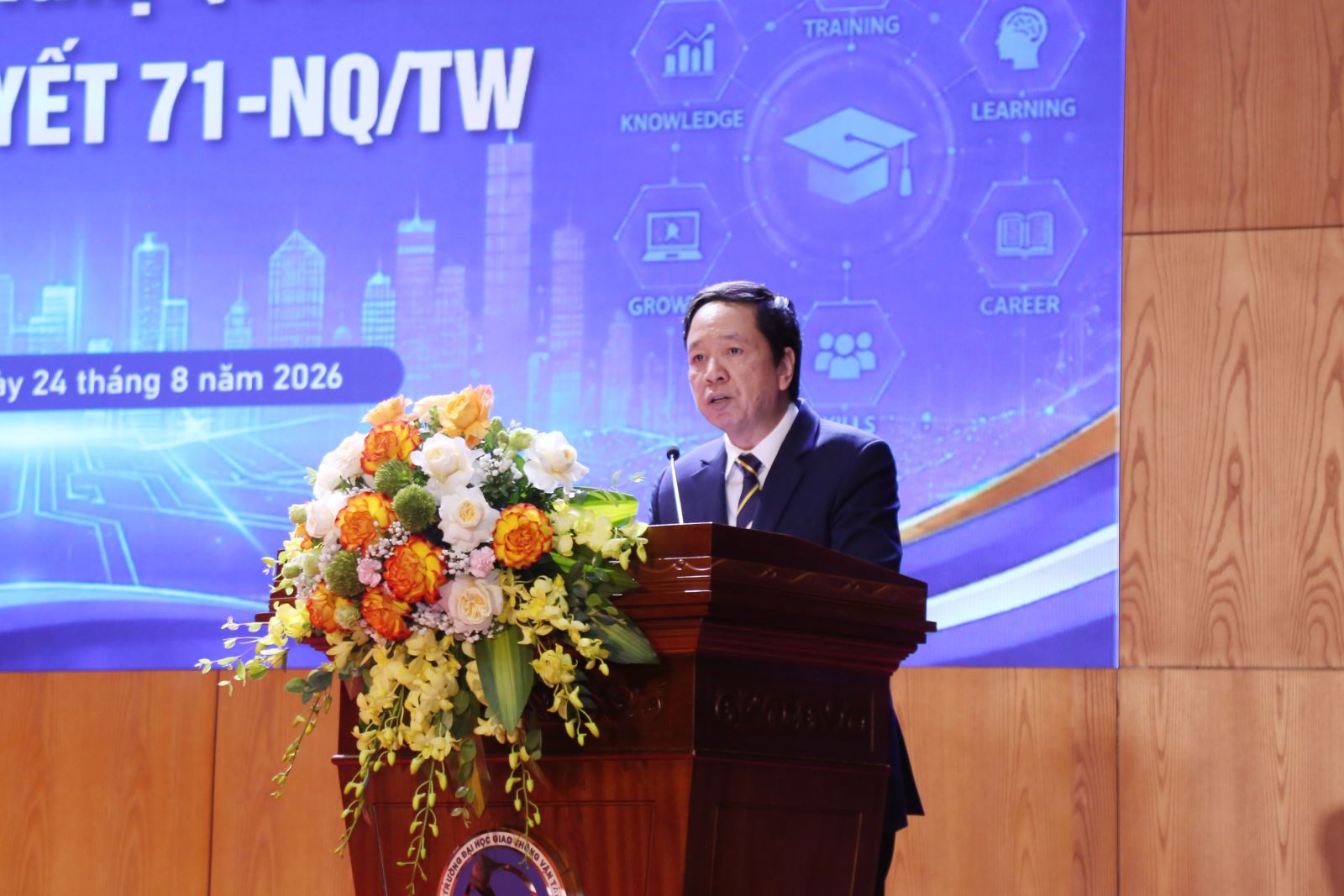
Assoc. Prof. Dr. Nguyen Van Hung, Secretary of the Party Committee and President of UTC, delivers his remarks.
Two resolutions – one comprehensive reform program
In line with this vision, UTC has reviewed and revised its Development Strategy for the 2026–2030 period, aligning the pillars of governance, education and training, science and technology, innovation, digital transformation, and international cooperation with key national programs and projects. On August 20, 2026, pursuant to Decision No. 1612/QD-TTg of the Prime Minister, UTC was designated as one of 12 leading higher education institutions in the capital city. The University continues to uphold its mission as a key national higher education institution in the transport sector, with the goal of entering the group of the top 200 universities in Asia by 2030.
The University has consolidated the model in which the Secretary of the Party Committee concurrently serves as the head of the higher education institution. It has also implemented organizational restructuring toward streamlining organizational units, reducing intermediary levels, clearly defining functions and responsibilities, and strengthening accountability. Following the restructuring, the number of second-level units was reduced from 37 to 23, representing a 37.8% reduction; the number of deputy heads of second-level units was reduced from 44 to 22, a 50% reduction. The number of third-level units was reduced from 62 to 42, representing a 32.3% reduction.
Alongside organizational restructuring, the University is finalizing schemes on job positions, working arrangements, KPI-based performance evaluation, digital governance, and institutional ranking enhancement. These efforts are gradually establishing a modern, transparent, and data-driven governance model. Institutional autonomy is being coupled with the diversification of revenue sources through science and technology, innovation, and the utilization of public assets, while practicing greater efficiency in recurrent expenditure to mobilize resources for sustainable development.
Transforming education and developing human resources for strategic sectors
In the railway sector, UTC took the lead in developing the undergraduate training program standards, which were promulgated by the Minister of Education and Training under Decision No. 1061/QD-BGDDT dated May 4, 2026. The University has also completed the development of training program standards for master’s and doctoral levels and submitted them to the Ministry of Education and Training. UTC has proposed 12 STEM talent engineering programs and completed the dossiers for establishing new programs in artificial intelligence, information security, and data science. Digital competencies, artificial intelligence, entrepreneurship, and innovation have also been integrated into the University’s training programs.
The University currently offers 10 high-quality training programs, one advanced program, and two international joint training programs. The total number of learners enrolled in these programs has increased by 14% compared with the same period of the previous academic year. The number of newly enrolled graduate students in the 2025–2026 academic year increased by more than 40%. More than 60 new doctoral students were admitted in 2025 and the first half of 2026, representing a 28% increase compared with the 2023–2024 period.
UTC currently has 1,041 staff and employees, including 785 lecturers. Of these, 364 lecturers hold doctoral degrees or higher, accounting for 46.3%. The University has 64 lecturers currently pursuing doctoral studies both domestically and overseas. In the first six months of 2026 alone, UTC sent 12 lecturers to pursue doctoral training and more than 20 staff members to China for training and professional development in high-speed rail. The University is currently entering into full-time contracts with 34 reputable professors, associate professors, and PhD holders, while also promoting cooperation with 76 international experts, scientists, and overseas Vietnamese professionals during the 2026–2027 academic year.
Science and technology focused on products and practical applications
In the 2025–2026 academic year alone, the University published 261 papers in reputable international journals, an increase of more than 15% compared with the previous academic year. The publication productivity at both domestic and international levels reached approximately 1.2 papers per lecturer.
The University is currently leading 34 ministerial-level and equivalent research projects, with a total value of approximately VND 51.5 billion. Including ongoing research tasks under the University’s leadership and revenue from technology transfer, the total value exceeds VND 54 billion. In 2025, 18 research products were transferred to users, generating more than VND 2.8 billion in revenue.
As of the end of June 2026, UTC had been granted 22 intellectual property protection certificates, including eight patents and 14 utility solution patents. The University has established four strong research groups and 19 promising research groups, focusing resources on specific products and strategic technological challenges.
In particular, the University is participating across the entire chain of strategic science and technology tasks in the railway sector assigned by the Ministry of Construction, including leading three tasks, co-leading four tasks, and participating in one task, with a total proposed budget of more than VND 200 billion. The research areas include ballastless track structures, rail and railway component manufacturing, railway subgrade, next-generation mobile communication networks, and interlocking systems for train operation control.
Several initial products have been developed, including: an architectural framework for a high-speed railway standards system; designs for five typical beam types; technical reports on solutions for the design, construction, and treatment of railway subgrades; infrastructure structural components manufactured and experimentally tested at laboratory scale; and the UTC-HSR Track Dynamic Analysis software, which simulates the dynamic interaction between rolling stock and ballastless track systems. In addition, the University has introduced AI-integrated UAV products for infrastructure inspection, damage detection, and infrastructure monitoring.
.jpg)
Deputy Minister of Education and Training Pham Quang Hung and Deputy Minister of Construction Pham Minh Ha visit the exhibition area showcasing science and technology products developed by the University of Transport and Communications.
Digital transformation and an open collaboration ecosystem
In recent years, the University has developed and submitted to the Ministry of Education and Training the project entitled “Developing a digital university ecosystem toward a smart university model,” with a total estimated investment of approximately VND 190 billion. In the second semester of the 2025–2026 academic year, a blended learning model was implemented across 52 courses offered by 19 academic departments, with more than 290 course classes. All staff and employees have participated or are currently participating in programs to enhance digital competencies and AI application skills. Academic diplomas issued during the 2020–2025 period have been digitized, and an AI chatbot has been piloted to support students in distance education and admissions.
The “Government–University–Industry” collaboration model continues to expand, with businesses increasingly involved in curriculum development, providing input on learning outcomes, supplying experts, hosting internships, co-supervising graduation projects, sponsoring equipment, commissioning research, and receiving technology transfers. In the railway sector alone, the University has organized six short-term training courses for more than 200 participants from regulatory agencies and businesses. In the semiconductor sector, the University has received scholarships, equipment, and specialized software support from various organizations and businesses, while also expanding partnerships with domestic and international technology corporations.
Deepening international integration
Since August 2025, the University of Transport and Communications has signed 30 cooperation agreements, including six domestic agreements and 24 international agreements, of which 11 focus on addressing strategic technological challenges. The University was selected by the Ministry of Education and Training to host the 3rd Presidents’ Conference of Vietnamese and Russian Universities, bringing together representatives from 130 higher education institutions from the two countries. UTC has also expanded cooperation with universities, research institutes, and businesses in China, Japan, South Korea, the United Kingdom, France, Germany, Australia, and many other countries.
The international projects currently underway have a total value of approximately VND 149 billion. These include the ACCESS project, funded by Erasmus+ with a value of VND 30.25 billion; three cooperation projects under British Council programs, with a combined value of more than VND 1.2 billion; a sand-reduction viaduct project in the Mekong Delta, funded by the Korea–Mekong Cooperation Fund, valued at VND 12.2 billion; a SATREPS project on carbon-neutral cities and AI-enabled smart mobility, valued at more than VND 81 billion; and a project funded by the European Commission, valued at VND 24.19 billion. In the QS World University Rankings: Asia 2026, UTC ranked 607th among 1,529 higher education institutions across 25 countries and territories.
To address barriers related to research commissioning mechanisms, commercialization, and intellectual property, Assoc. Prof. Dr. Nguyen Van Hung proposed that the Government and relevant ministries and agencies invest in key laboratories and develop a strong core team of leading scientists; provide funding to support the completion of products at the large-scale pilot stage; and that Hanoi City promptly establish a controlled testing mechanism (sandbox) for science and technology products and support the planning and development of UTC’s educational facilities at Hoa Lac.
As one of the 12 leading higher education institutions approved by the Prime Minister under Decision No. 1612/QD-TTg dated August 20, 2026, the University of Transport and Communications is committed to implementing four key tasks: strengthening autonomous governance; making breakthroughs in training in strategic fields, including railway, semiconductor technology, artificial intelligence, and aviation; accelerating the application of science and technology; and developing the Hoa Lac campus into an innovation hub while upgrading the University’s Ho Chi Minh City Campus into an independent university serving the southern region.
Assoc. Prof. Dr. Nguyen Van Hung expressed his confidence that, building on more than 80 years of tradition and development and guided by the spirit of “Pioneer – Responsibility – Quality – Adaptability,” the University of Transport and Communications will continue to pursue strong innovation and successfully fulfill its assigned tasks; train high-quality human resources; conduct research, develop, and gradually master strategic technologies; and make practical contributions to the construction sector, the transport sector, and the country’s development.
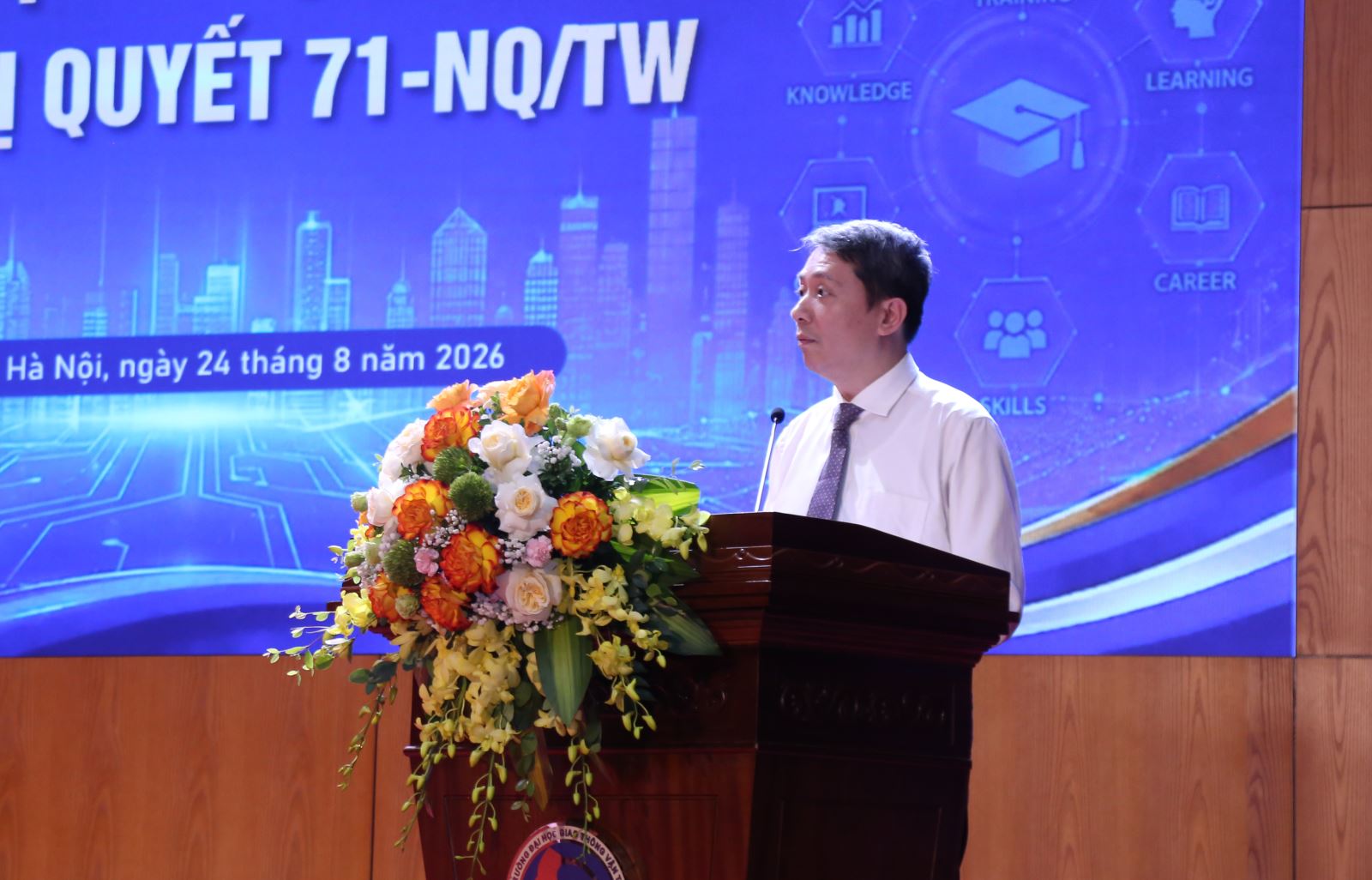
Deputy Minister of Education and Training Pham Quang Hung delivers his remarks.
Speaking at the conference, Deputy Minister of Education and Training Pham Quang Hung emphasized that, in higher education, Resolutions No. 57 and No. 71 should be implemented as “two sides of a unified whole.” While Resolution No. 71 focuses on people, educational quality, human resources, and talent development, Resolution No. 57 places emphasis on science and technology, innovation, and digital transformation. Universities are precisely where these two sets of requirements converge.
Building on the University of Transport and Communications’ progress in education and scientific research, the Deputy Minister acknowledged that the University has strengthened training programs in close connection with businesses and practical needs, with more than 90% of graduates working in jobs relevant to their field of study. The University has also provided training, professional development, and distance education in the railway sector for more than 1,600 learners.
In scientific research, the high-speed railway infrastructure program has initially developed an architectural framework for the standards system, design dossiers, typical bridge beams, as well as a number of results from design, manufacturing, and testing activities.
According to the Deputy Minister, the Government’s designation of the University of Transport and Communications as one of the 12 key higher education institutions in Hanoi’s capital area is both a recognition of the University’s achievements and a significant responsibility, placing greater demands on the University in developing human resources, science and technology, and innovation.
The Deputy Minister highly appreciated the University’s approach of using student success as a measure of the effectiveness of its educational activities, and the extent to which its science and technology outcomes serve the country as a measure of the effectiveness of its research activities.
However, the key challenge is to translate this approach into concrete capabilities and tangible outcomes. According to the Deputy Minister, the University needs to define more clearly its strengths and responsibilities in the new development phase.
“Education and training must stay ahead of demand” is the requirement emphasized by the Deputy Minister for strategic fields such as high-speed rail, urban rail, and emerging technologies.
The University needs to work closely with regulatory authorities and businesses to forecast human resource needs, ranging from engineers and specialists to personnel in operations, maintenance, and management. At the same time, students should be given early exposure to real-world challenges through laboratories, projects, and business environments.
With regard to AI, the Deputy Minister noted that its implementation should focus on practical applications, making AI a professional tool for engineers to enhance their capabilities in design, analysis, and solving technical problems, rather than simply adding a number of AI-related courses to the curriculum.
The Deputy Minister paid particular attention to the science and technology program on high-speed railway infrastructure assigned by the Ministry of Education and Training to the University for implementation. During his visit to the exhibition, the Deputy Minister highly appreciated the University’s research achievements, noting that some products are already approaching practical application and have been commissioned by businesses. This is a positive indication that investment in scientific research is beginning to generate tangible outcomes.
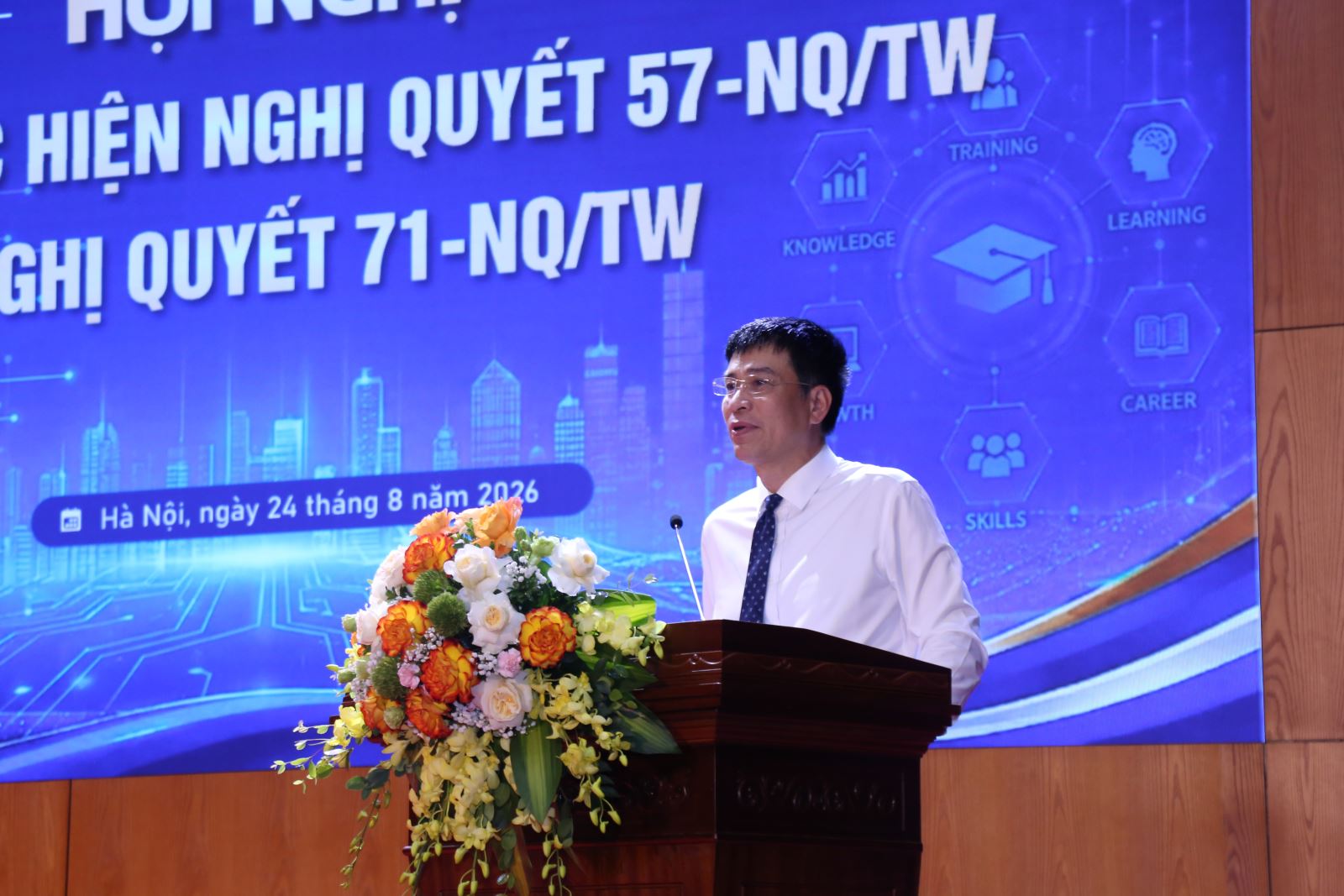
Deputy Minister of Construction Pham Minh Ha delivers his remarks.
Speaking at the Review Conference, Deputy Minister of Construction Pham Minh Ha emphasized that Resolution No. 57-NQ/TW and Resolution No. 71-NQ/TW call for substantive progress in science and technology, innovation, digital transformation, and human resource development. For a technical university, its performance must be measured by its capacity to address real-world challenges, master technologies, transfer products, develop and promulgate standards, and build a strong pool of experts.
This requirement is particularly important for the construction sector as the country prepares for and proceeds with the implementation of the North–South high-speed railway, national railway lines, and urban railway projects. These are complex, integrated systems encompassing infrastructure, rolling stock, power supply, signaling and telecommunications, operations, and safety. Therefore, alongside investment in infrastructure, it is essential to develop comprehensive capabilities in science and technology, standards, laboratories, human resources, and the capacity of domestic enterprises.
Deputy Minister of Construction Pham Minh Ha highly appreciated the University’s efforts to translate major policies into concrete tasks and products, while innovating its governance, developing its human resources, and strengthening its training programs, research activities, and collaboration with businesses. The establishment of one strong research group and 15 promising research groups is a necessary step toward concentrating resources on strategic technological challenges.
Continuing to Work Together to Bring Research Outcomes into Projects
According to Deputy Minister of Construction Pham Minh Ha, the University has achieved initial results in human resource development, standards development, research organization, and the development of railway technology products. He called on the University to continue focusing on major challenges facing the sector, including: the scientific basis for technology selection; systems of standards and technical regulations; materials, structural components, and equipment; localization capabilities; testing and inspection capacity; digital technologies throughout the entire lifecycle of infrastructure projects; and the organization of research groups around specific products, linked to clearly identified application areas.
Deputy Minister Pham Minh Ha called on the relevant agencies of the Ministry of Construction to continue coordinating with and supporting the University of Transport and Communications in implementing its assigned tasks; to conduct thorough research, assessment, and feedback on the initial research products so that they can be considered for testing, further development, and application in appropriate programs and projects.
On the occasion of the launch of the Open Library Portal on Modern Railways of the University of Transport and Communications, Minister of Construction Tran Hong Minh sent a congratulatory letter to the University.
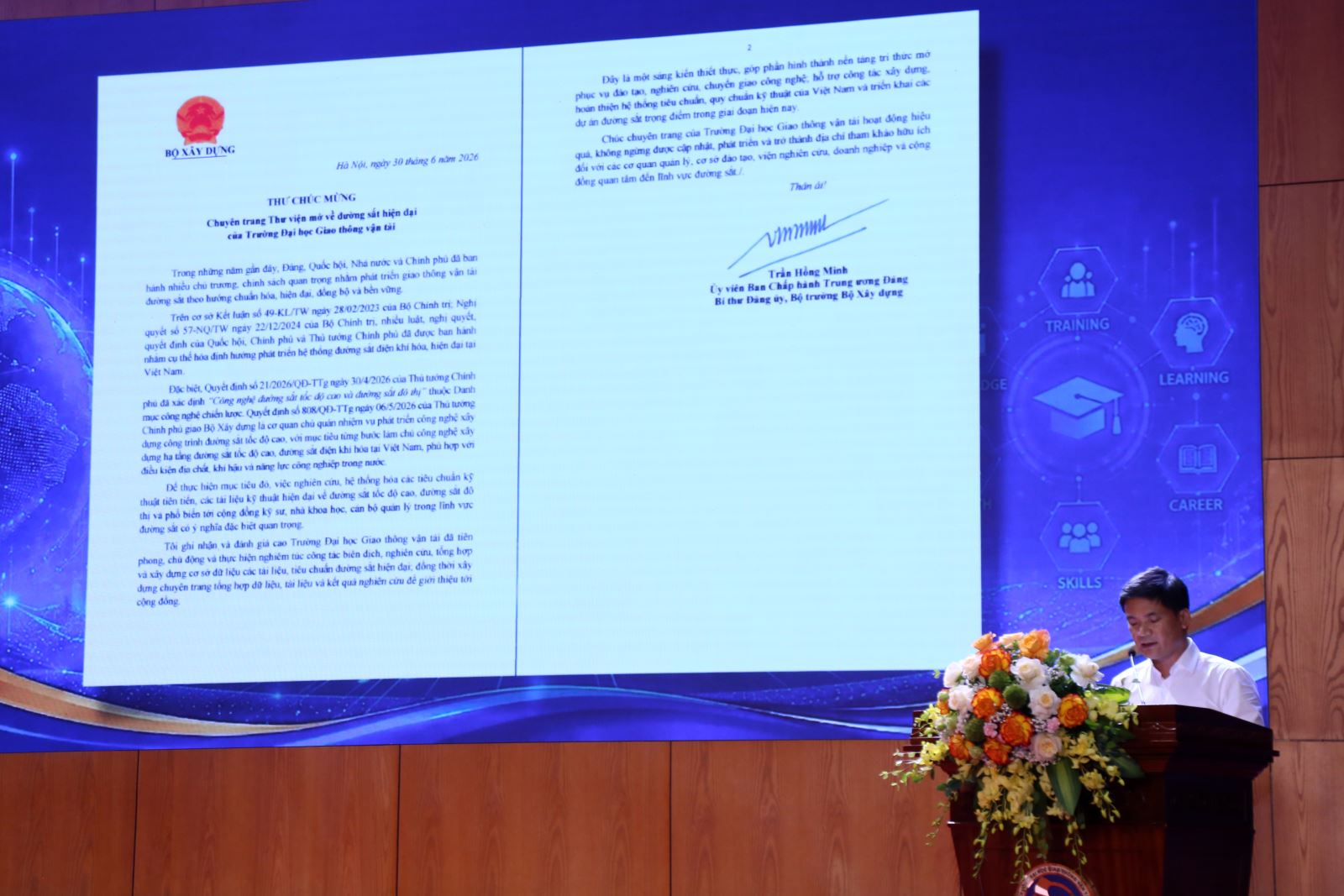
Mr. Lam Van Hoang, Chief of the Office of the Ministry of Construction, announces the congratulatory letter from the Minister of Construction.
As part of the Program, the University of Transport and Communications presented a report on the restructuring and reorganization of the University’s units; assigned tasks for the establishment of strong and promising research groups; and introduced strategic science and technology products in the fields of high-speed rail, urban rail, UAVs, AI, smart transport infrastructure, advanced materials, and advanced structures.
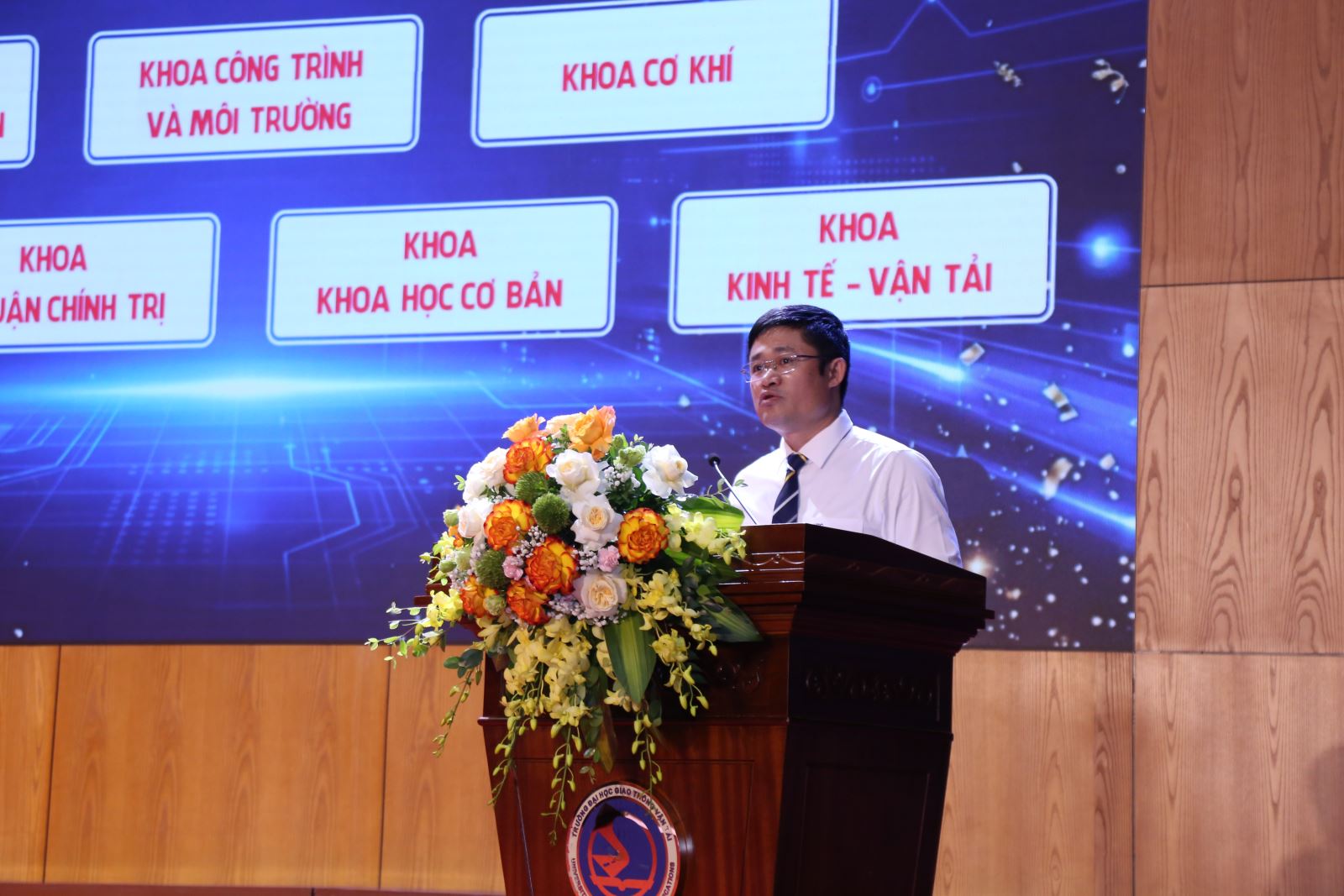
Assoc. Prof. Dr. Nguyen Van Hai, Head of the Personnel and Organization Department, reports on the restructuring and reorganization of the University’s units.
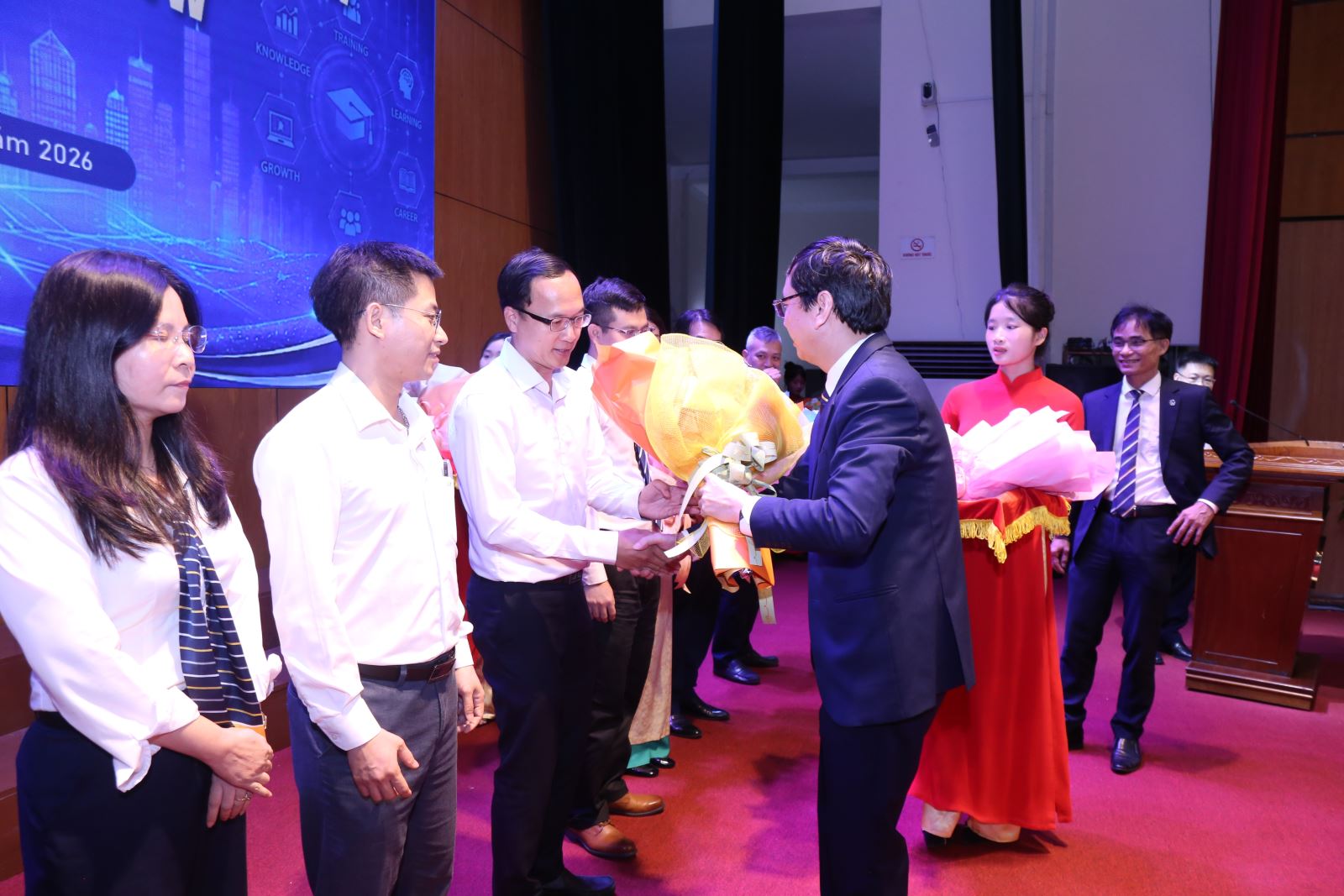
University leaders present flowers to congratulate scientists from the strong and promising research groups.
The University also signed strategic cooperation agreements with Hoa Phat Dung Quat Rail and Special Steel JSC, AMACCAO Group, and the Institute of Building Science and Technology under the Ministry of Construction.
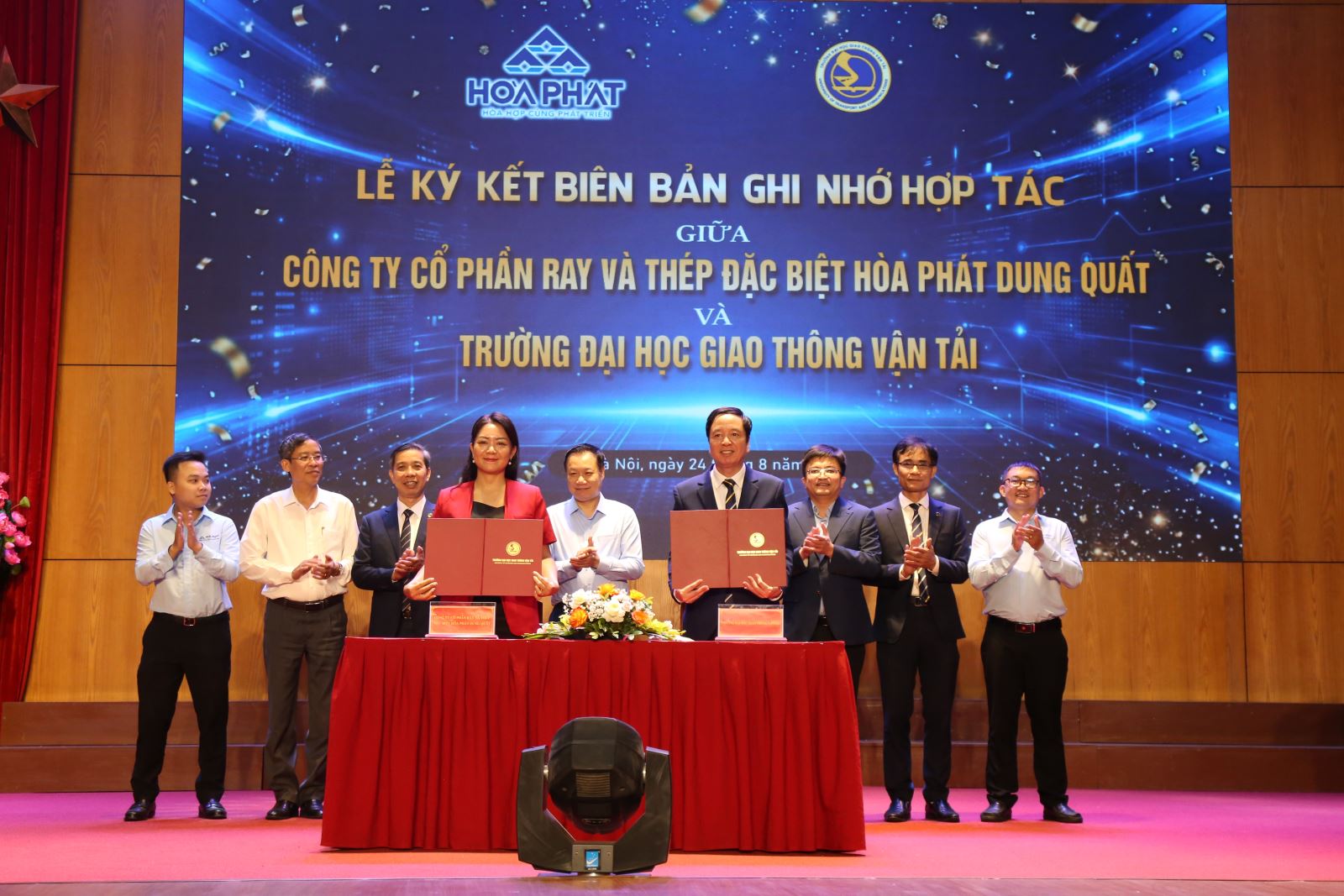
Signing of the cooperation agreement between the University of Transport and Communications and Hoa Phat Dung Quat Rail and Special Steel JSC.
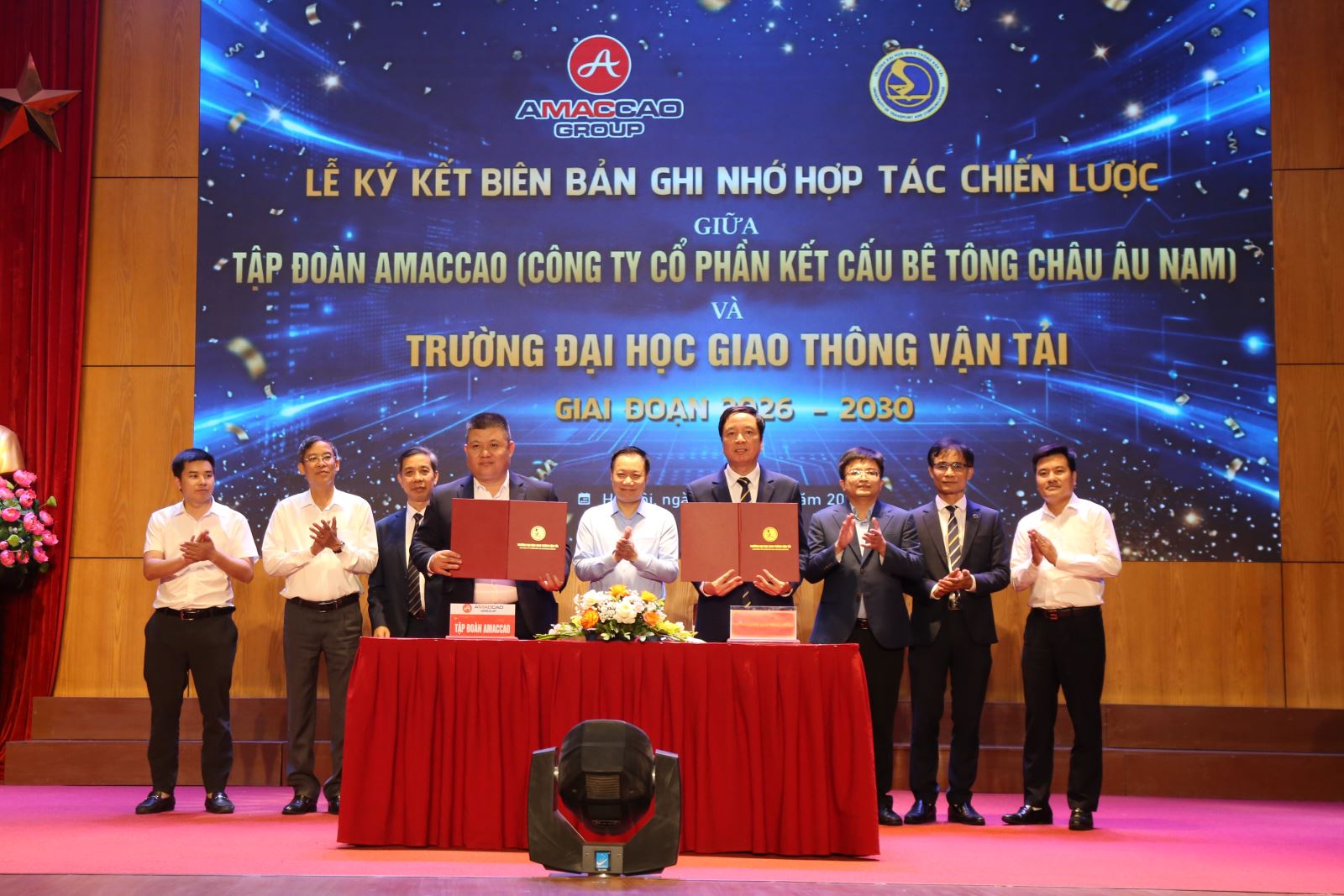
Signing of the strategic cooperation agreement between the University of Transport and Communications and AMACCAO Group (Nam European Concrete Structures Joint Stock Company).
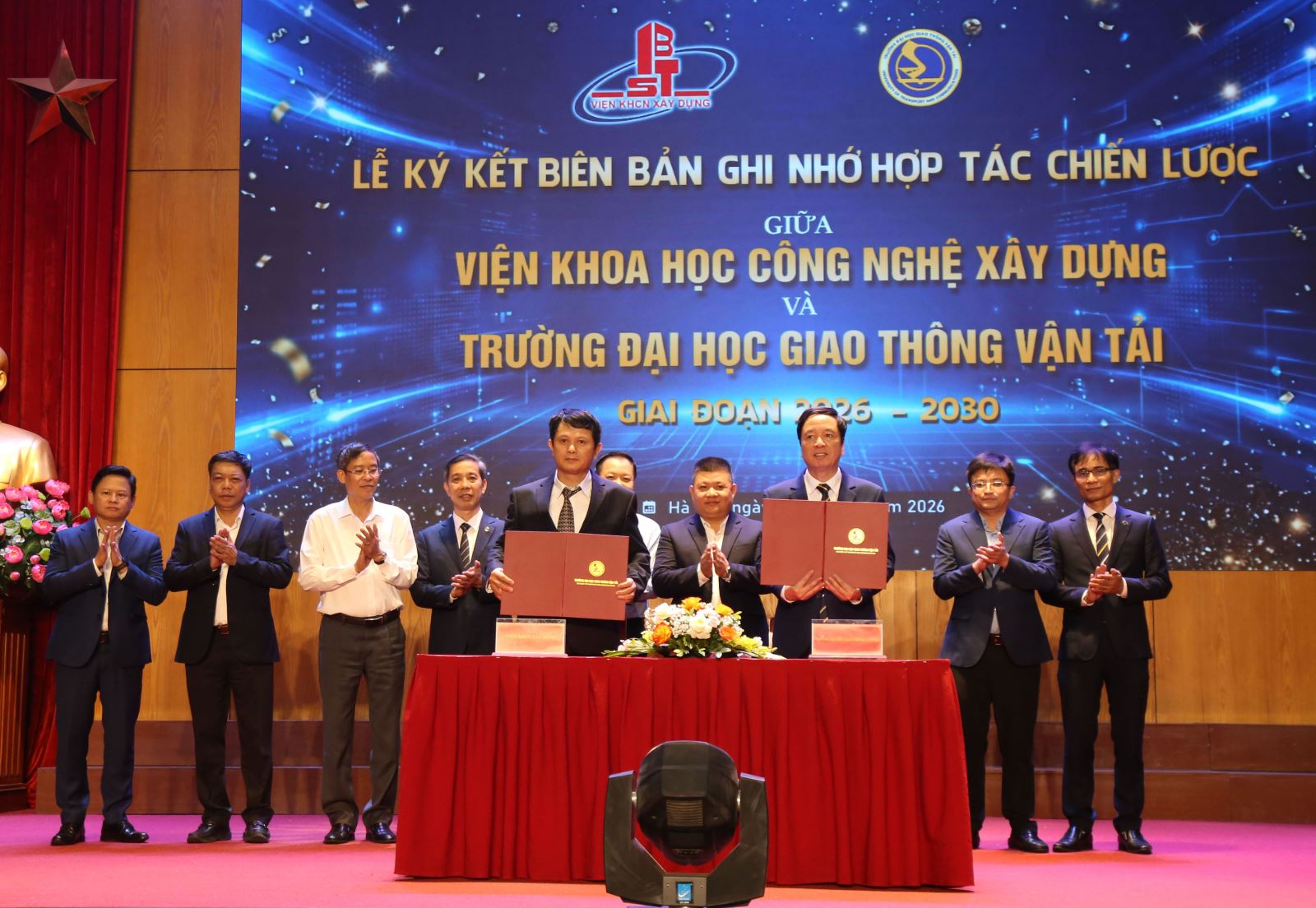
Signing of the strategic cooperation agreement between the University of Transport and Communications and the Institute of Building Science and Technology.
The outcomes presented at the Program demonstrate that Resolution No. 57-NQ/TW and Resolution No. 71-NQ/TW are being translated into concrete changes in the mindset, organizational structure, and operations of the University of Transport and Communications. Guided by the spirit of “Pioneer – Responsibility – Quality – Adaptability,” the University is committed to continuing to develop high-quality human resources, strengthen research groups and laboratories, gradually master strategic technologies, expand its collaboration ecosystem, and make practical contributions to the development of the transport sector, Hanoi Capital, and the country.
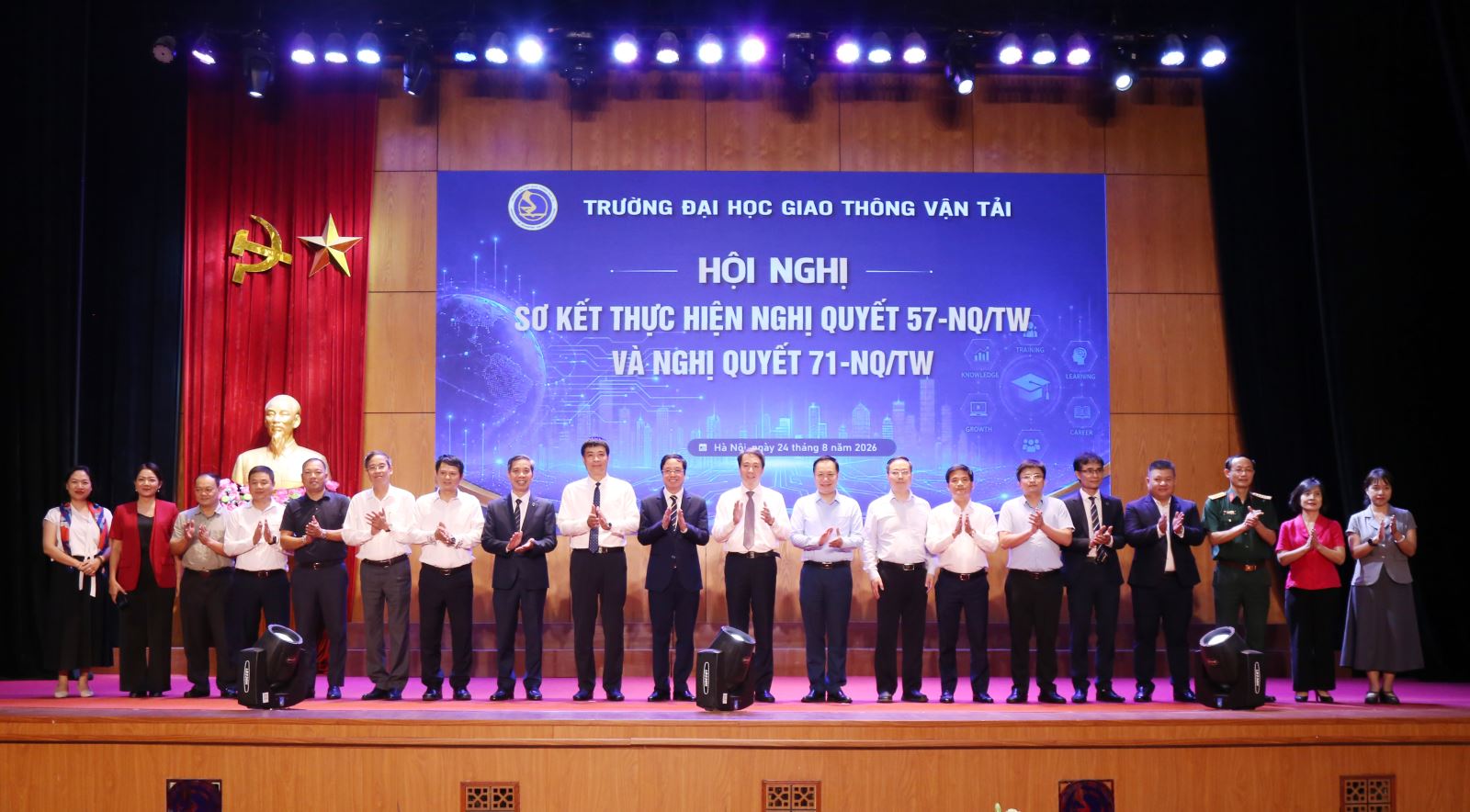
Delegates attending the program pose for a commemorative photo.
Related Articles
University of Transport and Communications (UTC) has been selected and assigned by the Prime Minister to play a co-leading role in developing and enhancing the quality of higher education in the Capital
DetailUniversity of Transport and Communications welcomes new students of cohort 67
DetailLaunching project on technical solutions for viaduct construction to minimize the use of sand and enhance sustainability in the development of transportation infrastructure in the Mekong Delta Subregion
Detail