
University of Transport and Communications Launches the Third-Cycle External Assessment of Institutional Quality
On the morning of 2 November 2026, the University of Transport and Communications (UTC), in coordination with the Centre for Education Accreditation – Vietnam National University, Hanoi, held the opening ceremony of the official external assessment of the University's institutional quality for the third accreditation cycle.
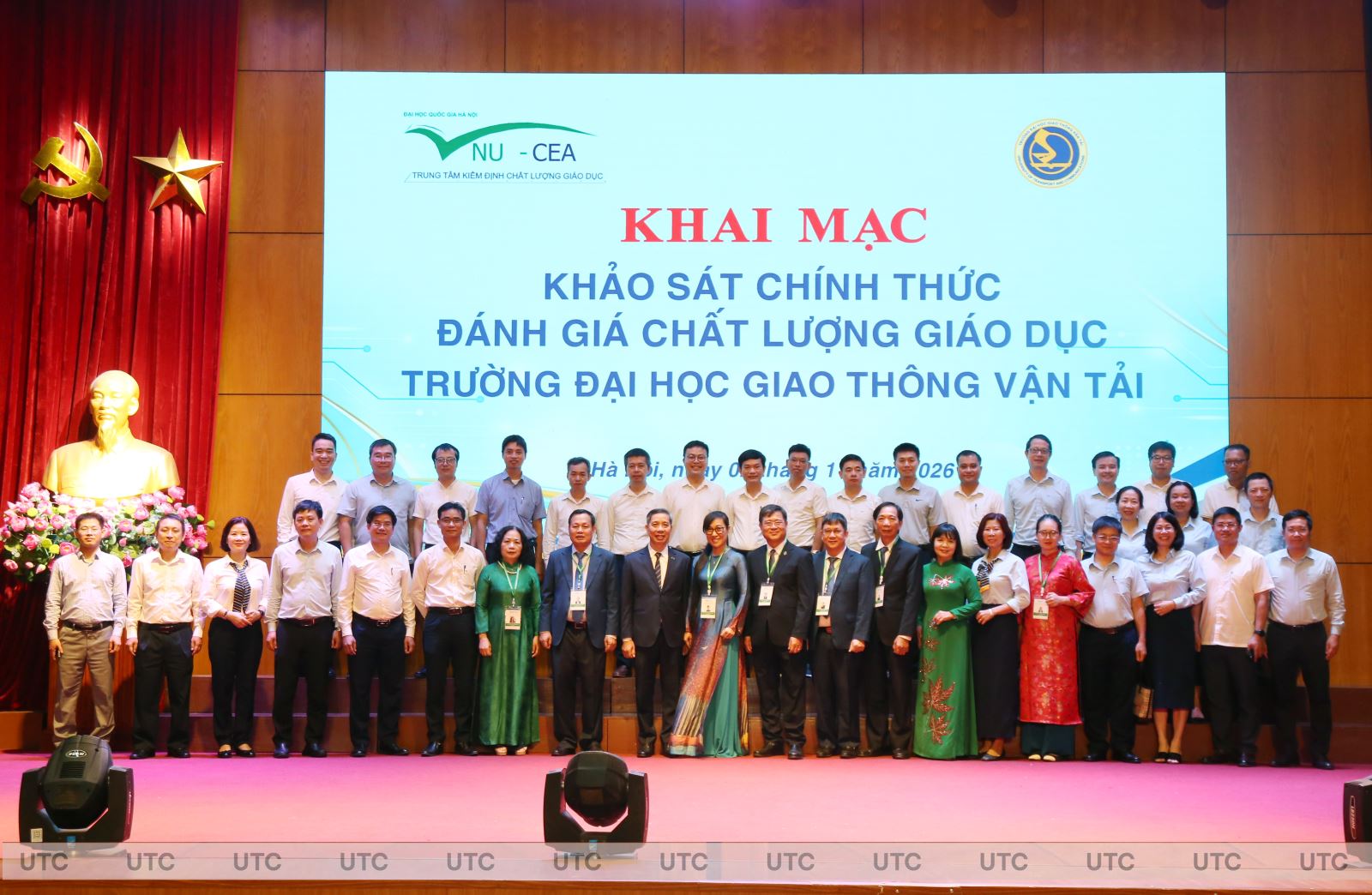
Delegates attending the opening ceremony pose for a group photo.
Attending the opening session, the external assessment team was represented by Prof. Dr. Nguyen Huu Duc, former Vice President of Vietnam National University, Hanoi, and Head of the External Assessment Team; Assoc. Prof. Dr. Ta Thi Thu Hien, Director of the Centre for Education Accreditation (Vietnam National University, Hanoi); and other members of the assessment team.
Representing the University of Transport and Communications were Assoc. Prof. Dr. Nguyen Thanh Chuong, Deputy Secretary of the Party Committee and Vice President; Assoc. Prof. Dr. Le Hoai Duc, Deputy Secretary of the Party Committee and Vice President; members of the University's Self-Assessment Council; and representatives of the leadership of its affiliated units. The opening ceremony was also connected online with UTC's Ho Chi Minh City Campus.
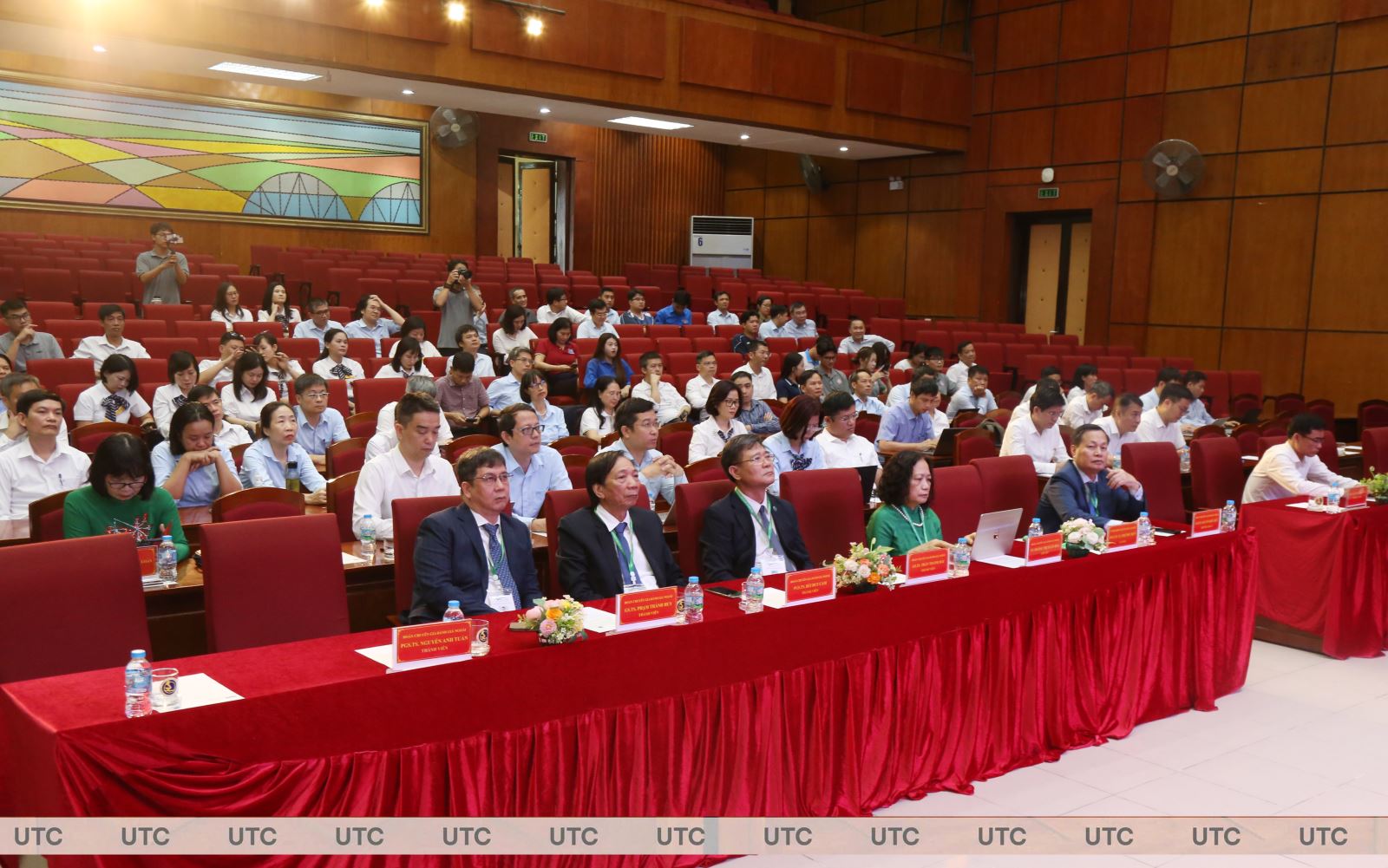
Delegates attending the opening session.
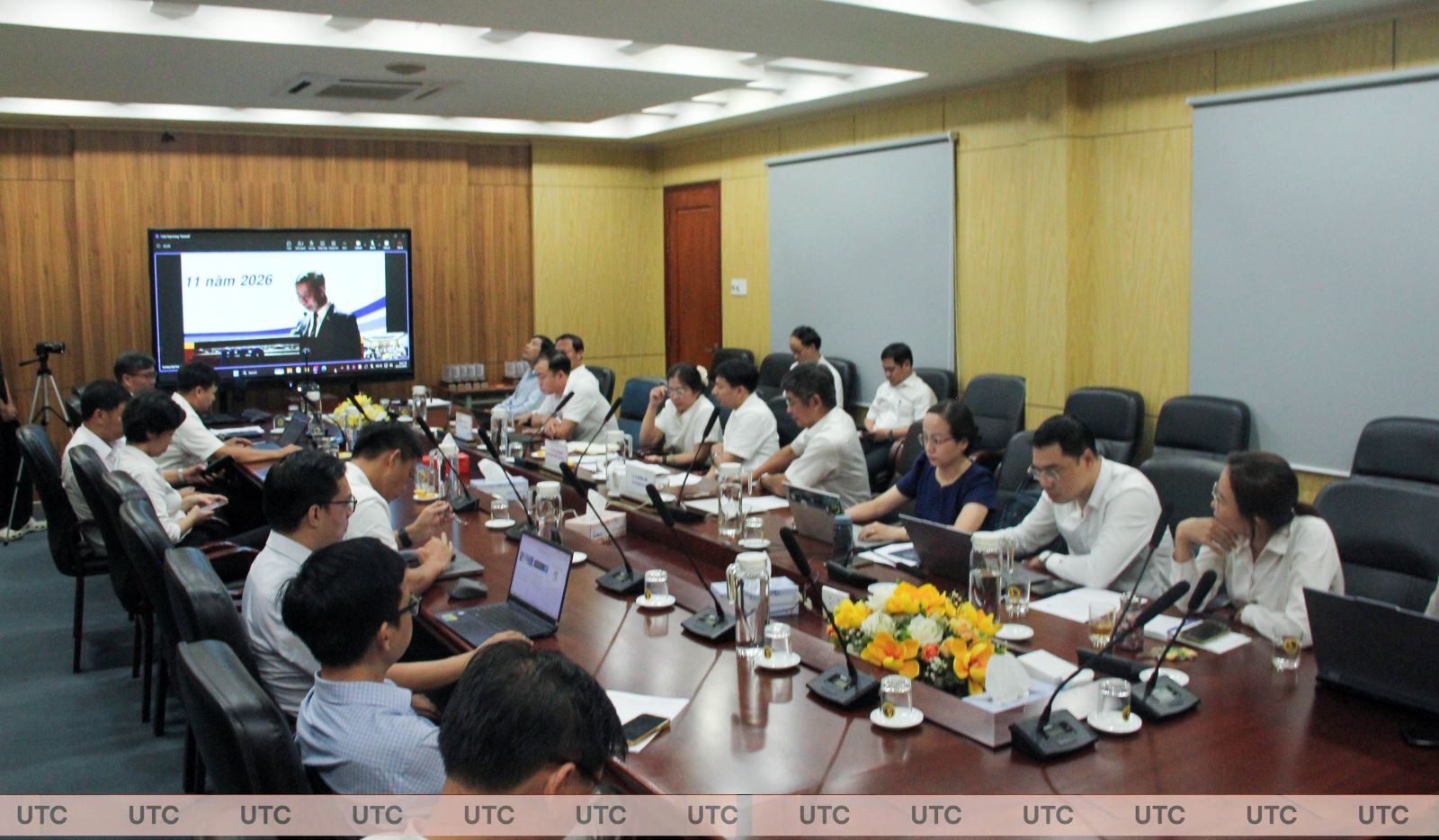
Delegates attending the opening session at UTC's Ho Chi Minh City Campus.
Raising Strategic Development Goals to New Heights in a New Era
As Vietnam enters a new phase of development, the country is presented with significant opportunities and demands for strategic breakthroughs. The issuance of Conclusion No. 91-KL/TW dated 12 August 2024 by the Politburo on the continued implementation of Resolution No. 29-NQ/TW; Resolution No. 57-NQ/TW dated 22 December 2024 on breakthroughs in the development of science and technology, innovation, and national digital transformation; and, in particular, Resolution No. 71-NQ/TW dated 22 August 2025 on breakthroughs in education and training development have set new requirements for higher education institutions. These policy directions reaffirm the pivotal role of higher education in developing a highly qualified workforce, enhancing national competitiveness, and contributing to the goal of achieving double-digit economic growth.
Recognizing both the opportunities and responsibilities of a long-established institution specializing in transport and technical infrastructure, the University of Transport and Communications has proactively reviewed and revised its development strategy, setting more ambitious goals:
- Enhancing international standing: To position UTC among the top 200 higher education institutions in Asia by 2030, replacing its previous target of reaching the top 350.
- Developing flagship disciplines: To have at least one academic discipline ranked among the world's top 200 according to reputable international rankings.
To achieve these goals, alongside improving the quality of education, scientific research, and faculty development, UTC has identified quality assurance as a central and continuous priority.
Taking the Lead in and Persistently Building a Culture of Quality
The University of Transport and Communications has a strong track record in quality assurance and accreditation:
- 2016: UTC became the first university in Vietnam to receive institutional accreditation under the set of standards comprising 10 standards and 61 criteria.
- 2021 - 2022: UTC completed its second-cycle external assessment and was awarded the Certificate of Institutional Accreditation in 2022.
- Programme accreditation: UTC has completed the accreditation of nine academic programmes under the AUN-QA standards and 14 programmes under the standards issued by the Ministry of Education and Training.
In recent years, UTC's quality assurance activities have become increasingly systematic, scientific, and integrated. The University has established a two-level quality assurance model covering the university level and its faculties and departments. It has also issued a comprehensive set of standardized documents, including the Quality Assurance Regulations (2023), Quality Policy, Regulations on Stakeholder Surveys, the ISO 9001:2015 Quality Management System, and the Quality Assurance Handbook (2024).
In addition, improvements in university governance, accelerated digital transformation, and active engagement with stakeholder feedback have helped raise awareness among university staff and lecturers, fostering a culture of quality throughout the institution.
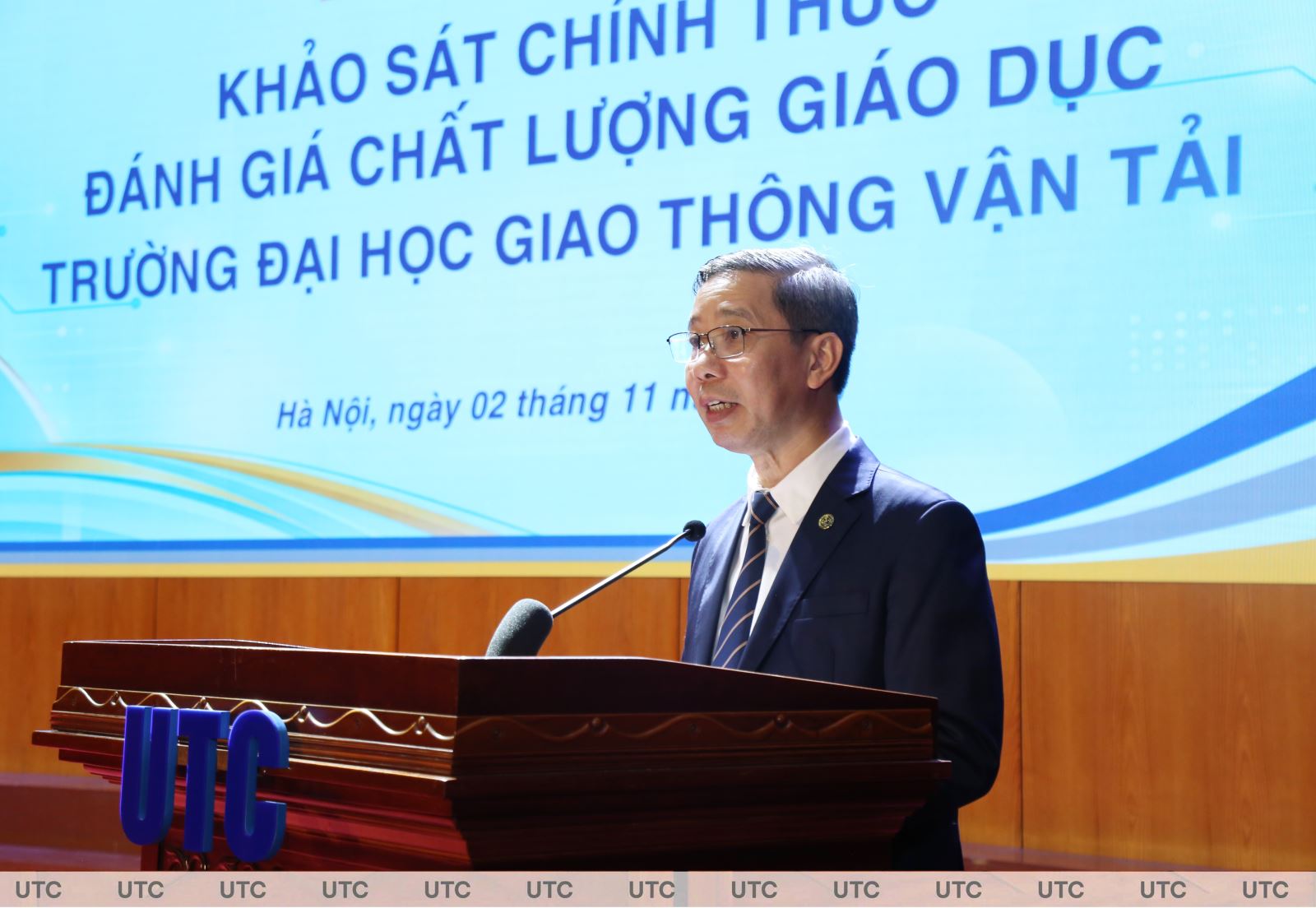
Assoc. Prof. Dr. Nguyen Thanh Chuong, Deputy Secretary of the Party Committee and Vice President of UTC, delivering his remarks.
A Commitment to Cooperation for Sustainable Development
In his opening remarks, Assoc. Prof. Dr. Nguyen Thanh Chuong, Deputy Secretary of the Party Committee and Vice President of UTC, emphasized that the third-cycle external assessment represents an important opportunity for the University to comprehensively review the implementation of its development strategy, evaluate the effectiveness of its governance system, and identify improvement measures for the coming period.
In fulfilment of its commitments set out in the “Memorandum of Understanding Following the Preliminary Assessment” signed on 21 October 2026, UTC had made thorough preparations in terms of documentation, supporting evidence, and facilities for the official assessment.
Assoc. Prof. Dr. Nguyen Thanh Chuong expressed his confidence that the recommendations of the external assessment team would serve as a driving force for UTC to continue strengthening its development and advancing its international integration.
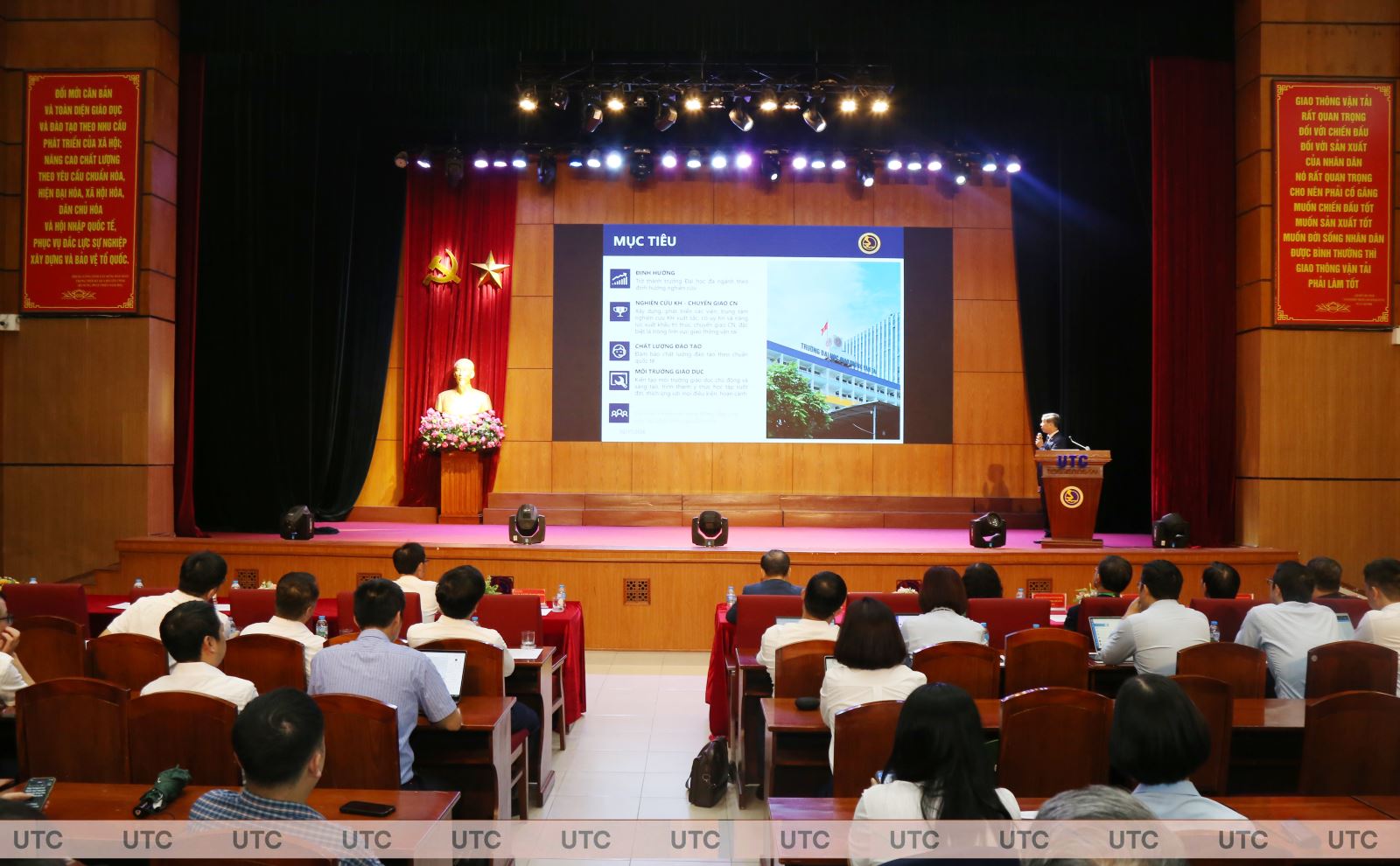
Assoc. Prof. Dr. Nguyen Thanh Chuong, Deputy Secretary of the Party Committee and Vice President of UTC, presenting an overview of the University of Transport and Communications.
Representing the accreditation body, Assoc. Prof. Dr. Ta Thi Thu Hien, Director of the Centre for Education Accreditation (Vietnam National University, Hanoi), expressed her sincere appreciation for the University's trust and cooperation over the past years.
She emphasized that the official assessment is a particularly important stage in the accreditation process. The external assessment team would review institutional documentation, verify supporting evidence, conduct interviews with relevant stakeholders, and undertake on-site observations to form the most objective assessment possible.
Assoc. Prof. Dr. Ta Thi Thu Hien also expressed her hope for open communication and close cooperation from UTC's staff, lecturers, and students, enabling the team to collect accurate data and provide valuable recommendations to support the University's continued development.
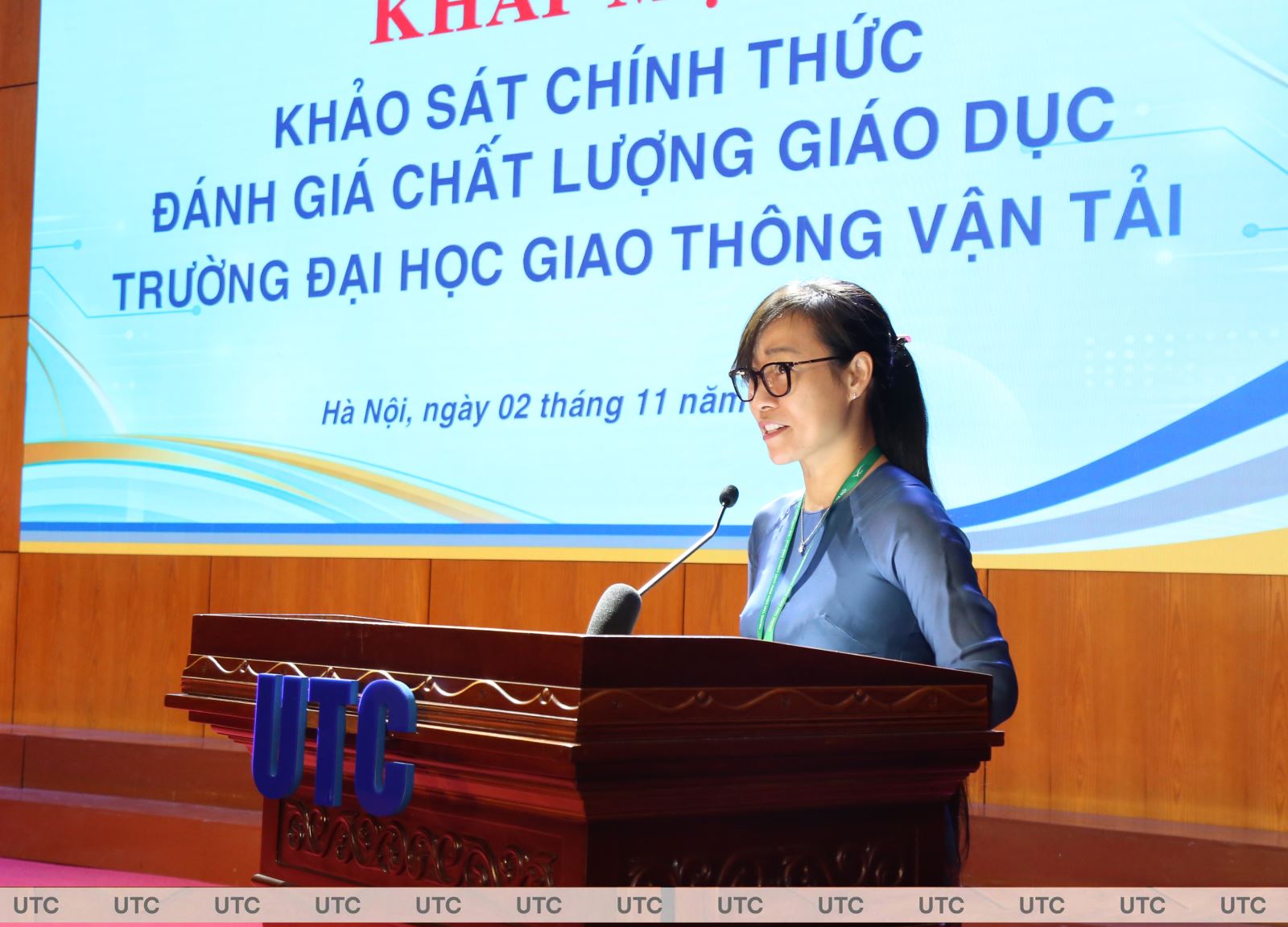
Assoc. Prof. Dr. Ta Thi Thu Hien, Director of the Centre for Education Accreditation (Vietnam National University, Hanoi), delivering her remarks.
The official external assessment took place from 31 October to 4 November 2026. Prior to the opening ceremony, on 31 October and 1 November, the external assessment team had conducted a preliminary review of institutional documents and supporting evidence, met with relevant university focal points, and interviewed representatives of enterprises and alumni, among other stakeholders.
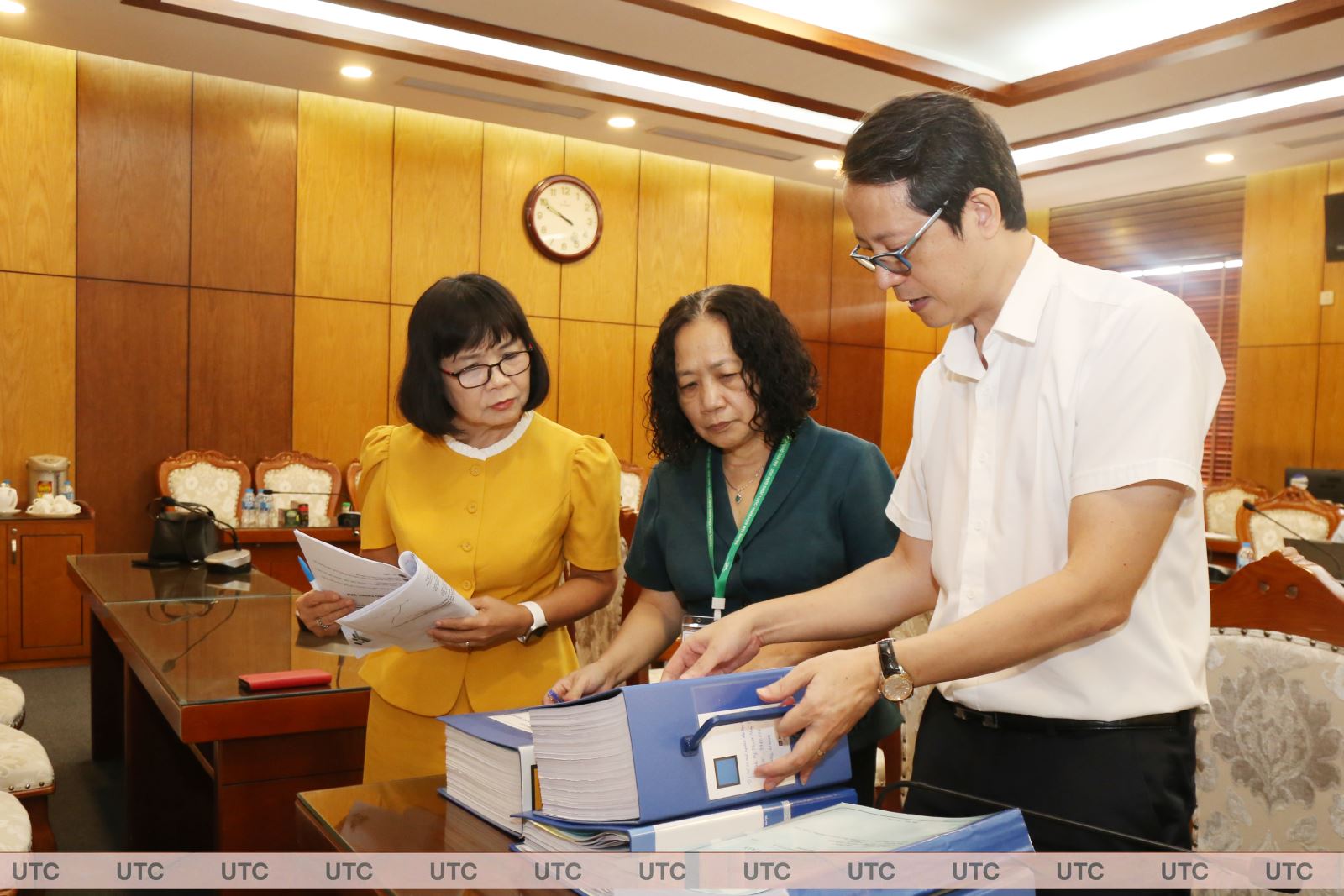
The external assessment experts meeting with staff responsible for academic affairs.
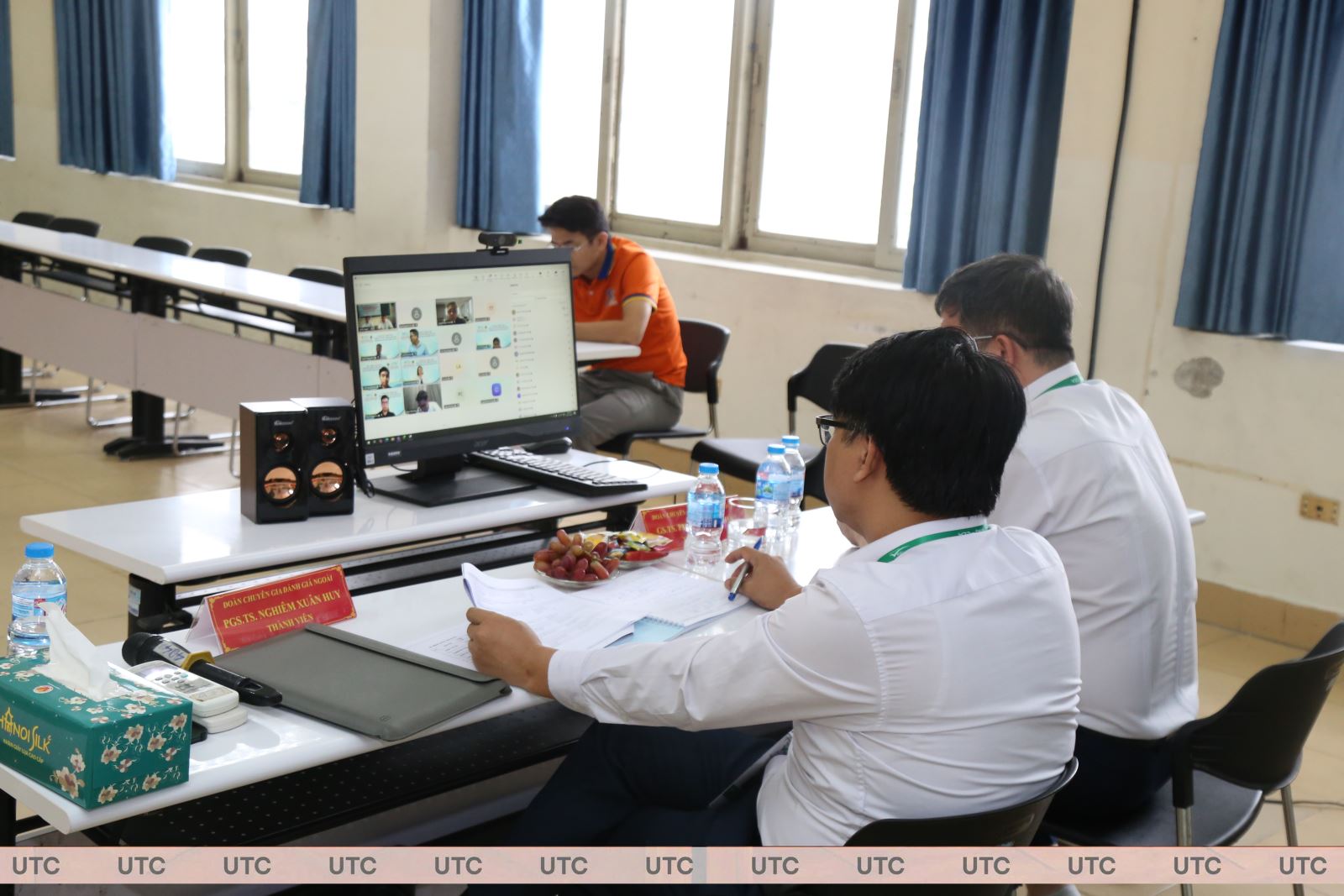
The external assessment experts interviewing employers in Hanoi and at the Ho Chi Minh City Campus.
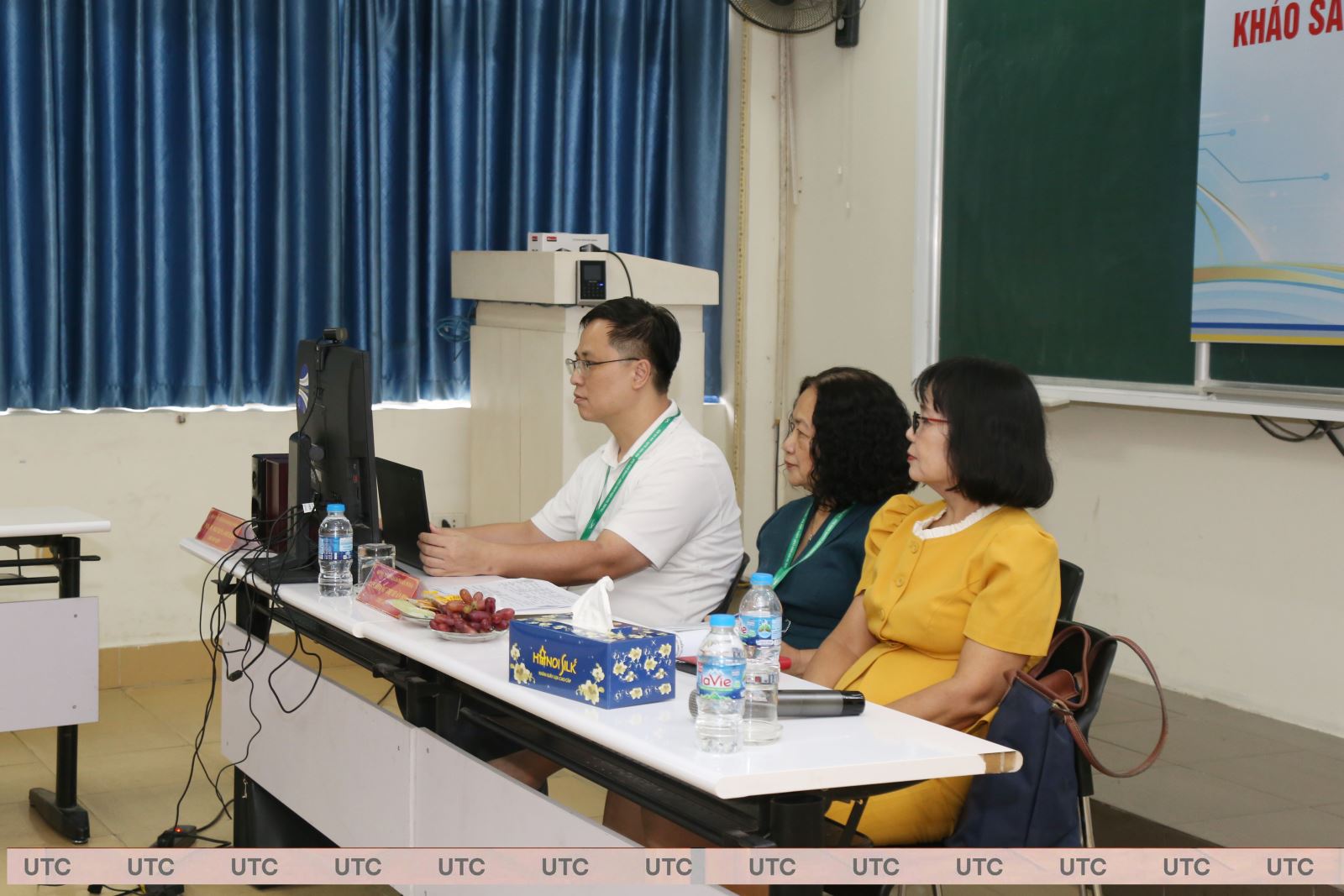
The external assessment experts interviewing alumni from various academic programmes in Hanoi and at the Ho Chi Minh City Campus.
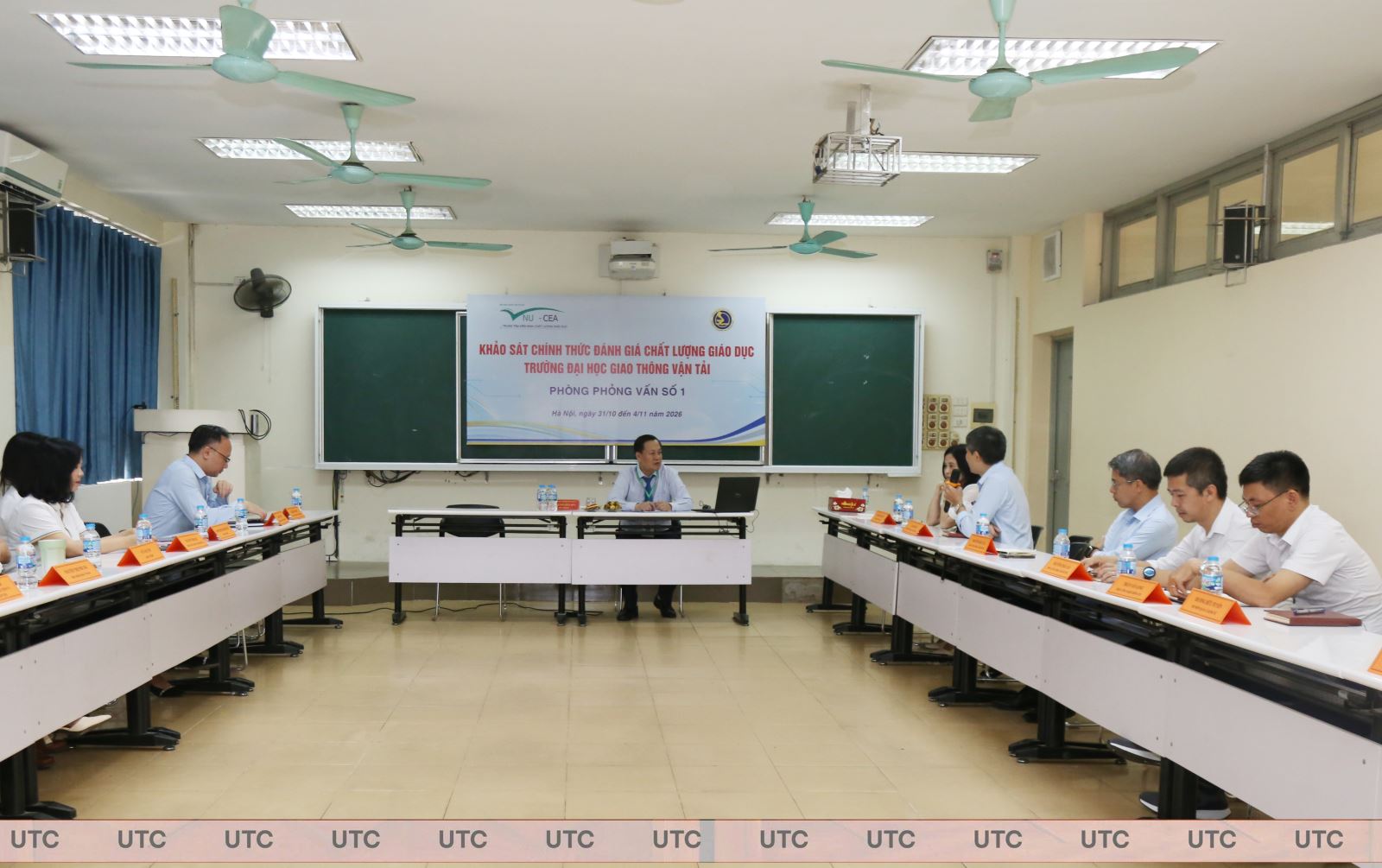
The external assessment expert interviewing academic managers.
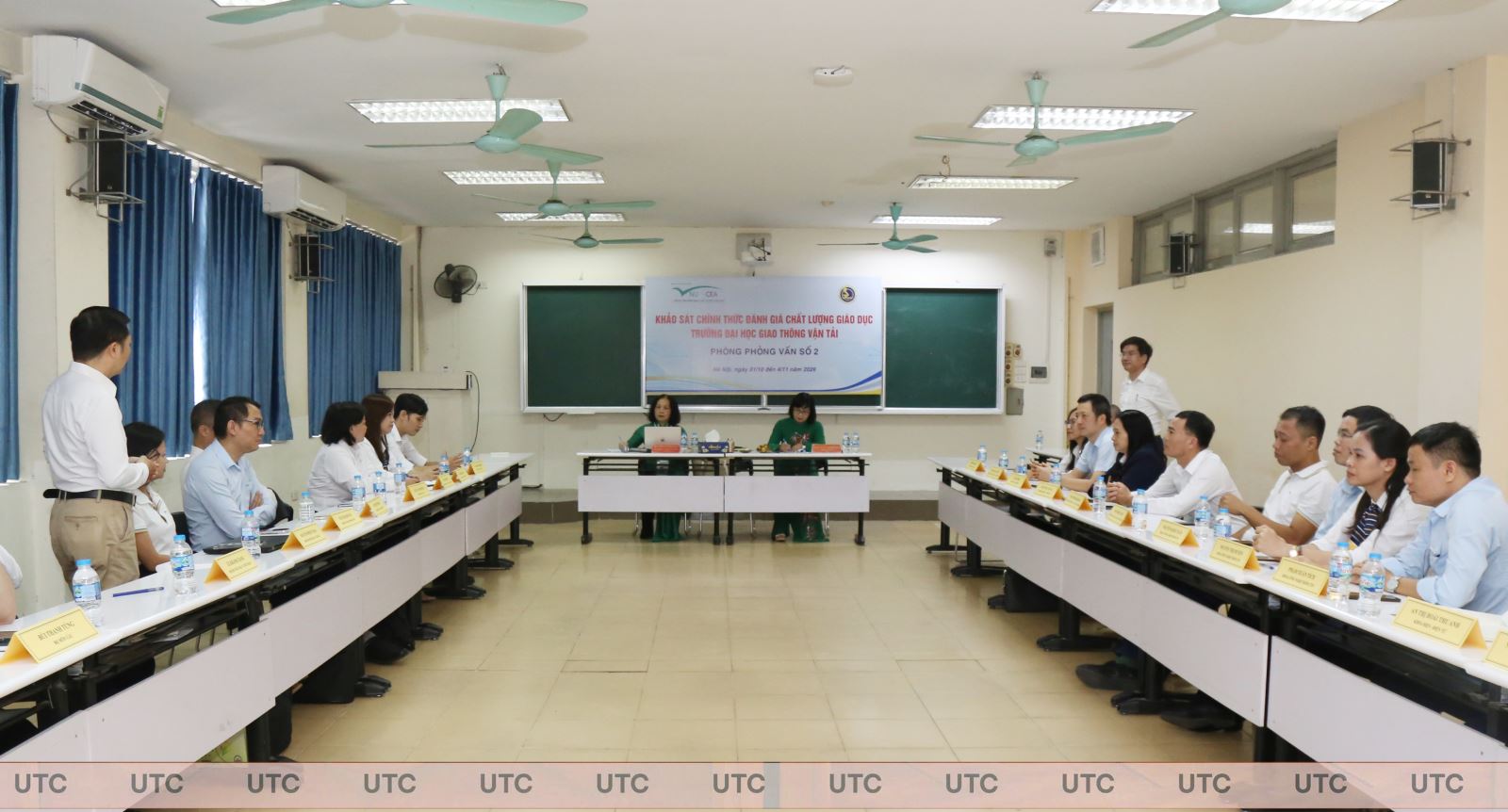
The external assessment expert interviewing lecturers.
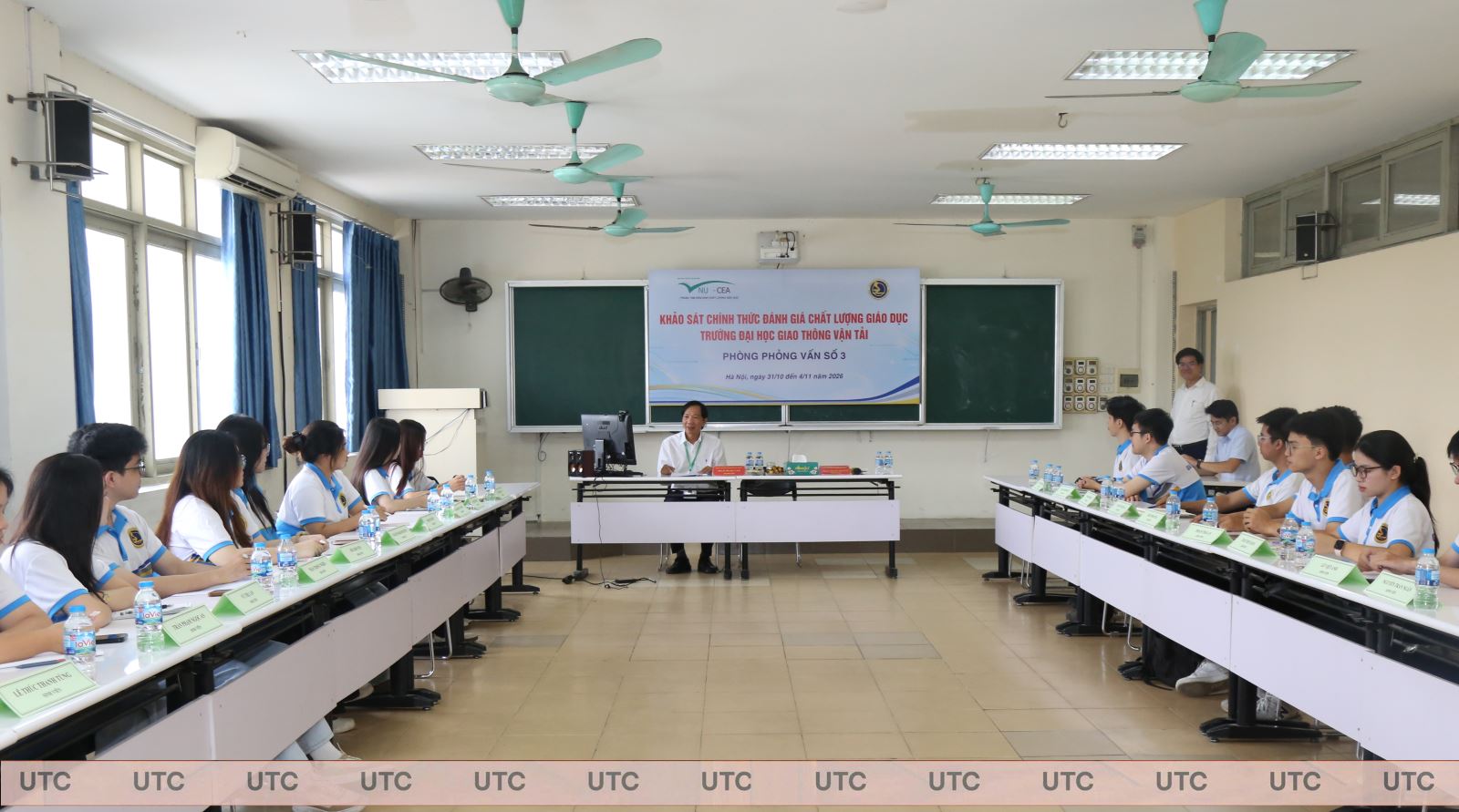
The external assessment expert interviewing students from various academic programmes in Hanoi.
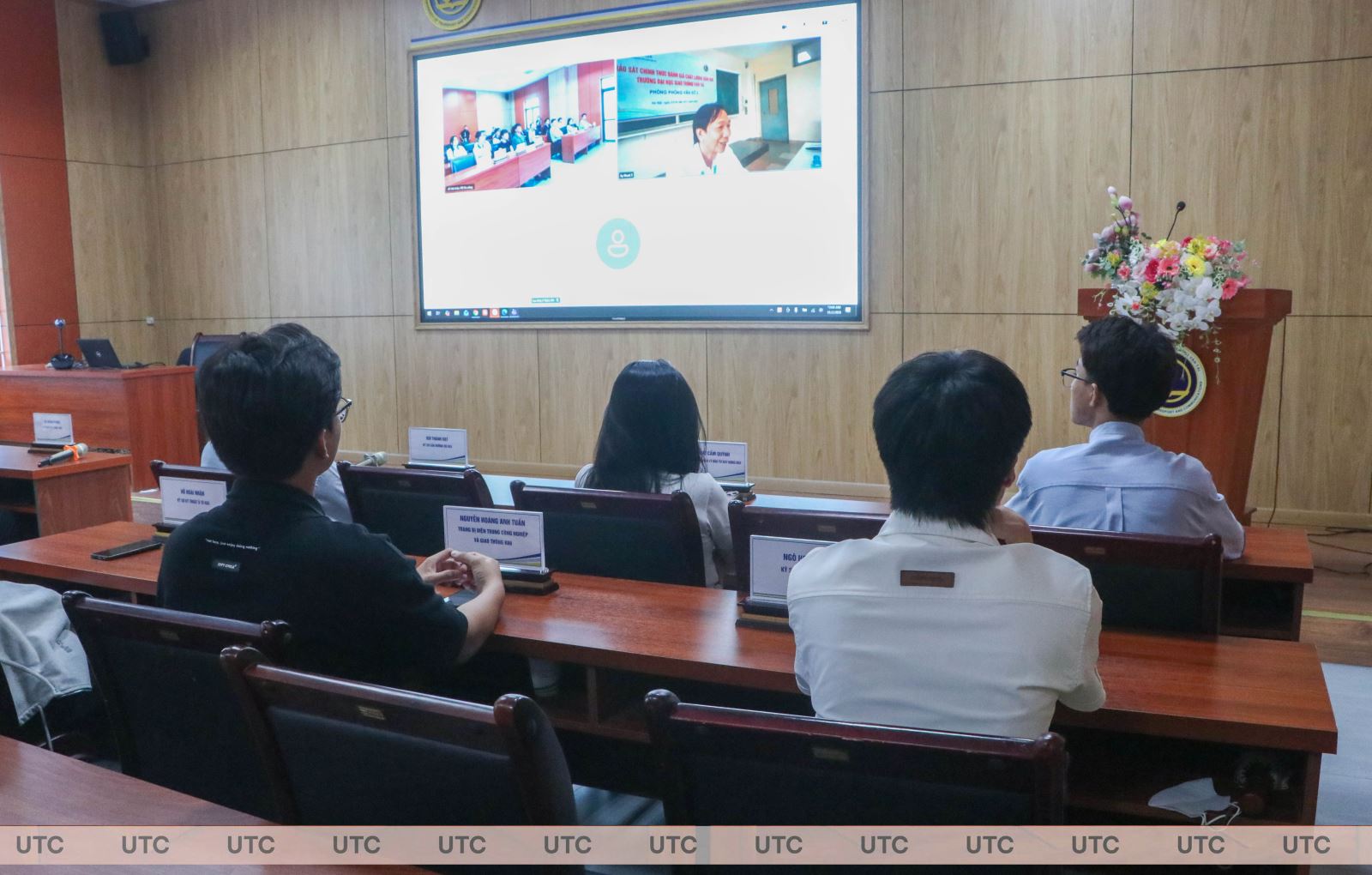
The external assessment expert conducting an online interview with students from various academic programmes at the Ho Chi Minh City Campus.
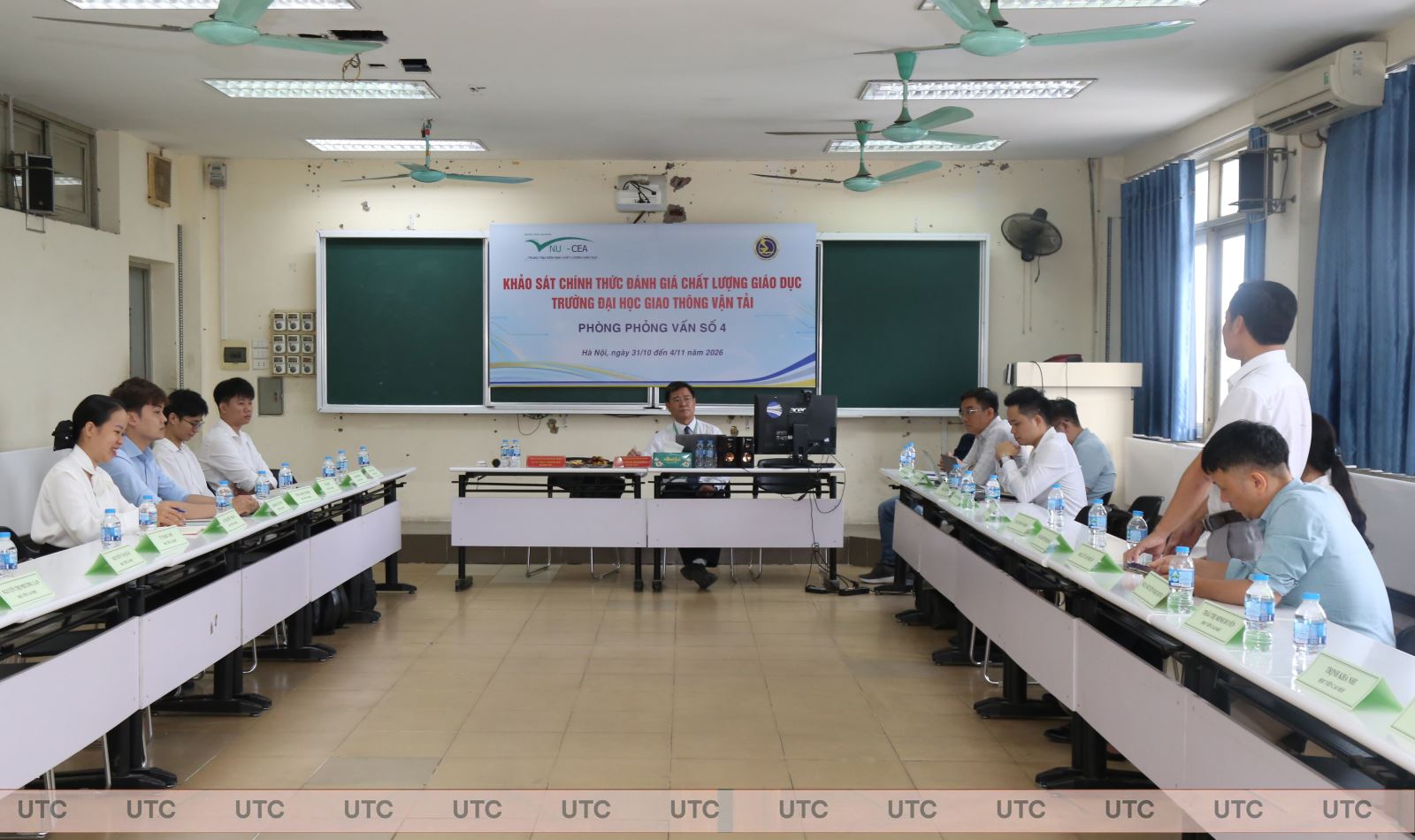
The external assessment expert interviewing master's and doctoral students in Hanoi (in person) and at the Ho Chi Minh City Campus (online).
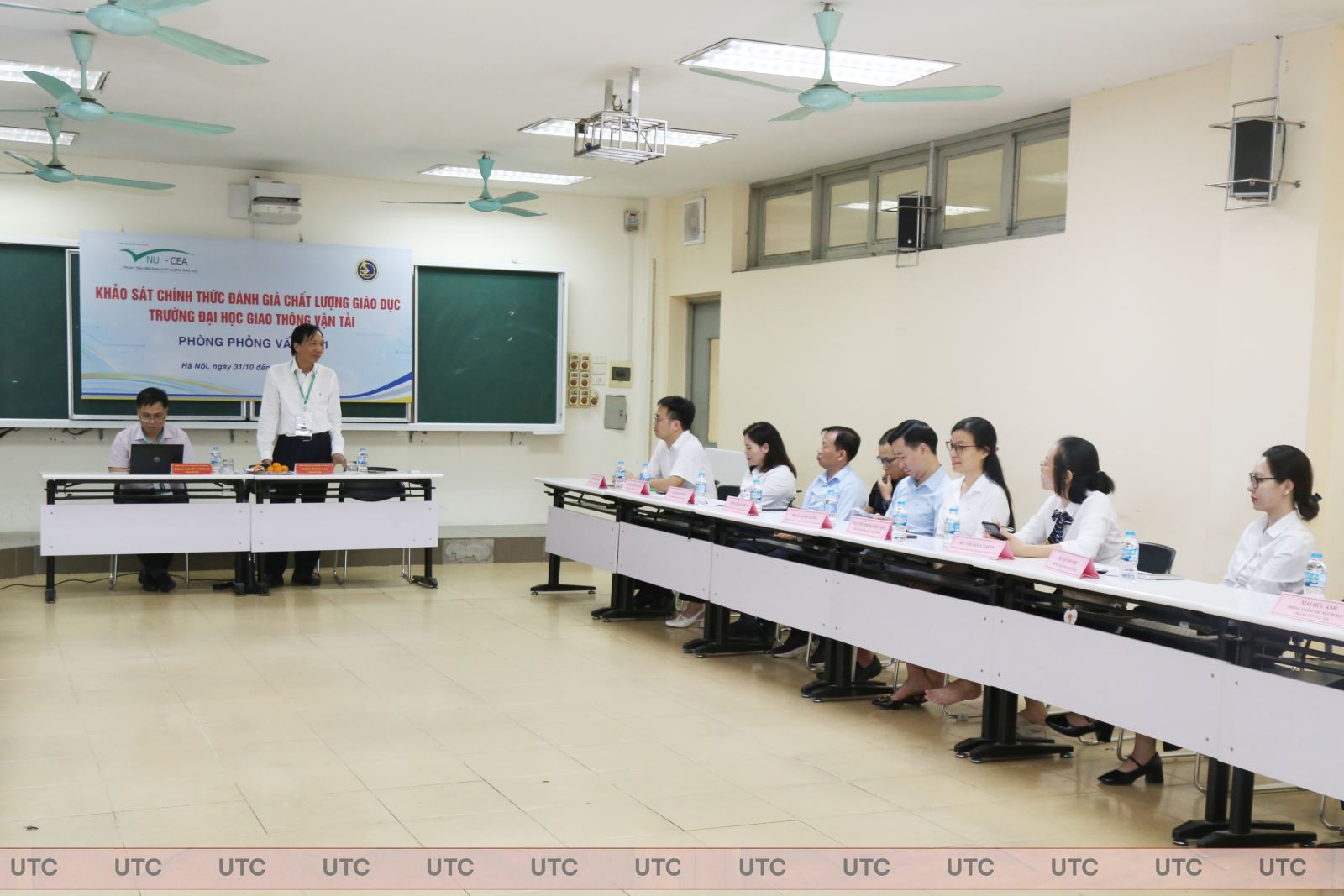
The external assessment expert interviewing support staff.
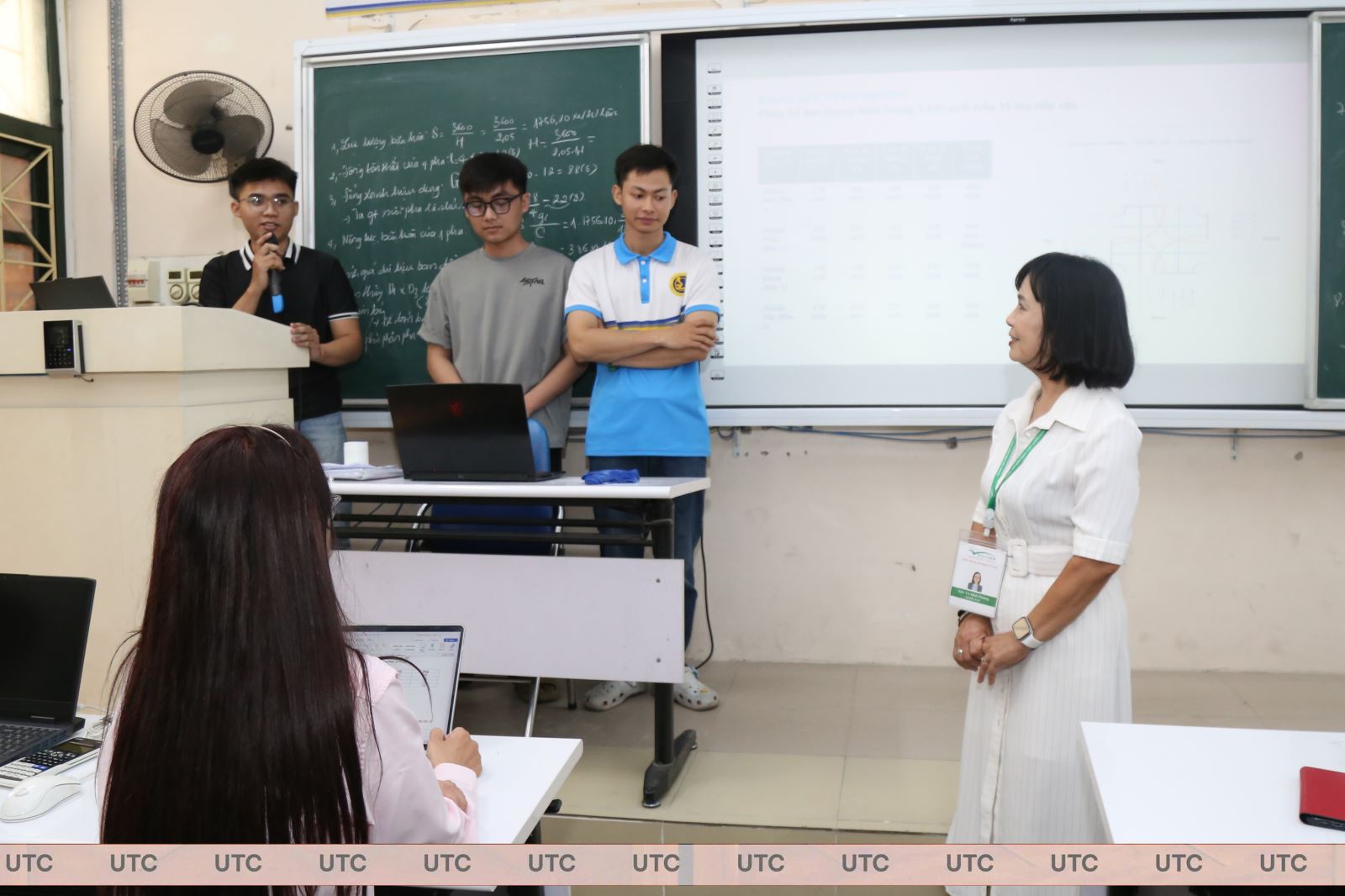
The external assessment expert visiting classrooms and engaging directly with students in the lecture hall area.
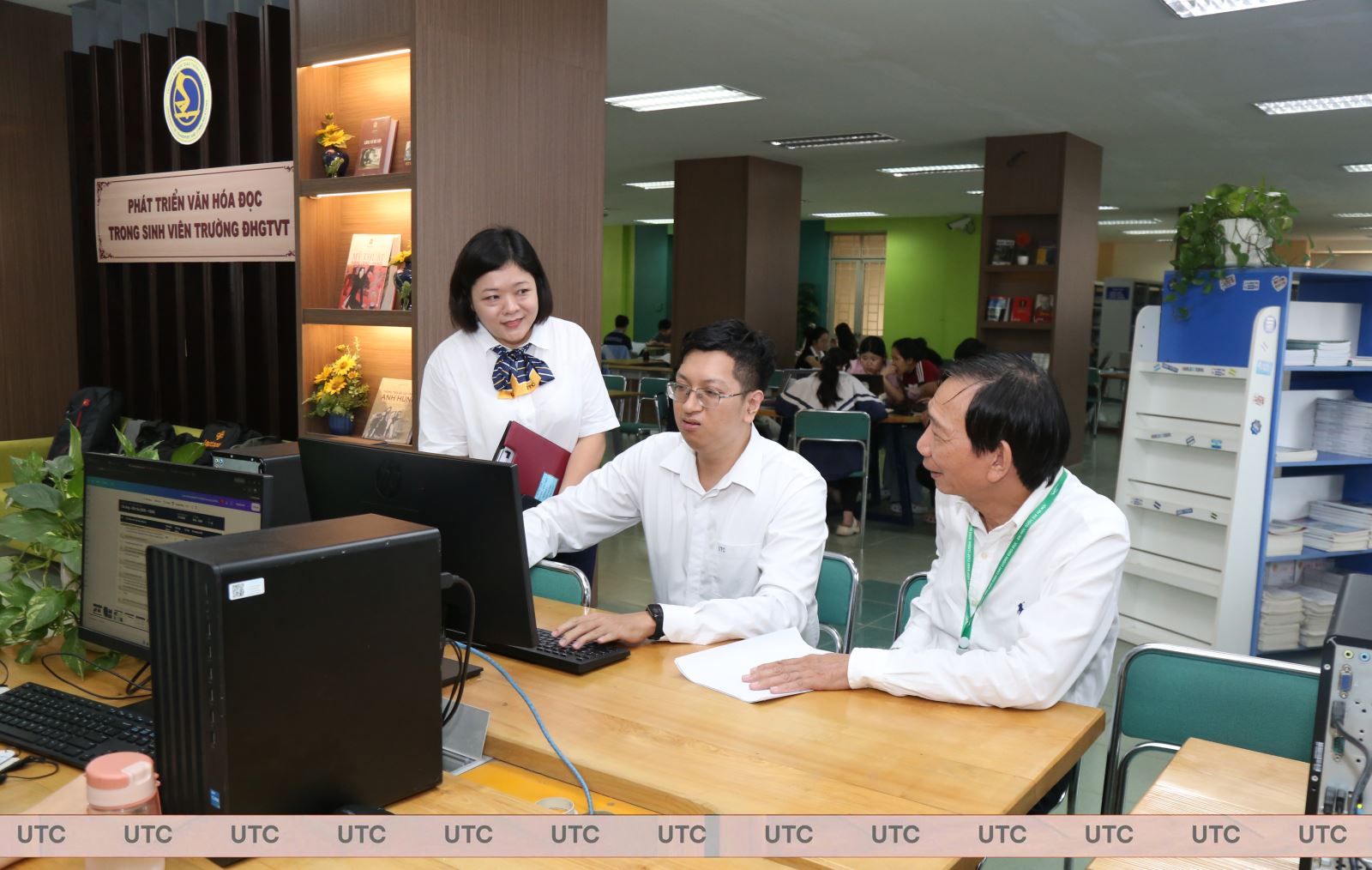
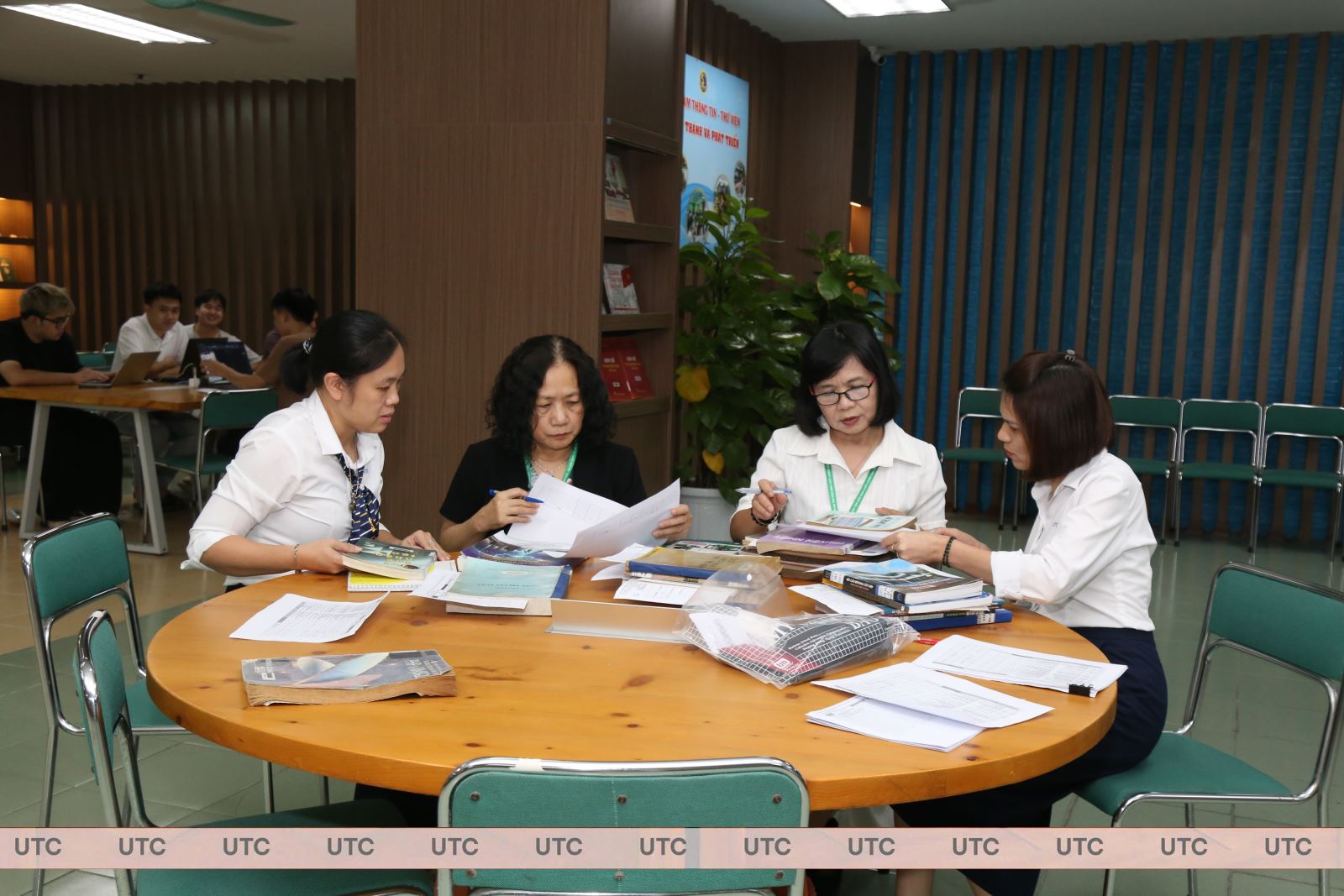
The external assessment expert visiting the Library and meeting with professional staff.
Related Articles
University of Transport and Communications expands cooperation in Aerospace, Intelligent Transportation, and Railway Technologies in Saint Petersburg
DetailUniversity of Transport and Communications Signs Cooperation Agreement with ALMEC Vietnam Co., Ltd.
DetailPresident of the University of Transport and Communications meets with Leading Russian Universities to Promote Cooperation in Strategic Technologies
Detail