
University of Transport and Communications signs Cooperation Agreement with Hanoi City and Vietnam–Korea Institute of Science and Technology
On the afternoon of January 10, 2026, at a conference organized by the Hanoi People's Committee bringing together experts, scientists, universities, colleges, and enterprises, the University of Transport and Communications signed a cooperation agreement with the Hanoi authorities and the Vietnam - Korea Institute of Science and Technology.
.jpg)
The University of Transport and Communications has signed a cooperation agreement with the Hanoi People's Committee and the Vietnam–Korea Institute of Science and Technology.
Attending the conference were: Nguyen Van Phong, Standing Deputy Secretary of the Hanoi Party Committee; Ha Minh Hai, Member of the Standing Committee of the Hanoi Party Committee and Head of its Organization Commission; Truong Viet Dung, Vice Chairman of the Hanoi People's Committee; Nguyen Thanh Son, Secretary of the Party Committee of universities and colleges in Hanoi; Vu Ha, Standing Deputy Head of the Propaganda and Mass Mobilization Commission of the Hanoi Party Committee; along with scientists and representatives from universities, colleges, and enterprises across the city.
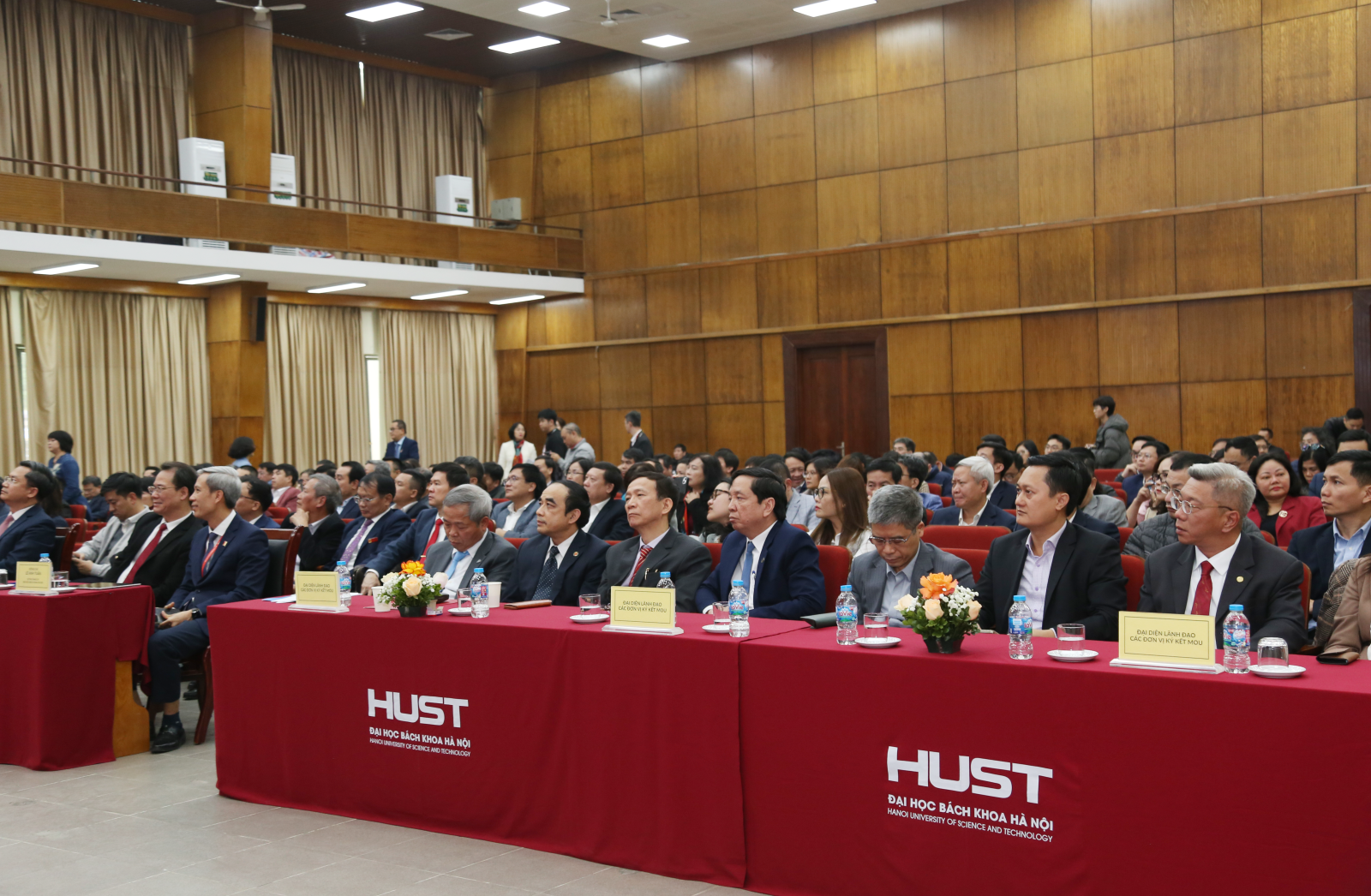
Delegates attending the Conference
In his keynote address, Nguyen Van Phong, Standing Deputy Secretary of the Hanoi Party Committee, outlined the key requirements for the Capital’s development planning. The central authorities particularly emphasized the need to harmoniously combine Hanoi’s long-standing cultural and intellectual traditions with modern development, while building Hanoi into a center of innovation that gathers global knowledge and inspires creativity among Vietnamese people, especially the younger generation.
Regarding the growth model, Hanoi is required to pursue strong reforms, taking science and technology, innovation, and digital transformation as foundational drivers, combined with modern urban governance. These efforts are expected to create sufficient momentum for the city to achieve an economic growth rate of 11% or higher.
The city also determined that Hanoi’s planning should not be confined to administrative boundaries but must be closely linked with regional connectivity, maintaining its role as a development hub of Northern Vietnam. The development orientation follows a multi-layered, multi-polar, and multi-center model, including specialized hubs for higher education and science and technology such as Hoa Lac, Xuan Mai, and Soc Son, along with high-tech zones in Thuong Cat and Tay Tuu.
During the process of developing the Capital Master Plan and revising the Law on the Capital, the city places particular importance on the participation of experts, scientists, universities, research institutes, and enterprises. This process must be conducted in an open, democratic, and scientific manner to ensure long-term value for future generations.
For the revised Capital Law, the central government allows Hanoi to be granted maximum authority accompanied by strict oversight mechanisms, enabling the implementation of breakthrough institutional policies, including pilot initiatives. Hanoi is ready to take the lead in testing these initiatives so that the central authorities can evaluate and scale them nationwide.
The city also affirmed that universities, colleges, and enterprises in the area are important resources, and that the challenges faced by these institutions are also issues that the city must address. Hanoi plans to strongly develop education–science urban zones in Hoa Lac, Xuan Mai, and Soc Son, while investing in major infrastructure projects such as Metro Line 5 (Van Cao – Hoa Lac) and expanding strategic transportation corridors to create a synchronized ecosystem for education, research, and innovation.
.png)
Standing Deputy Secretary of the Hanoi Party Committee Nguyen Van Phong delivering a keynote address at the conference
At the conference, delegates listened to presentations from representatives of Hanoi University of Science and Technology, Vietnam National University, Hanoi, CMC Corporation, and Mobifone Telecommunications Corporation, among others. The presentations focused on initiatives in innovation, the application of digital technologies, and strengthening the linkage between research activities and the practical development needs of the Capital.
Many participants emphasized the important role of universities and enterprises in developing a knowledge-based economy, improving productivity, and enhancing the quality of public services. Discussions also examined mechanisms for coordination among government agencies, businesses, and research organizations, aiming to shorten the time from research outcomes to practical application.
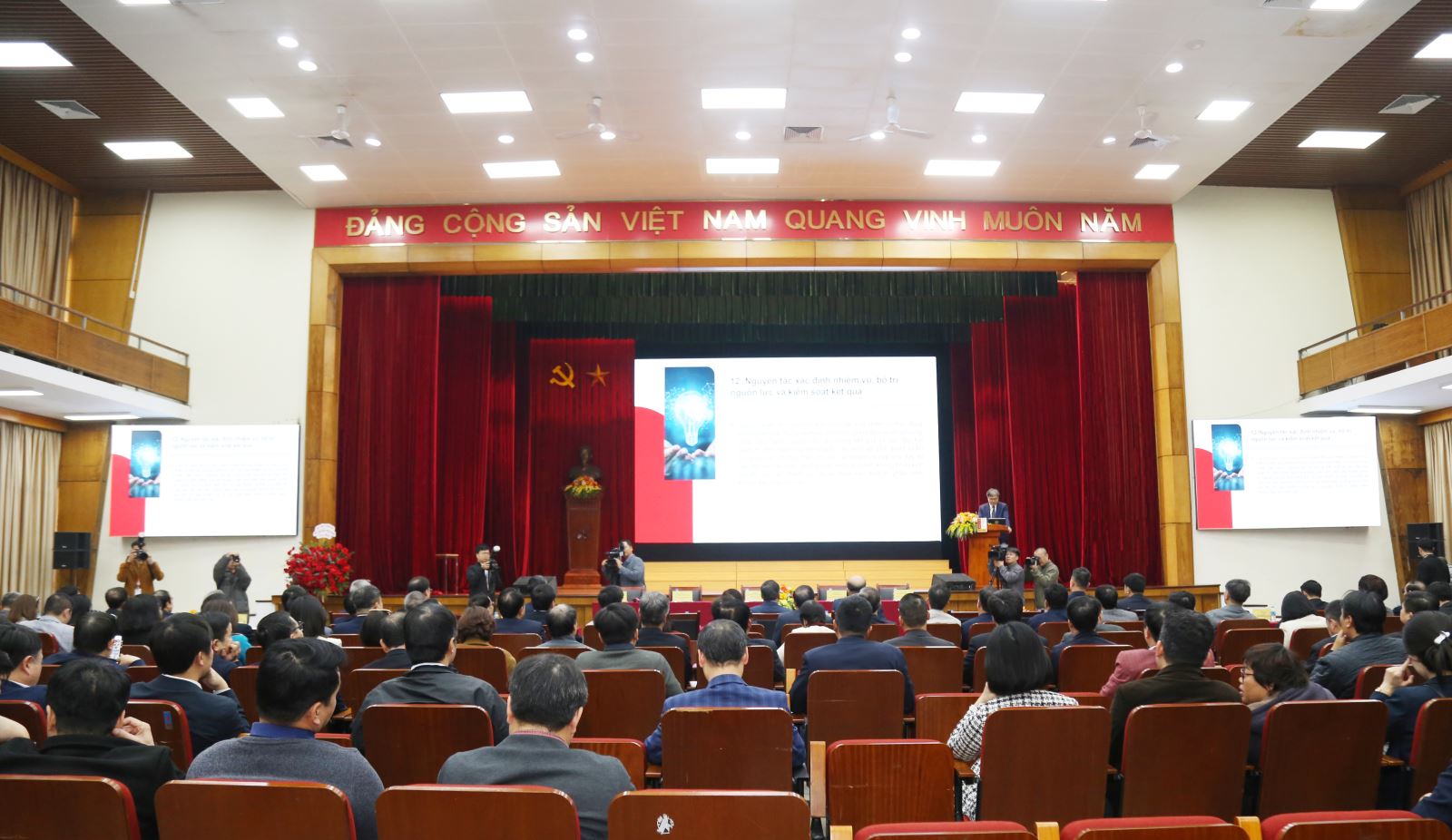
Overview of the Conference
The conference also witnessed the signing ceremony of six cooperation agreements between various organizations, including: Hanoi People's Committee - University of Transport and Communications –Vietnam-Korea Institute of Science and Technology; Hanoi People's Committee - Vietnam National University, Hanoi; Hanoi People's Committee - Hanoi University of Science and Technology - CMC Corporation; Hanoi People's Committee - Hanoi Medical University - Tam Anh General Hospital; Hanoi People's Committee - Foreign Trade University; Sun Edu International Education Joint Stock Company - Hanoi College of High Technology - Vietnam Association for Supporting Industries.
According to the implementation plan of Resolution No. 57 (2026), the Capital’s science and technology tasks will be organized through a four-step closed-loop process, starting from identifying practical challenges to inviting enterprises and science and technology organizations to participate in solving them. The city aims to restructure training programs and attract science and technology talent, while implementing a program to train 1,000 PhD holders linked to addressing real-world challenges of Hanoi, along with the establishment of three key technology testing and standardization centers.
In the context that the city plans to allocate approximately 4% of its GRDP - equivalent to over VND 9 trillion in 2026 - for science, technology, and innovation, this mechanism is considered crucial to ensure that funding is allocated effectively, targeted appropriately, and based on outcomes. The cooperation agreements signed at the conference serve as an initial foundation for Hanoi to further translate commitments into practical challenges, pilot solutions, and scale up successful models, thereby turning knowledge into a real driving force for creating new value for the Capital’s economy.
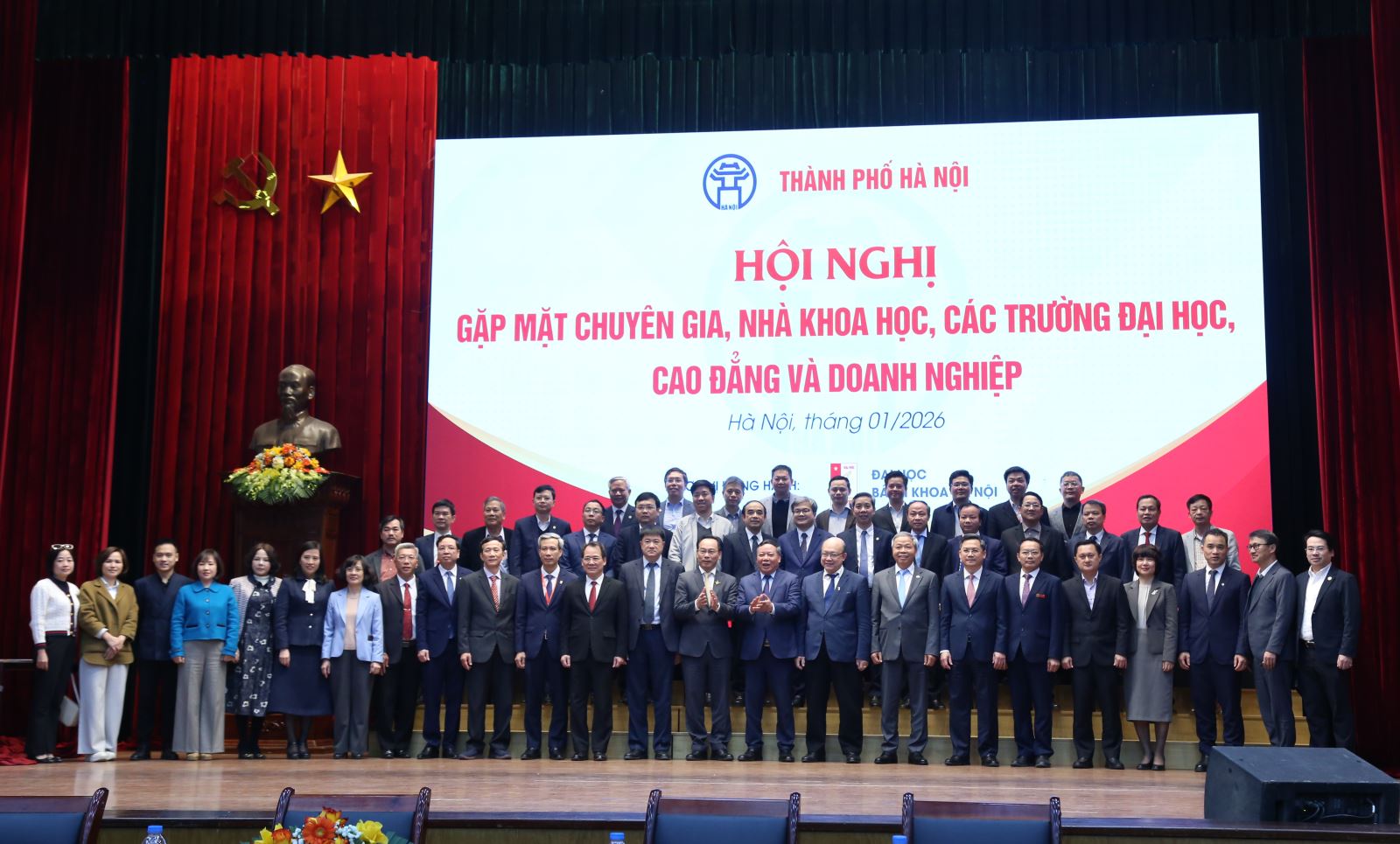
Delegates attending the Conference taking a commemorative photo
ICDS
Related Articles
Conference on the Review of Science and Technology Activities of the University of Transport and Communications for the 2022–2025 Period
DetailThe University of Transport and Communications signs a cooperation agreement with Viettel Post Joint Stock Corporation
DetailVATM Scholarship Award Ceremony – Empowering Dreams
Detail